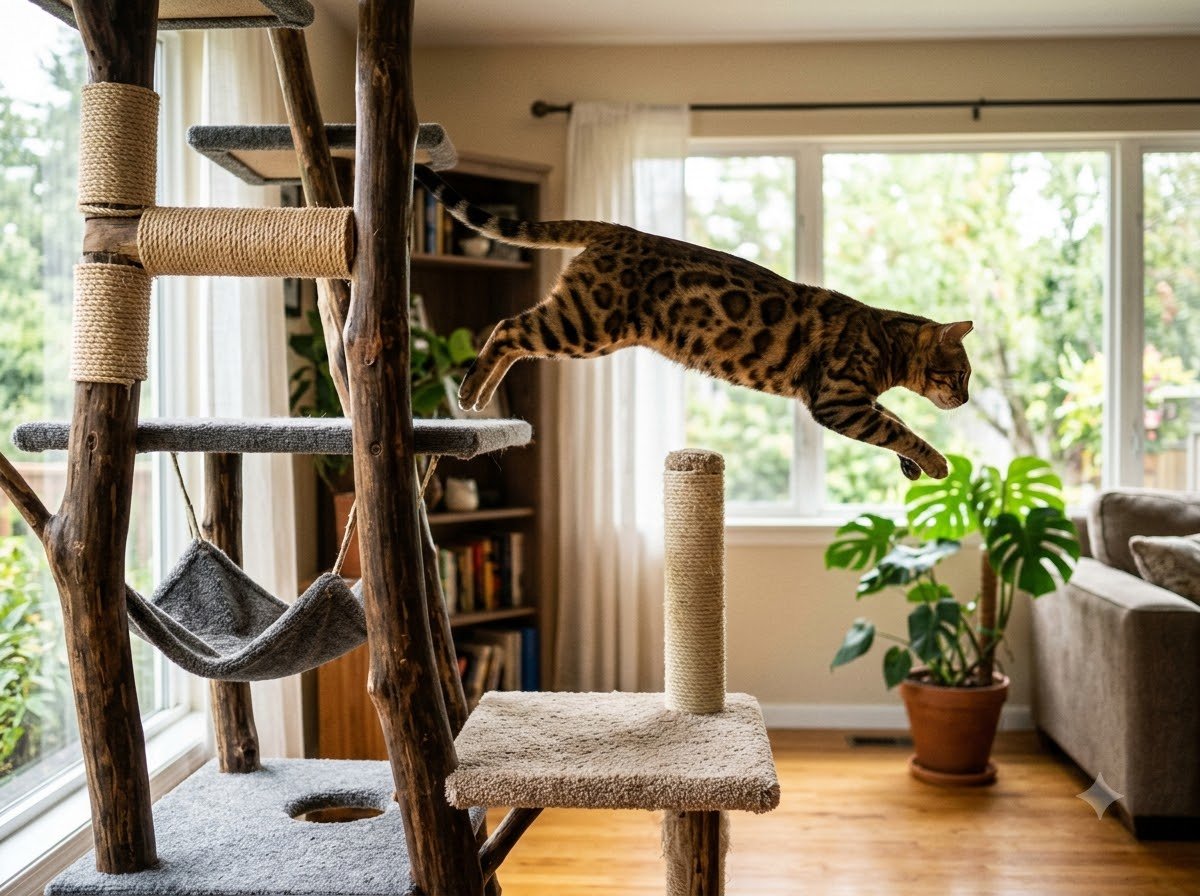
Bengal cats are one of the most athletic domestic cat breeds, known for high jumps, vigorous play, and near-constant activity — traits that make joint problems both less common early on and harder to detect when they do develop, since a strong, driven cat can compensate for discomfort longer than a naturally sedentary one.
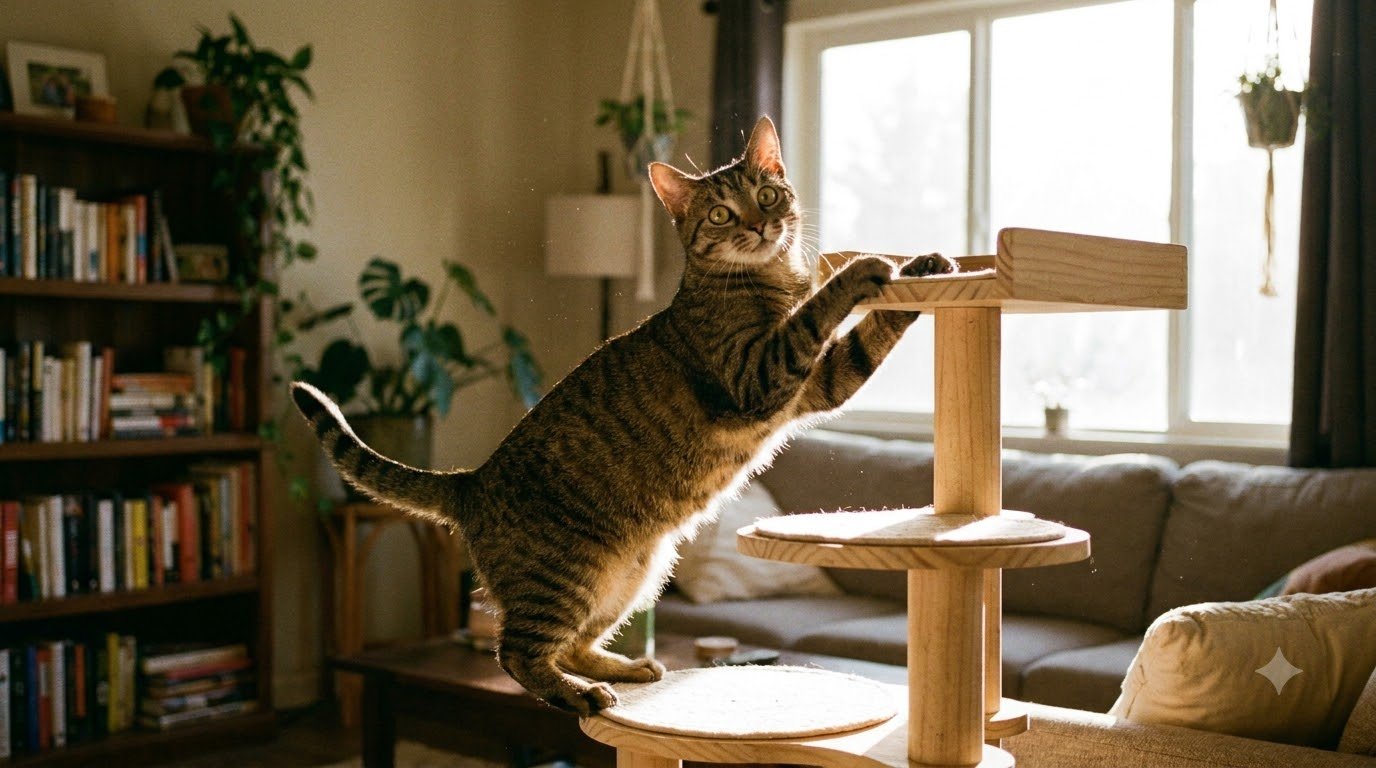
Why Is Joint Pain Harder to Notice in an Athletic Breed Like Bengals?
Bengals’ muscular build and high drive mean they can often compensate for early joint discomfort simply through strength and motivation, continuing to jump and play even as an underlying issue develops. This makes subtle changes — slightly lower jump height, brief hesitation before a jump they used to make instantly, shorter play sessions — more useful warning signs than waiting for an obvious limp, which cats rarely show even with significant joint pain.
What Contributes to Joint Wear in Highly Active Cats?
- Years of high-impact jumping and landing put more cumulative stress on joints than in a low-activity cat
- Rapid, athletic movements (sudden direction changes, high leaps) place more strain on ligaments and tendons over time
- As with any breed, aging naturally reduces cartilage cushioning, which becomes more noticeable in a cat whose identity is built around physical activity
How Can You Support Joint Health in an Active Bengal Cat?
- Watch for small changes in jump height or hesitation before jumps, rather than waiting for obvious lameness
- Provide varied-height perches so the cat can choose lower routes as needed without giving up vertical space entirely
- Keep the cat lean — excess weight adds meaningful strain to joints under this level of activity
- Bring any noticeable drop in play enthusiasm to your vet’s attention, since it can be an early, easy-to-miss signal in this breed specifically