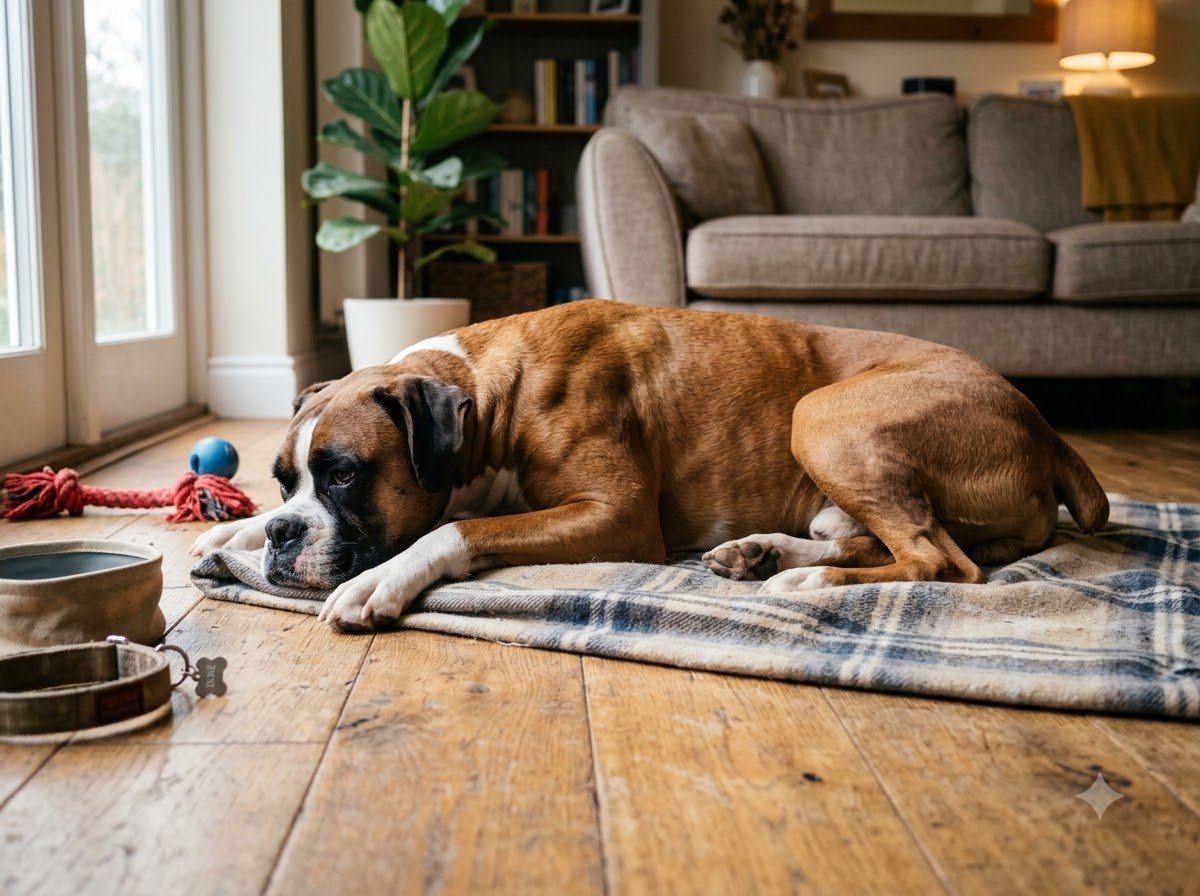
Boxers carry their famously playful, high-energy temperament well into adulthood, which makes the activity restriction that comes with arthritis a particularly noticeable — and often emotionally hard — adjustment for both the dog and its owner, on top of the breed’s real, if moderate, predisposition to hip dysplasia.

What Joint Issues Are Boxers Prone To?
- Hip dysplasia — present in the breed at a meaningful rate, generally less severe on average than in the highest-risk large breeds
- General osteoarthritis — a natural consequence of the breed’s muscular build and high activity level compounding over the years
- Cruciate ligament injuries — Boxers’ athletic, high-impact play style puts them at somewhat elevated risk compared to lower-energy breeds
Why Can Joint Pain Be Harder to Spot in Boxers?
Boxers’ strong, muscular build allows many dogs to compensate for early joint discomfort simply through strength, continuing to play enthusiastically even as an underlying problem develops. Subtle changes — shorter play sessions, slower recovery after activity, reluctance to engage in favorite rough-and-tumble games — are often more reliable early indicators than an obvious limp.
How Can You Manage Arthritis in an Aging Boxer?
- Gradually shift high-impact play toward lower-impact alternatives like structured walks or swimming, rather than eliminating activity outright, which this breed tends to find distressing
- Keep the dog lean, since extra weight compounds joint strain in an already-vulnerable breed
- Ask your vet about joint supplements or pain management proactively, given the breed’s activity level and real dysplasia risk
- Watch for subtler behavioral signs of discomfort rather than waiting for an obvious limp, since this breed’s build can mask pain longer than most