
Cocker Spaniels face a moderate but real set of mobility considerations as they age — patellar luxation and a somewhat elevated disc disease risk being the two most relevant, alongside general joint wear common to any active, mid-sized breed.
What Joint Issues Are Cocker Spaniels Prone To?
- Patellar luxation — a kneecap issue that can cause an intermittent skip or hop in the gait, sometimes worsening with age
- Hip dysplasia — present in the breed, though less severe on average than in larger dogs
- Intervertebral disc disease — a moderately elevated risk given the breed’s proportions, though not as extreme as in true long-backed breeds
Can Ear Problems Be Mistaken for Mobility Issues in This Breed?
Cocker Spaniels are prone to chronic ear infections because of their long, low-set, poorly-ventilated ears. Left unmanaged, a severe or inner-ear infection can affect balance, sometimes producing head-tilting or unsteadiness that owners mistake for a joint or neurological problem — worth ruling out with a vet before assuming mobility changes are purely orthopedic.
How Should You Support a Cocker Spaniel’s Mobility as They Age?
- Watch for an intermittent skip in the hind leg gait, a common early sign of patellar luxation
- Keep ears clean and dry to reduce infection risk that could otherwise complicate balance assessment
- Maintain a lean body condition, since Cocker Spaniels are prone to weight gain that adds strain to already-vulnerable joints
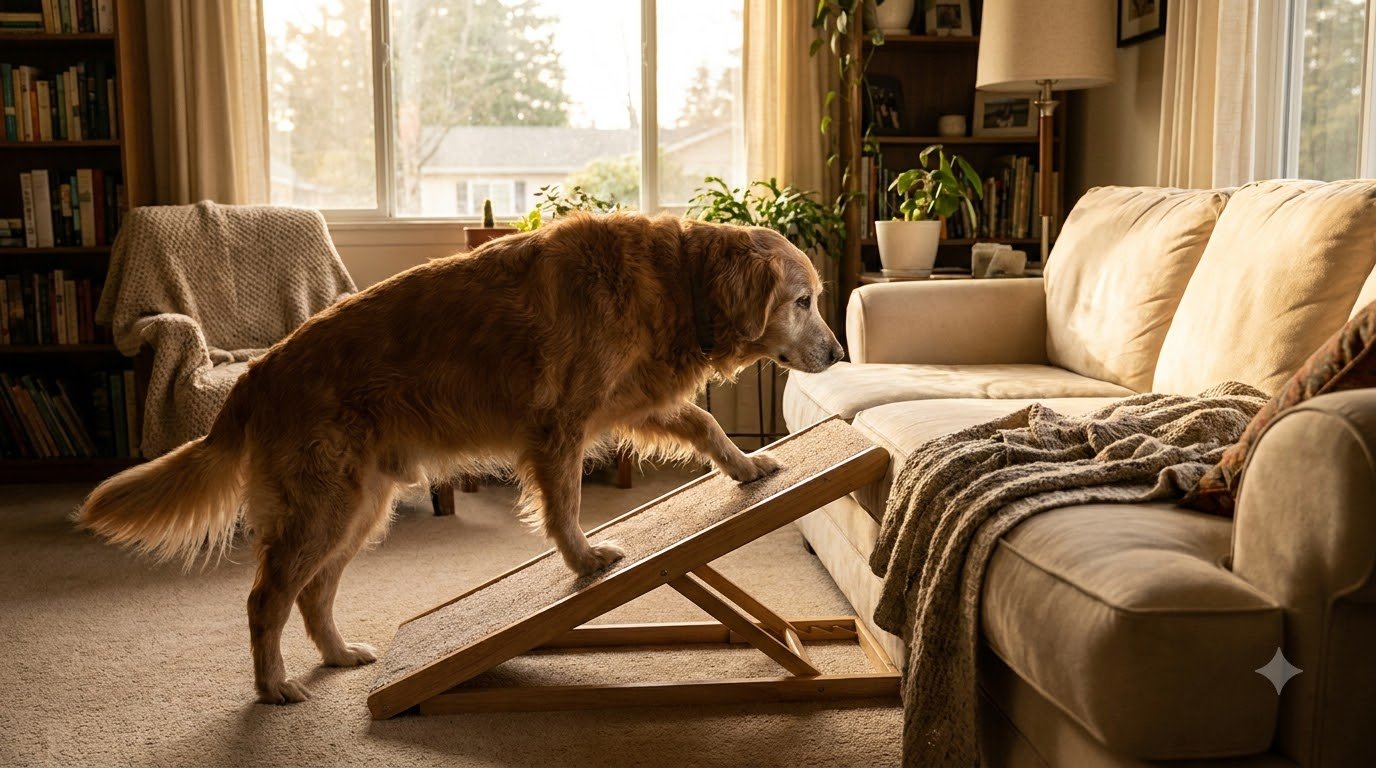
- Use ramps for furniture and cars to reduce jumping-related strain on the spine and knees
- Bring any new stiffness or reluctance to a vet promptly rather than assuming it’s simply “slowing down with age”