Pugs share French Bulldogs’ combination of breathing and joint challenges, though with their own specific risk profile — a flat-faced airway that limits exercise tolerance, joint issues common to small compact breeds, and in some cases a congenital spinal condition that can affect gait from a young age.
How Does a Pug’s Airway Structure Limit Mobility?
Like other brachycephalic breeds, Pugs have a shortened airway that restricts airflow, making them tire and overheat faster than dogs with typical muzzle lengths. This means reduced activity in a Pug can reflect breathing limitations as much as joint discomfort, and the two are worth assessing together rather than assuming one or the other.
What Joint and Spinal Issues Are Pugs Prone To?
- Patellar luxation — a common small-breed kneecap issue that can affect gait
- Hip dysplasia — occurs in the breed, generally less severe than in larger dogs but still relevant
- Hemivertebrae — a congenital spinal malformation seen more often in Pugs than in most breeds, sometimes causing hind-limb weakness from an early age
- Obesity-related joint strain — Pugs are especially prone to weight gain, which compounds both breathing and joint issues more than in non-brachycephalic breeds
How Can You Support Mobility in an Aging Pug?
- Keep exercise short and avoid heat and humidity, watching for labored breathing as a signal to stop, not just visible tiredness
- Maintain a lean body condition — weight management matters more for this breed’s mobility than almost any other factor
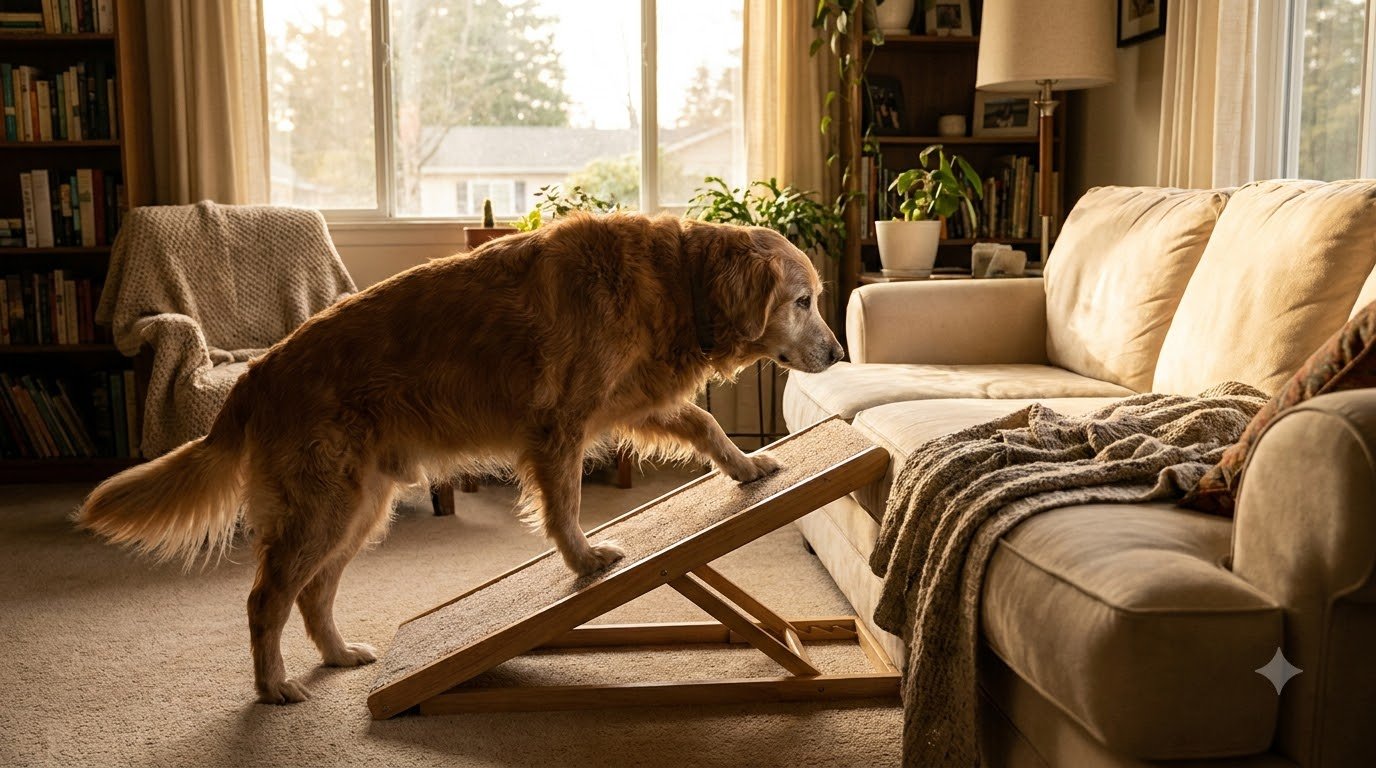
- Use ramps for furniture to reduce jumping-related strain on both joints and spine
- If hind-limb weakness appears at a young age rather than gradually with aging, ask your vet about hemivertebrae specifically