
Shih Tzus combine several small-breed mobility considerations: a common susceptibility to patellar luxation, some brachycephalic breathing limitations that can affect exercise tolerance, and a body shape that carries a modest elevated risk for back issues compared to more standard-proportioned breeds.
What Joint Issues Are Most Common in Shih Tzus?
- Patellar luxation — one of the more frequently diagnosed joint issues in the breed, ranging from mild intermittent slipping to more serious cases needing surgical correction
- Hip dysplasia — occurs in the breed, though usually less severe than in larger dogs
- Intervertebral disc issues — a moderate risk given the breed’s somewhat elongated spine relative to leg length
How Does Breathing Structure Factor Into Shih Tzu Mobility?
Like other flat-faced breeds, Shih Tzus can have some degree of airway restriction that limits exercise tolerance and increases heat sensitivity, though the severity varies significantly between individual dogs depending on their specific facial structure. This is worth factoring in when assessing whether reduced activity reflects joint discomfort, breathing limits, or both.
How Can You Support a Shih Tzu’s Mobility as They Age?
- Watch for an intermittent skip or hop in the hind leg gait, a common early sign of patellar luxation
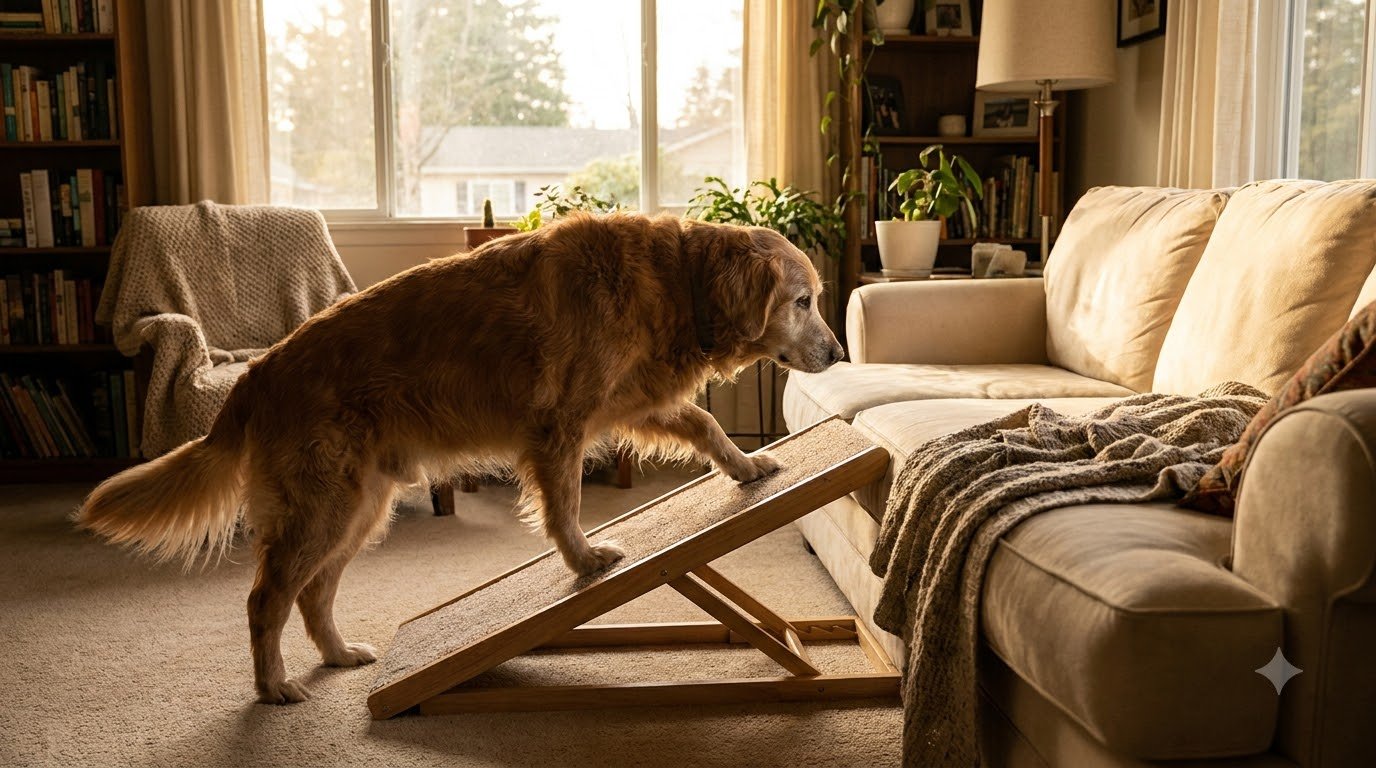
- Use ramps or steps for furniture to reduce jumping strain on both joints and spine
- Keep exercise sessions shorter and avoid hot, humid conditions given the breed’s airway sensitivity
- Maintain a lean body condition, since even modest weight gain adds disproportionate strain on a small frame
- Schedule a vet exam promptly if you notice a new limp or reluctance to jump, rather than assuming it will resolve on its own