No matches found. Try a different search term.
HomeDog BreedsBernese Mountain Dog
DOG BREED PROFILE

Bernese Mountain Dog

— Gentle. Loyal. Good-Natured.

Bred in the Swiss Alps to herd cattle, pull carts, and guard farms, the Bernese Mountain Dog combines a striking tricolor coat with a famously gentle, good-natured temperament. Large and powerfully built, "Berners" are devoted family companions, though their giant-breed status comes with a notably shorter lifespan and real health considerations.

SwitzerlandOrigin
Working GroupBreed Group
7 - 10 YearsLife Expectancy

QUICK OVERVIEW

Homes with space for a giant breed
Owners who can manage joint health
Families wanting a gentle giant
Hot climates without cooling access

About the Bernese Mountain Dog

Bred in the Swiss Alps to herd cattle, pull carts, and guard farms, the Bernese Mountain Dog combines a striking tricolor coat with a famously gentle, good-natured temperament. Large and powerfully built, "Berners" are devoted family companions, though their giant-breed status comes with a notably shorter lifespan and real health considerations.

Last updated: August 12, 2026
Read Full History
Key Facts

One of four Swiss mountain dog breeds, developed for farm work in the Alps
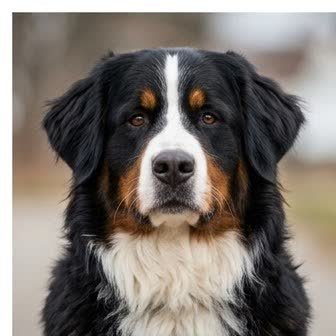
Known for a striking tricolor coat pattern of black, white, and rust
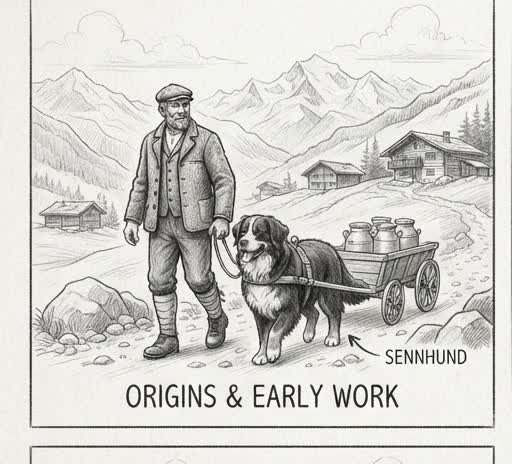
Historically used to pull carts of dairy products to market
Famous for an exceptionally gentle, good-natured temperament despite their large size

Is Bernese Mountain Dog Right for You?

Homes with space for a giant breed
Owners who can manage joint health
Families wanting a gentle giant
Hot climates without cooling access
Explore More Breeds →

Photo Gallery

View All Breeds →

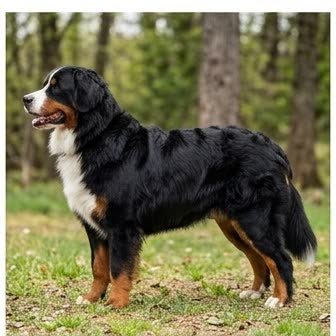
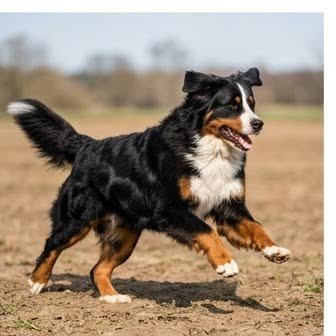
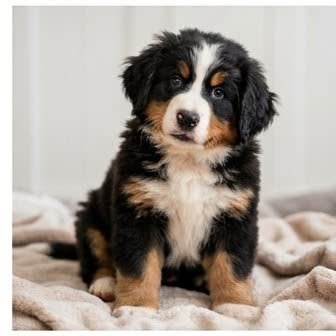
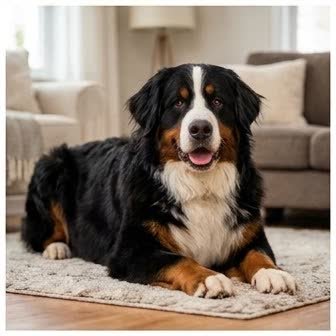
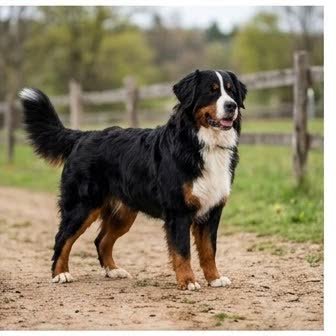
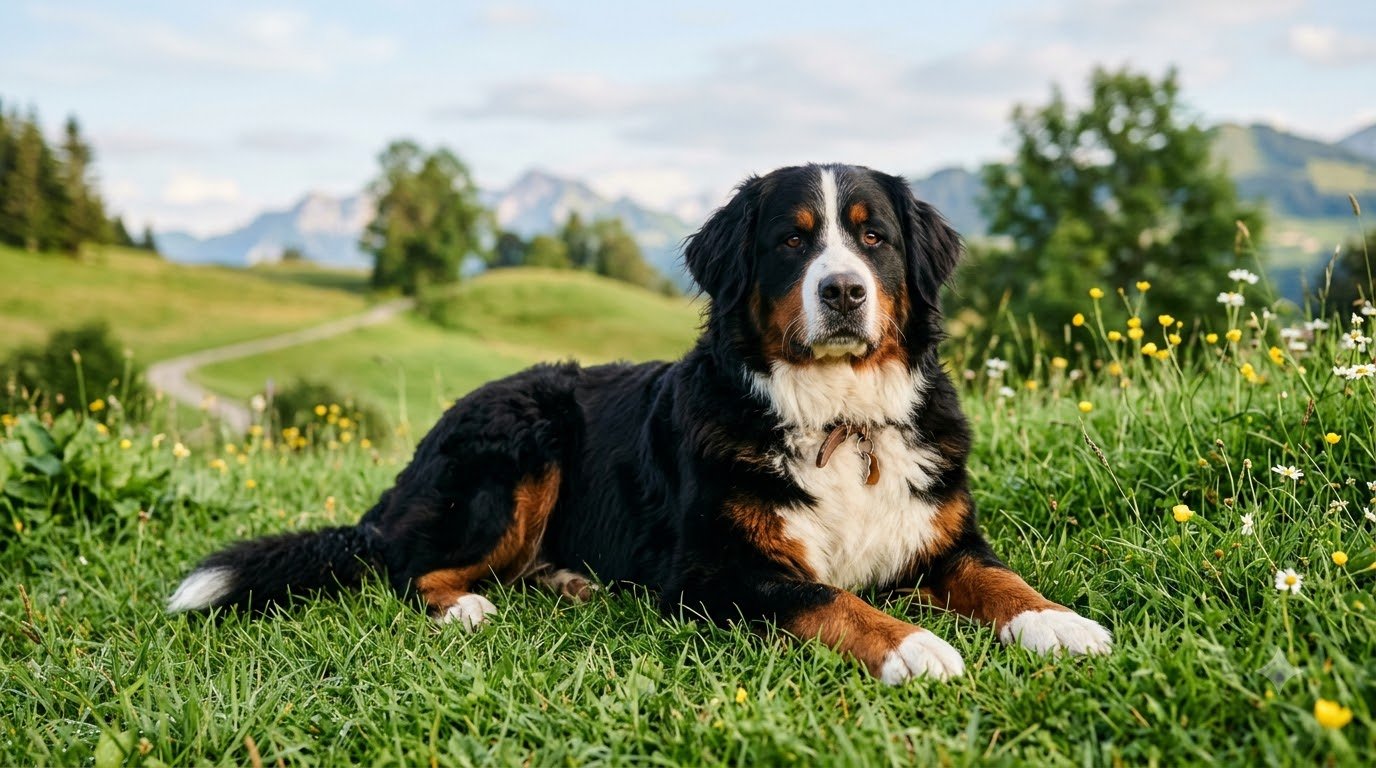
The Bernese Mountain Dog has a thick, moderately long double coat coat in tricolor — black, white, and rust, with heavy shedding year-round.

Personality

GentleDespite their large size, Berners are known for a calm, patient temperament well suited to families.
LoyalForms deep, devoted bonds with family, often described as eager to please and affectionate.
Good-NaturedRarely aggressive or reactive, generally tolerant of household chaos and children.
CalmCarries themselves with a relaxed, composed demeanor rather than high-strung energy.

Care & Needs

Joint SupportAs a giant breed, controlled growth during puppyhood and joint-supportive nutrition matter significantly for long-term mobility.
Heat ManagementTheir thick coat makes them prone to overheating — limit strenuous activity and ensure shade and water access in warm weather.
GroomingRegular brushing several times weekly to manage heavy shedding and prevent matting.
Exercise30-45 minutes of moderate daily activity; not an especially high-energy breed despite their working heritage.

Did You Know?

The Bernese Mountain Dog is one of four distinct Swiss mountain dog breeds (Sennenhund), all sharing the same tricolor pattern but differing in size and coat length.

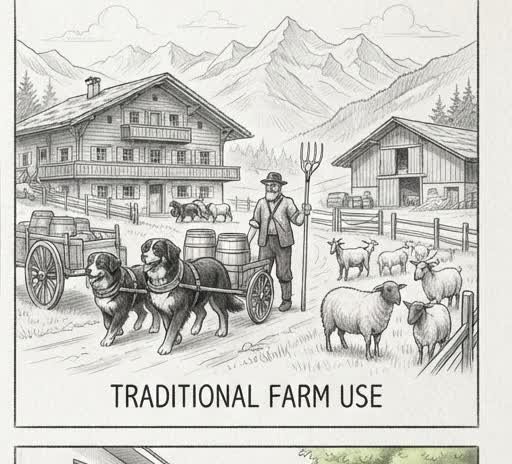
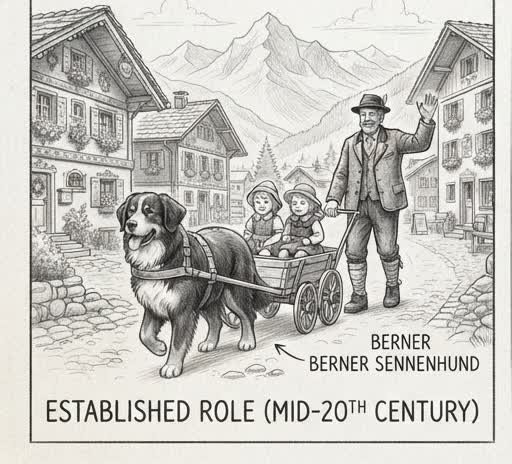
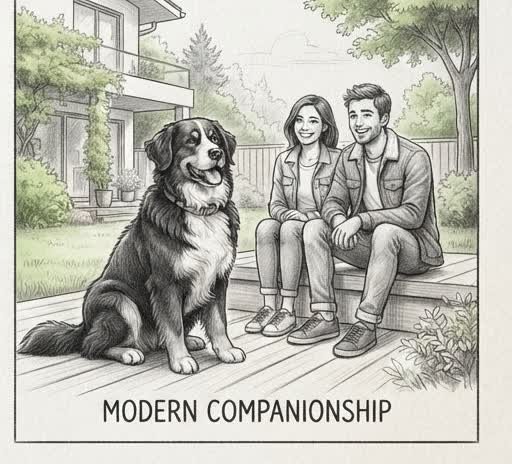
Bernese Mountain Dogs have been serving humans in many important roles including: Farm Dogs , Draft Dogs and Family Companions .

Health & Common Issues

Cancer RiskBernese Mountain Dogs have one of the highest documented cancer rates of any breed, including histiocytic sarcoma — a major factor in their shorter average lifespan.
Hip and Elbow DysplasiaVery common in large and giant breeds; controlled growth and joint-supportive care during puppyhood help manage lifetime risk.
Bloat (GDV)Deep-chested giant breeds face elevated risk of this life-threatening emergency, managed partly through smaller, frequent meals.

Training & Exercise

  • Begin obedience training early while puppies are still manageable in size, since a fully grown, untrained Berner is difficult to physically control.
  • Use calm, positive, consistent training — this gentle, sensitive breed responds poorly to harsh handling.
  • Avoid excessive jumping or high-impact exercise during the first 18-24 months while bones and joints are still developing.
  • Provide moderate, consistent exercise rather than intense bursts, matching this breed's working-but-calm temperament.

History & Origin

Illustrated sketch of an early Bernese Mountain Dog pulling a cart in the Swiss Alps Ancient Descended from Roman Mastiff-type dogs brought to Switzerland, developed by farmers in the canton of Bern for herding and draft work.
Illustrated sketch of a Bernese Mountain Dog on a traditional Swiss farm 1800s Nearly declined as farming practices modernized, before a dedicated revival effort by Swiss breed enthusiasts.
Illustrated sketch of an established Bernese Mountain Dog in a Swiss alpine village 1937 Officially recognized by the American Kennel Club.
Illustrated sketch of a modern Bernese Mountain Dog with a family in a present-day home Today Valued primarily as a devoted family companion, with continued efforts within the breed community to address cancer prevalence through health-focused breeding.

Frequently Asked Questions

Are Bernese Mountain Dogs good with children?
Yes, generally — their gentle, patient temperament makes them well suited to families, though their large size means supervision matters to prevent accidental injury during normal play.
Why do Bernese Mountain Dogs have a shorter lifespan?
The breed has an unusually high documented cancer rate compared to most breeds, which is the primary factor behind their relatively short average lifespan of 7-10 years — ongoing health-focused breeding efforts aim to address this.
How much exercise does a Bernese Mountain Dog need?
A moderate amount, typically 30-45 minutes daily — despite their working farm-dog heritage, Berners aren't an especially high-energy breed and do well with consistent, non-intense activity.

Related Guides for Bernese Mountain Dog Owners

You Might Also Like

Love Bernese Mountain Dogs?
Get expert tips, care guides & stories straight to your inbox.
No spam Unsubscribe anytime 100% Free