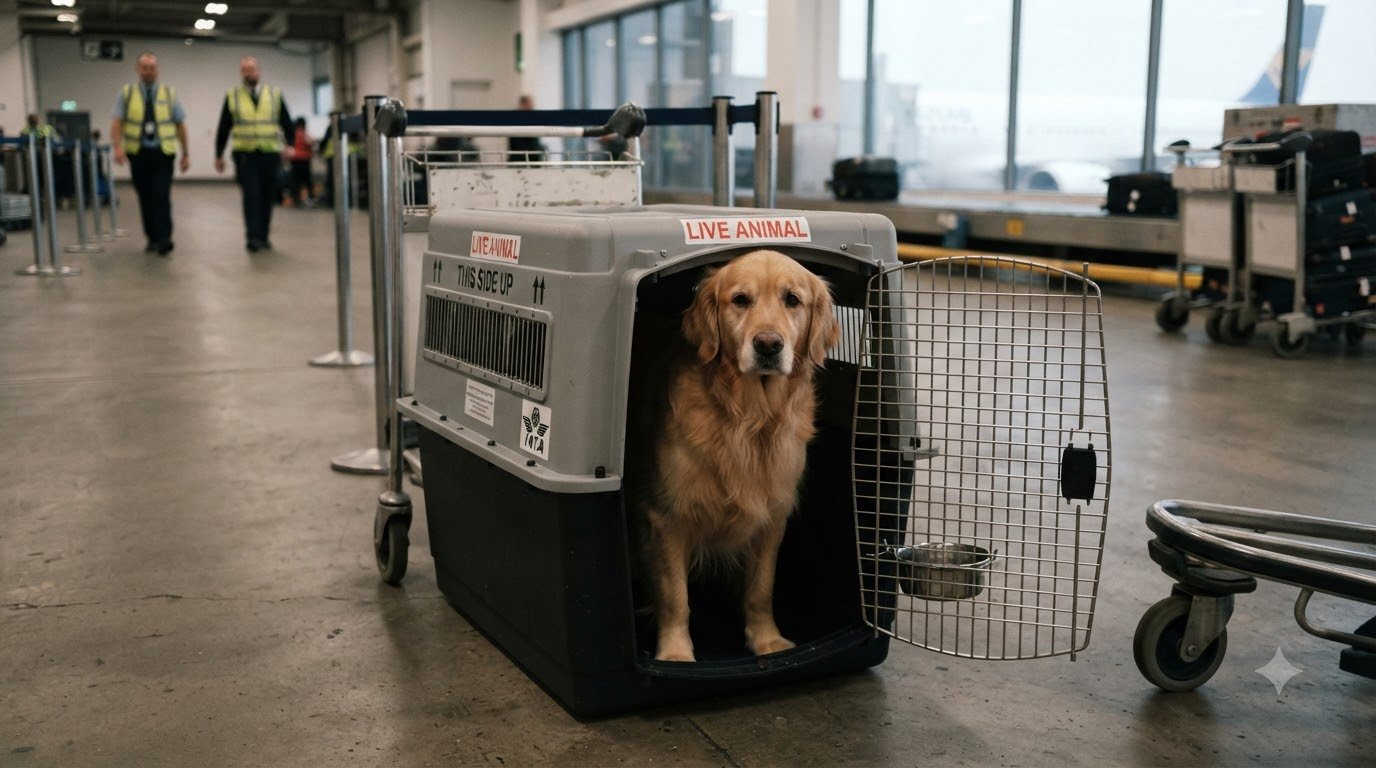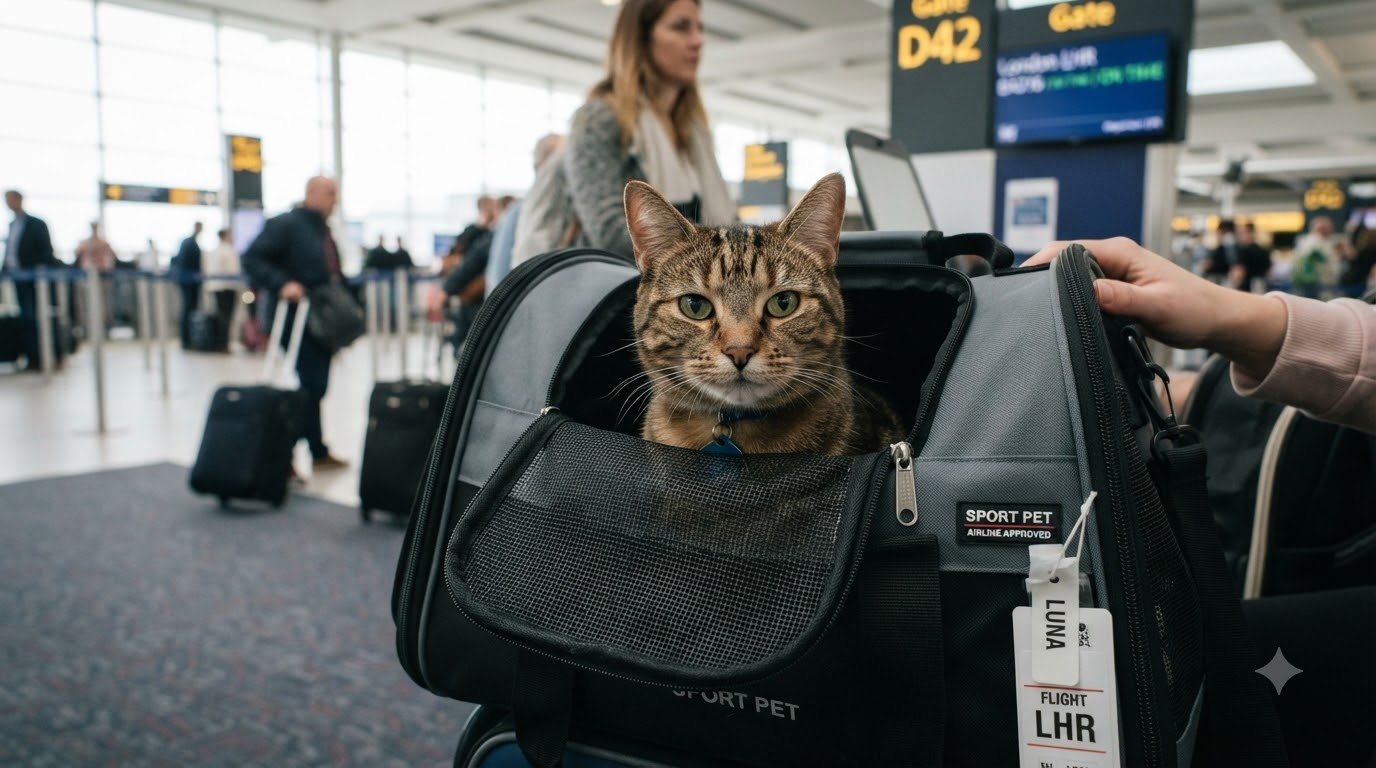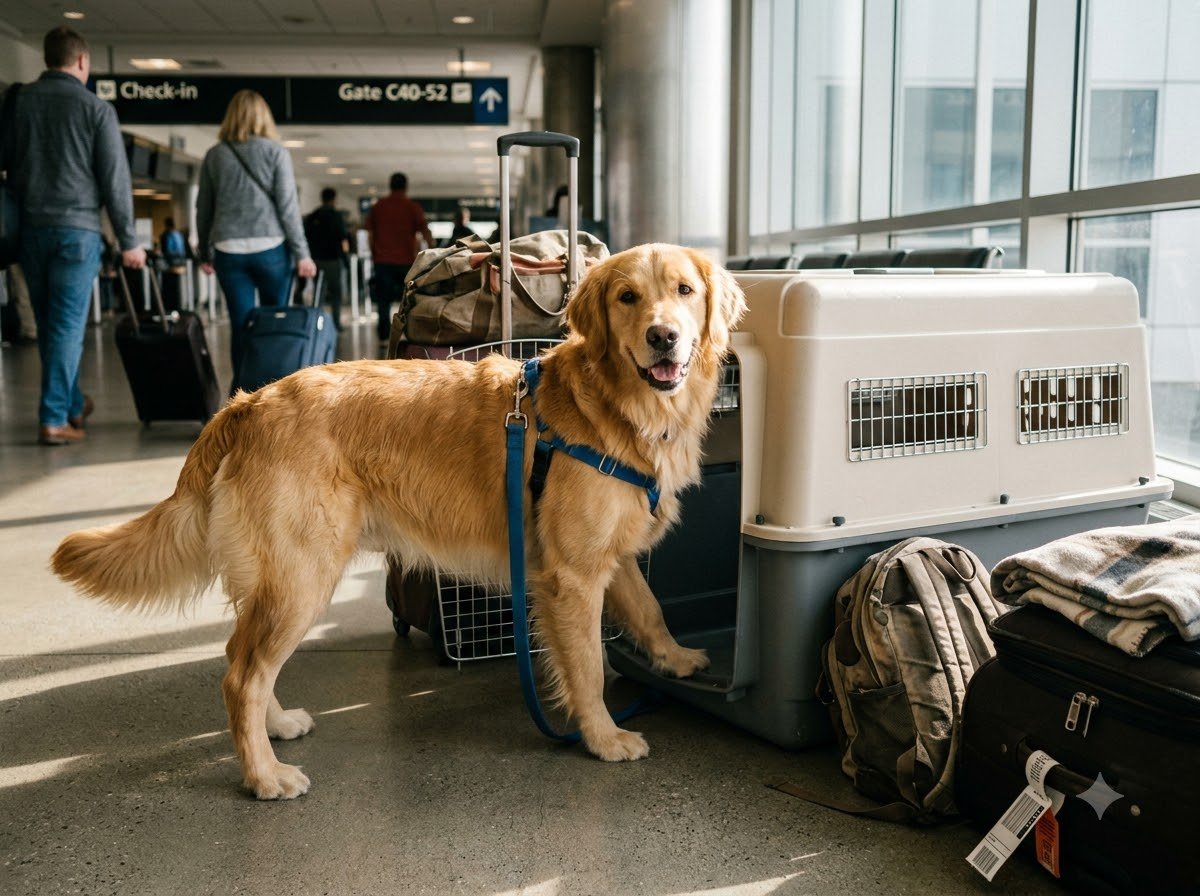
International travel is stressful for most dogs regardless of whether they’re flying in the cabin or as cargo, and while you can’t eliminate that stress entirely, thoughtful preparation in the weeks before the flight makes a real, measurable difference in how your dog handles the day.
Why Is Sedation Generally Not Recommended?
It’s a common first instinct, but most airlines and veterinary organizations actually advise against sedating dogs for air travel. Sedatives can suppress a dog’s ability to regulate body temperature and can affect breathing, both of which carry more risk at altitude and in cargo holds where temperature and pressure aren’t identical to ground level. If anxiety is a significant concern, this is worth discussing directly with your vet well before the flight, since they may suggest non-sedating anti-anxiety approaches instead.
How Does Crate Training Help?
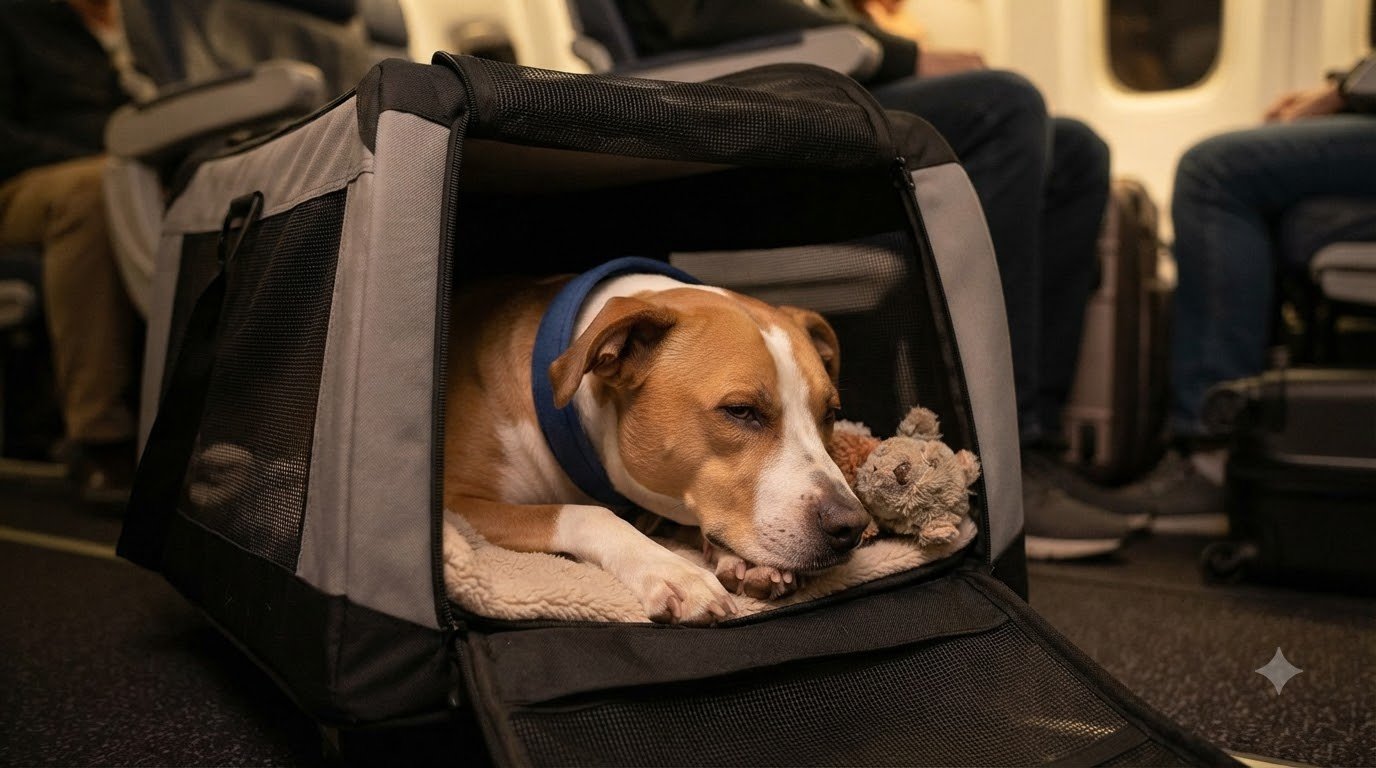
A dog that’s genuinely comfortable in its crate — not just tolerating it, but relaxed and calm inside it — handles travel stress dramatically better than one encountering the crate as a foreign, frightening object on travel day. Building this association takes real time:
- Introduce the crate weeks or months before travel, not days
- Feed meals inside the crate to build a positive association
- Gradually increase time spent in the crate with the door closed, starting with short periods
- Practice with the crate in a moving car if possible, to simulate some travel sensation
- Avoid ever using the crate as punishment, which undermines the calm association you’re building
What Else Can Help Reduce Anxiety?
- Familiar scent items: A worn (unwashed) t-shirt or blanket with your scent can be comforting inside the crate
- Exercise before travel: A dog that’s had adequate physical activity before a long travel day tends to settle more easily
- Calming pheromone products: Synthetic dog-appeasing pheromone sprays or collars have some evidence supporting reduced general anxiety, and are a reasonable low-risk addition
- Consistency in routine: Keeping feeding and walk timing as normal as possible in the days leading up to travel avoids adding extra unpredictability
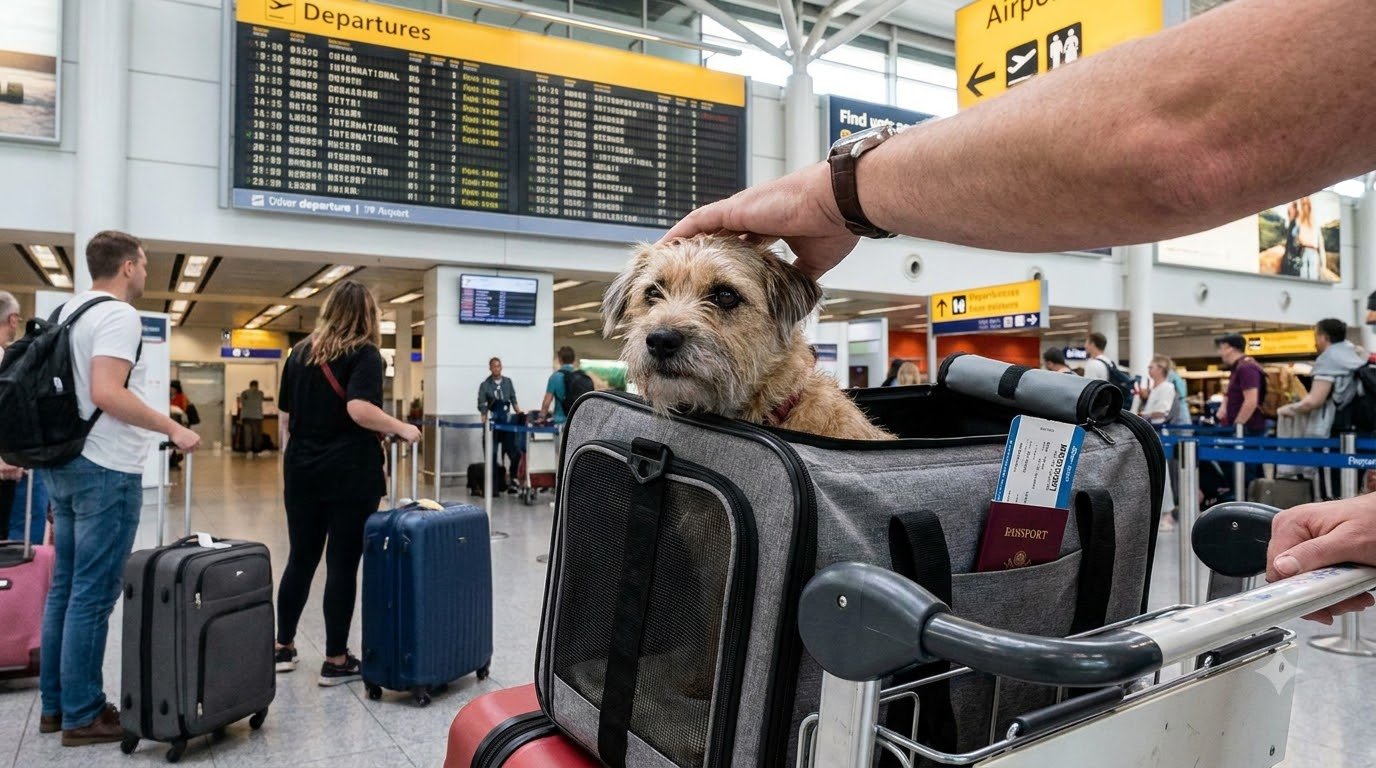
What Should You Discuss With Your Vet Beforehand?
For a dog with significant anxiety, or a history of stress-related issues, a pre-travel vet visit is worth it specifically to discuss non-sedating options, whether behavioral or supplement-based, that are appropriate for air travel. This conversation should happen well before the flight — not the week of — so there’s time to trial anything new and see how your dog responds.
What’s the Realistic Goal?
The goal isn’t a dog that experiences zero stress during international travel — that’s not a realistic bar for most dogs. It’s meaningfully reducing that stress through preparation, so the experience is manageable rather than traumatic, and giving your dog the best possible chance of arriving calm and healthy at the other end.