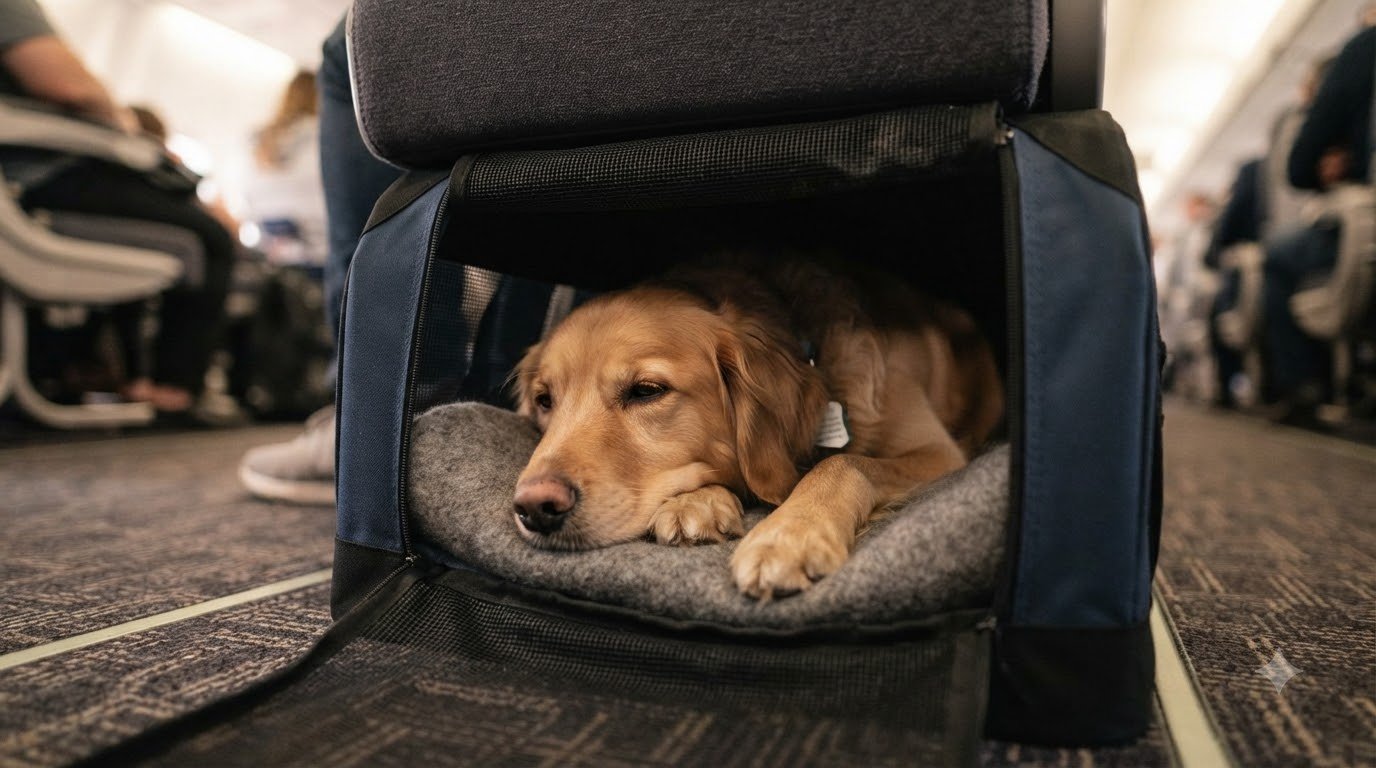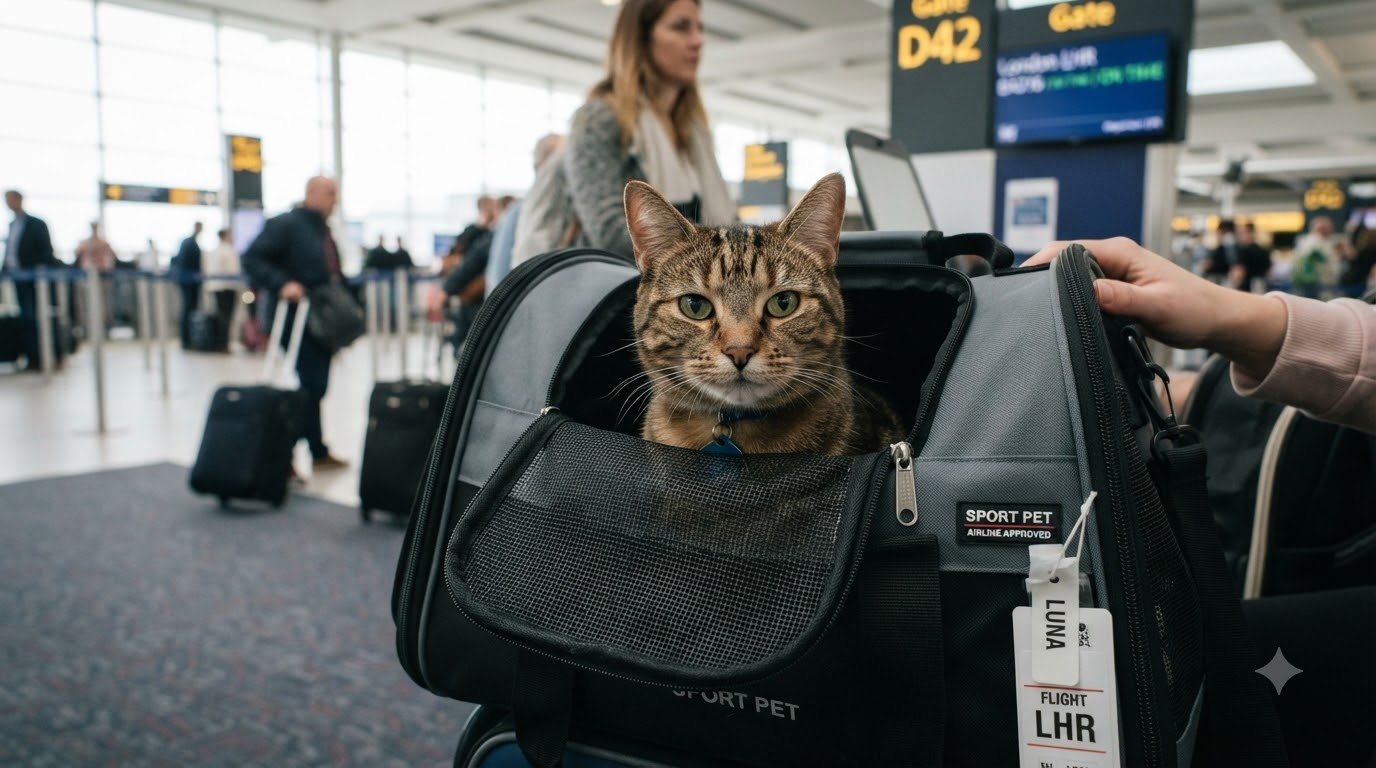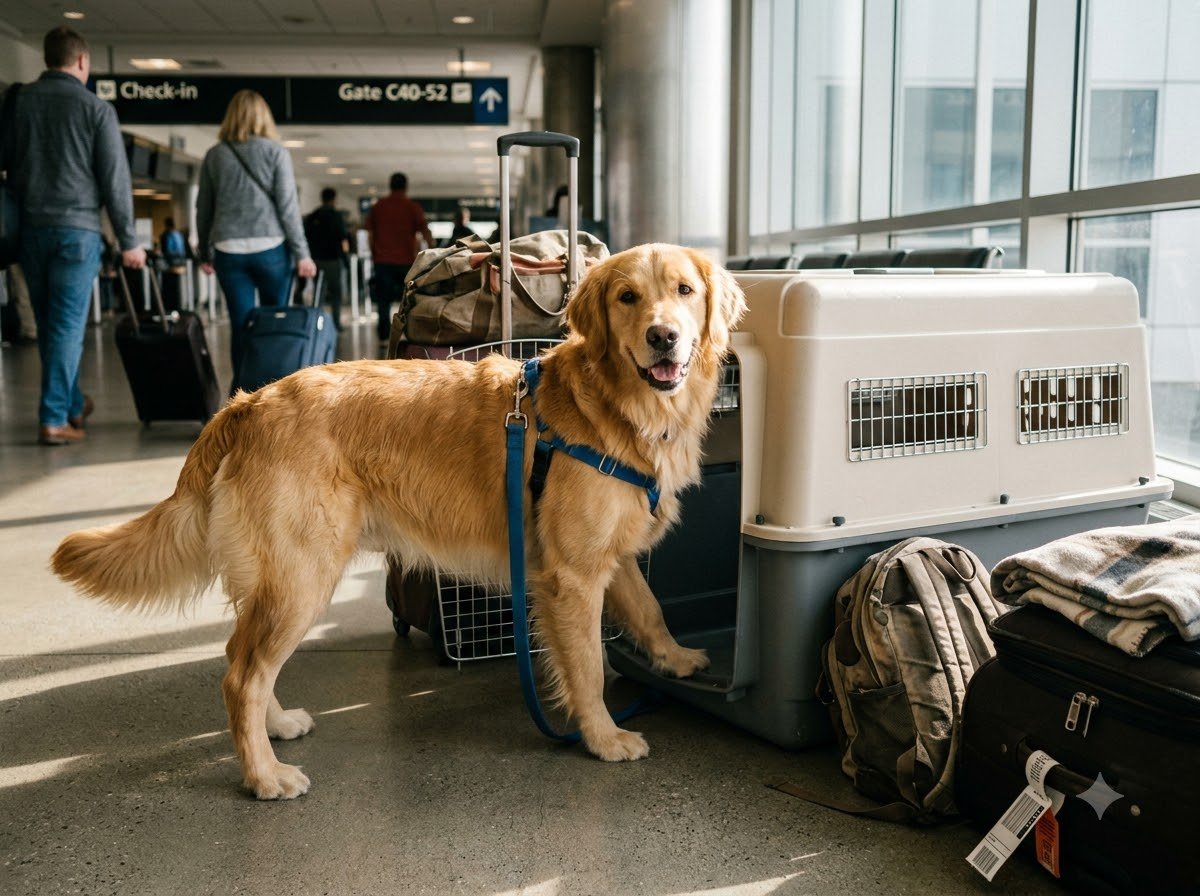
A large dog that doesn’t fit under an airline seat has to travel as cargo or “manifest cargo” on an international flight, and the sticker shock for many first-time owners isn’t the airfare itself — it’s realizing how many separate costs stack on top of it.
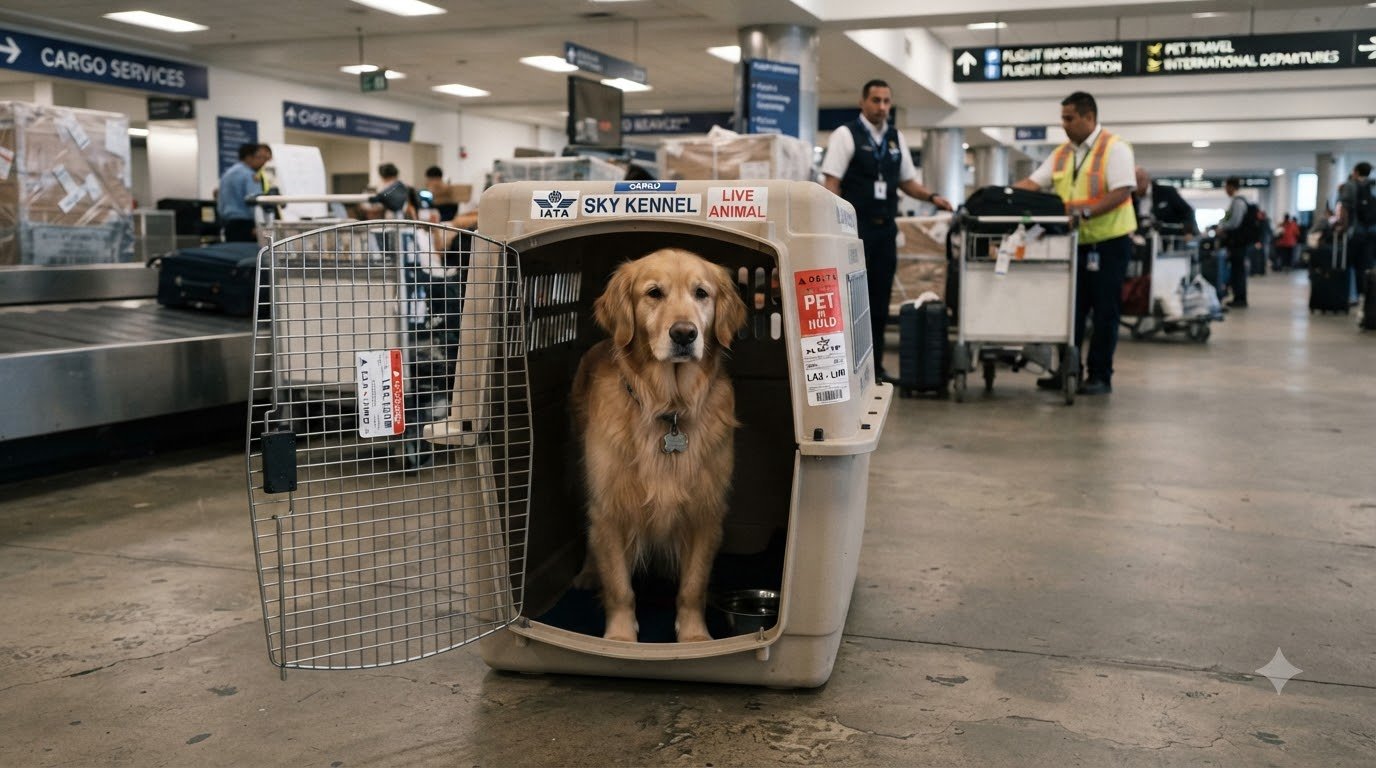
Why Do Large Dogs Cost So Much More to Fly?
Airlines charge for cargo pet travel based on the combined weight of the dog and its IATA-compliant crate, which for a large breed can be substantial. Unlike small pets that travel in the cabin as carry-on, cargo travel involves handling by a separate logistics process, temperature-controlled holding areas, and often a live-animal handling fee — all of which are priced into the cost well beyond a simple ticket price.
What Costs Typically Make Up the Total?
- Airline cargo fee: Based on the dog and crate’s combined weight or dimensional weight, whichever is greater
- IATA-compliant crate: A properly sized, airline-approved crate for a large dog can itself cost several hundred dollars if purchased new
- Health certificate and vaccination records: Required veterinary paperwork, usually needed close to the travel date
- Import permits or documentation fees: Vary significantly by destination country
- Ground handling and agent fees: Some airports require a licensed handling agent for live cargo, adding another line item
- Optional pet relocation service fees: If you use one, they typically handle crate sourcing, paperwork, and logistics for an additional service fee
How Can You Get an Accurate Estimate?
Because pricing depends so heavily on your dog’s exact weight and crate dimensions, the origin and destination airports, and the specific airline’s cargo policy, there’s no single number that applies broadly. The most reliable way to budget is to get a direct quote from the airline’s cargo division (separate from passenger booking) or from a pet relocation service, based on your dog’s actual measurements and your specific route.
What Can Increase or Decrease the Cost?
- Route complexity: Direct flights are generally cheaper and less stressful for your dog than routes with multiple connections
- Booking lead time: Last-minute cargo bookings tend to cost more and have less availability, since cargo space is limited per flight
- Season: Some airlines restrict or halt live animal cargo during extreme heat, which can force rebooking onto a different, sometimes costlier, date or route
- Breed restrictions: Brachycephalic (flat-faced) breeds are banned or restricted from cargo travel by many airlines due to breathing-related risk, which may force a different routing or travel method entirely
Is a Pet Relocation Service Worth the Added Cost?
For international travel specifically, a relocation service adds cost but can meaningfully reduce risk, since they handle crate compliance, country-specific import paperwork, and airline coordination — areas where a documentation mistake can mean a delayed or refused pet at the destination. For owners flying a large dog internationally for the first time, the added cost is often worth the reduced logistical risk, though it’s a reasonable trade-off to weigh against your own comfort navigating the process directly.