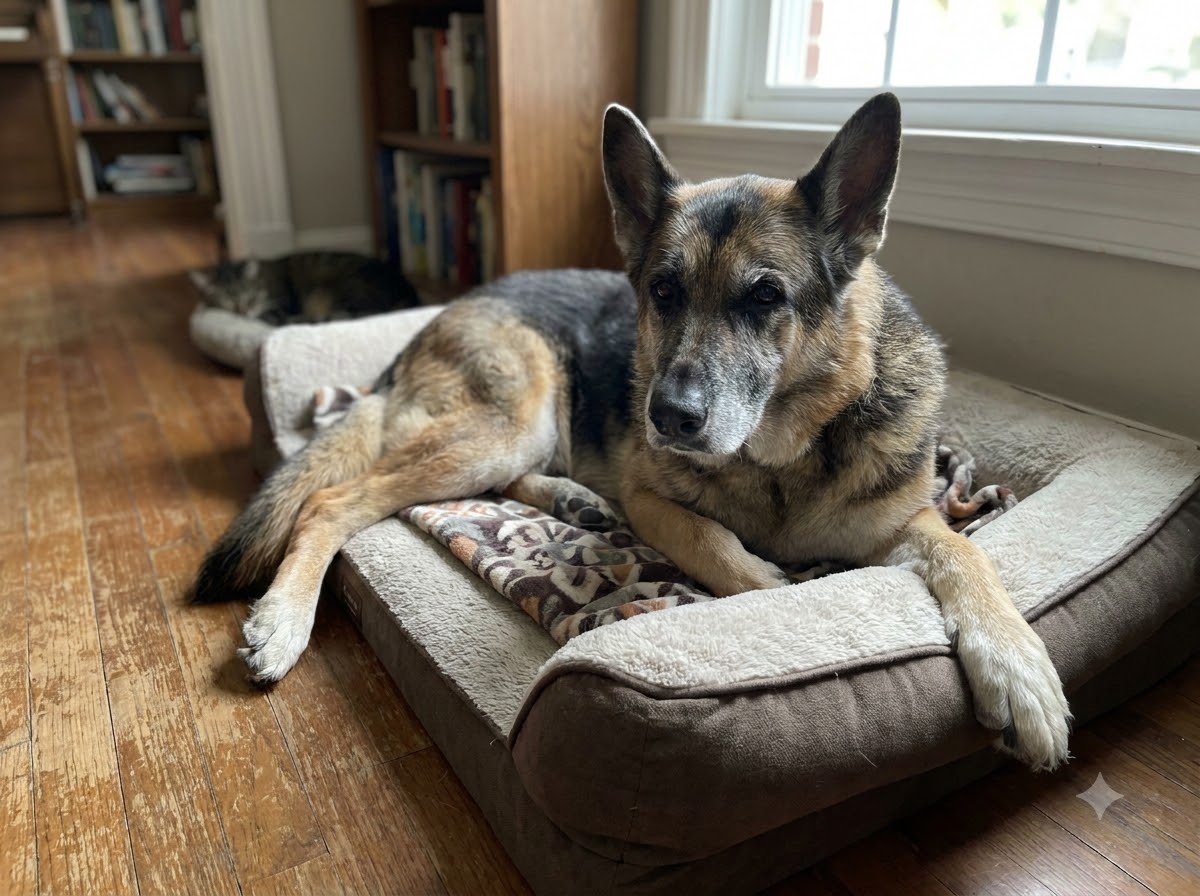
German Shepherds carry one of the best-documented breed predispositions to hip dysplasia in veterinary medicine, and it’s often the defining factor in how this breed’s senior years go. Watching for early mobility changes — rather than waiting for an obvious limp — gives the most room to manage it well.
Why Is Hip Dysplasia Such a Common Issue for This Breed?
Hip dysplasia is a structural looseness in the hip joint that develops during growth, and German Shepherds have one of the highest documented rates of any breed. It doesn’t always cause symptoms early, which is why many dogs seem fine through adulthood before pain becomes noticeable in the senior years as arthritis develops around the already-imperfect joint.
What Other Mobility Issues Are German Shepherds Prone To?
- Degenerative myelopathy — a progressive spinal cord condition causing gradual hind-limb weakness, more common in this breed than most
- Elbow dysplasia — often overlooked since hip issues get more attention, but a real contributor to front-end lameness
- General large-breed joint wear, compounded by the breed’s naturally high drive and activity level throughout life
How Can You Support Mobility in an Aging German Shepherd?
- Ask for hip X-rays at the first sign of hindquarter stiffness rather than assuming it’s ordinary aging
- Keep the dog lean — excess weight disproportionately worsens hip dysplasia symptoms
- Add ramps for stairs and vehicles, since jumping motions load the hips hardest
- Discuss joint supplements or prescription pain management early rather than after mobility has already declined significantly
- Consider hydrotherapy, which lets the breed’s naturally high exercise drive continue with far less joint impact