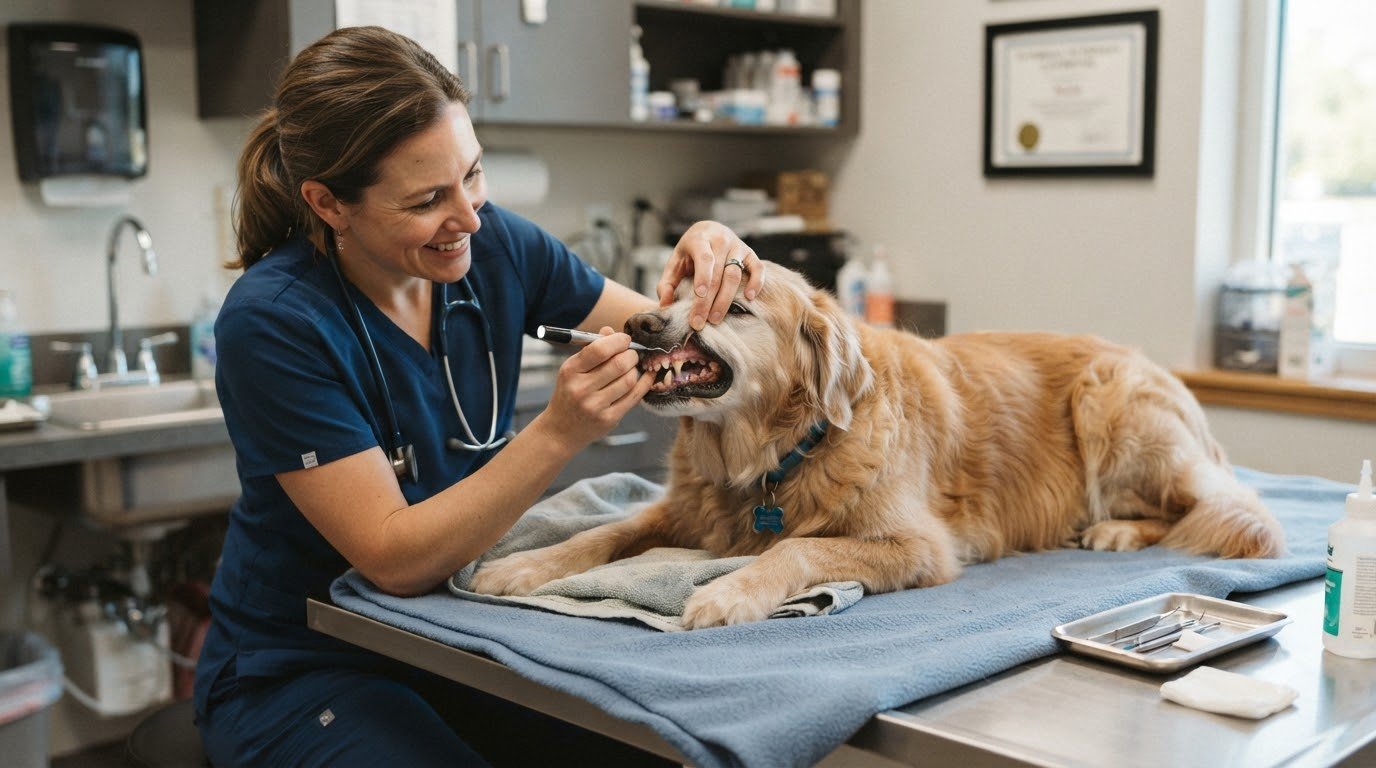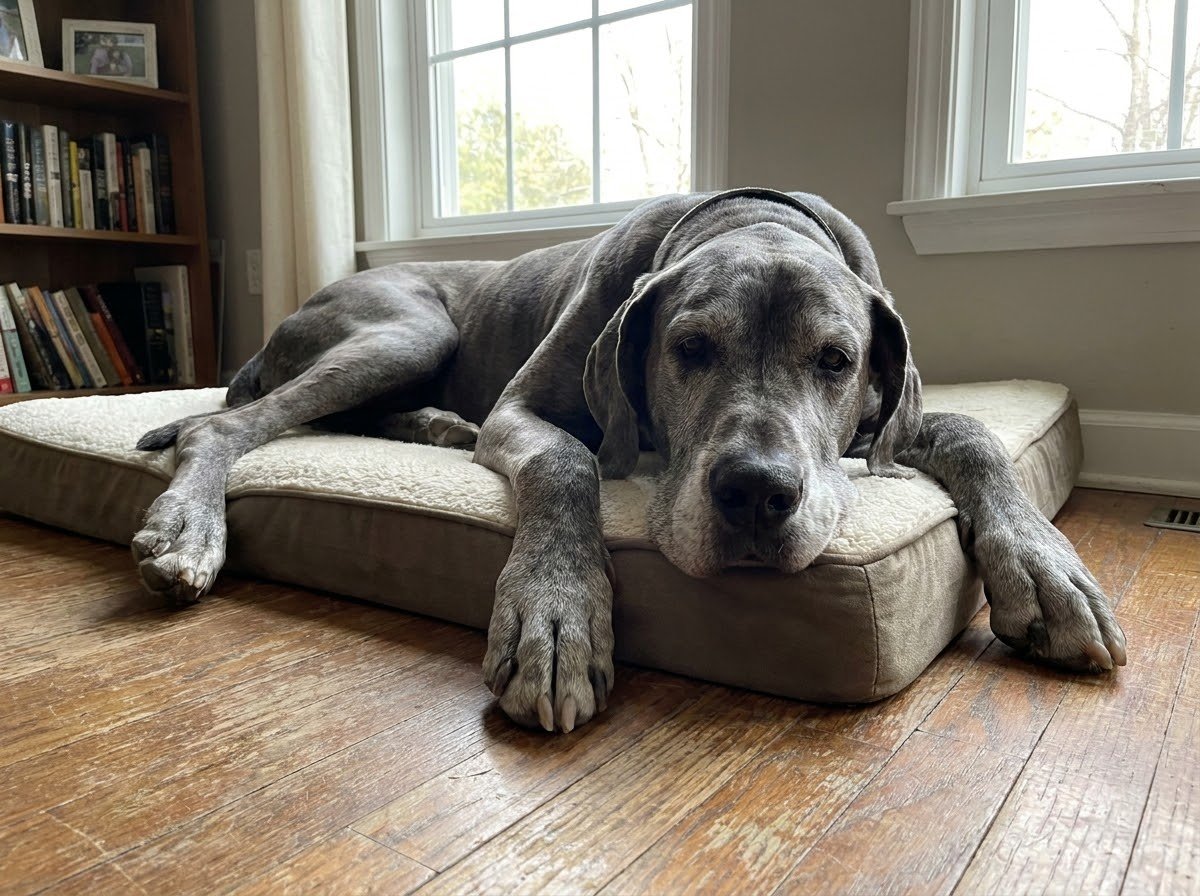
Some of the behavior changes owners write off as “just getting old” — a dog that seems confused in familiar rooms, or suddenly barks at nothing — can actually be signs of canine cognitive dysfunction, a real, diagnosable condition rather than an inevitable part of aging.

What Is Canine Cognitive Dysfunction?
Canine cognitive dysfunction (CCD) is a progressive condition affecting an aging dog’s memory, learning, awareness, and perception, driven by changes in the brain that share real similarities with Alzheimer’s disease in humans. It’s not simply “slowing down” — it’s a distinct medical condition that a vet can screen for, and one that tends to be under-recognized because its early signs overlap so closely with ordinary aging.
What Are the Early Signs Owners Often Miss?
- Appearing disoriented or “lost” in familiar spaces, like staring at a wall or getting stuck in a corner
- Changes to the sleep-wake cycle — restlessness or pacing at night, sleeping more during the day
- Reduced interest in interaction with family members or other pets
- Forgetting previously well-known house-training habits
- New anxiety, clinginess, or unexplained vocalization
Veterinarians sometimes use the acronym DISHA (Disorientation, Interaction changes, Sleep-wake changes, House-soiling, Activity changes) to organize these signs, since spotting a pattern across categories is more meaningful than any single behavior alone.
How Is It Different From Normal Aging?
Normal aging can bring some slowing down — less enthusiasm for long walks, more naps. Cognitive dysfunction goes further: it involves a genuine breakdown in memory and awareness, not just reduced energy. A dog that’s simply tired will still recognize its owner, its home, and its routine; a dog with more advanced CCD may struggle with all three. If changes are new, progressive, and involve confusion rather than just fatigue, it’s worth raising with a vet specifically rather than assuming it’s routine aging.

How Do Vets Diagnose It?
There’s no single blood test for CCD. Vets typically diagnose it by ruling out other medical causes for the same symptoms — pain, vision or hearing loss, thyroid issues, or other illnesses that can look similar — combined with an owner-reported history of behavior changes. Being ready to describe specific examples, and roughly when they started, makes this conversation much more productive.
What Can Help a Dog With Cognitive Decline?
- Keep a consistent daily routine — unpredictability tends to worsen disorientation
- Discuss enrichment activities with your vet, like short training refreshers or food puzzles suited to your dog’s ability
- Ask about diets formulated to support brain health in senior dogs, since some contain antioxidants studied for this purpose
- Bring up medication options with your vet if symptoms are affecting your dog’s quality of life — some are specifically studied for slowing CCD progression
- Make the home more predictable and safe, such as keeping furniture in the same place and using night lights for a disoriented dog
There’s no cure for canine cognitive dysfunction, but catching it early and working with your vet on a management plan can meaningfully support your dog’s comfort and quality of life in its senior years.