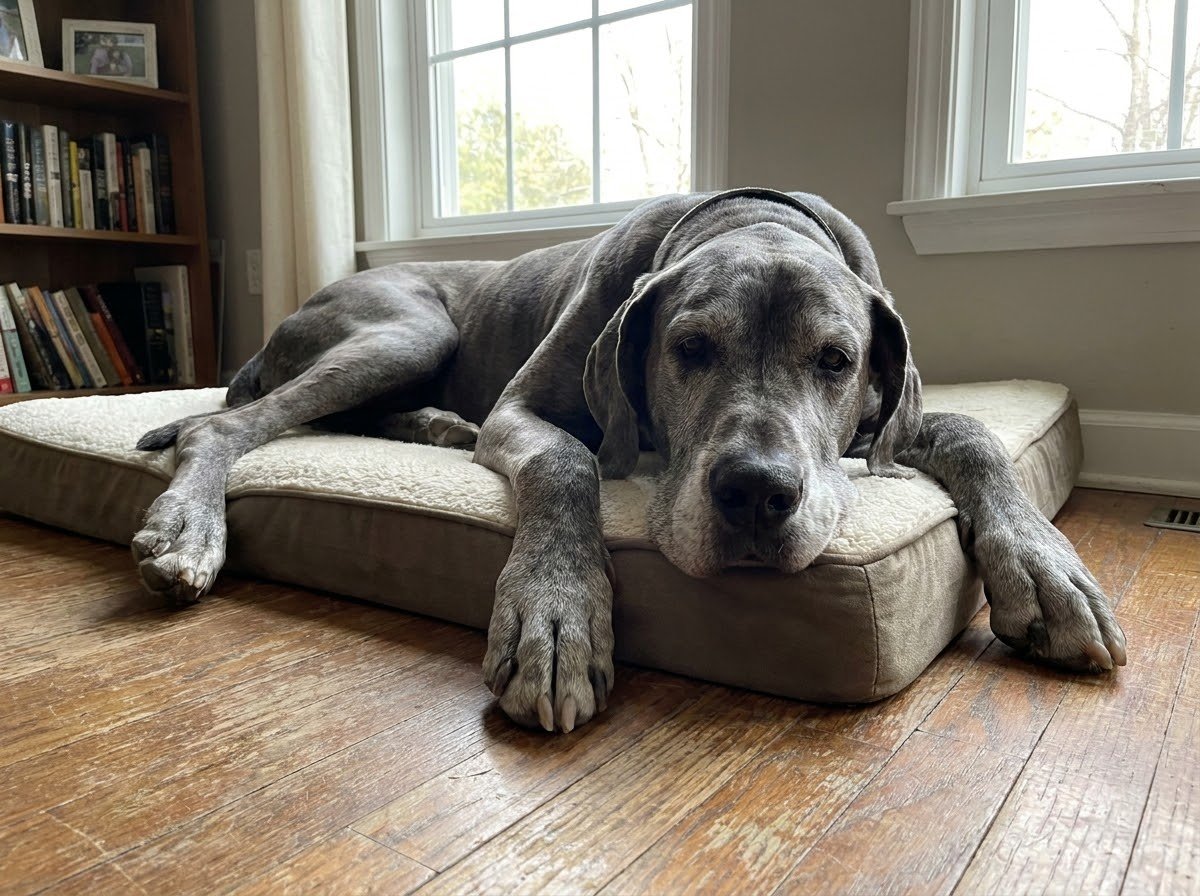
Great Danes are considered senior by around 5-6 years old — years earlier than small breeds — and typically live only 7-10 years total. This isn’t a training or care failure; it reflects a well-documented pattern across giant breeds, where extremely rapid puppyhood growth appears to come with a tradeoff of accelerated aging and a shorter overall lifespan.
Why Do Giant Breeds Age and Decline Faster Than Small Dogs?
Across nearly all dog breeds, size and lifespan are inversely correlated, and Great Danes sit at the extreme end of that pattern. Giant breeds grow to adult size in a fraction of the time it takes a human or even a medium dog, and that rapid cellular growth appears to be linked to earlier onset of age-related disease, particularly cancer and heart conditions.
What Health Issues Are Great Danes Especially Prone to With Age?
- Dilated cardiomyopathy — a heart condition disproportionately common in giant breeds, worth screening for even before obvious symptoms appear
- Bloat (GDV) — a lifelong risk for deep-chested breeds, not something that lessens with age
- Osteosarcoma (bone cancer) — significantly more common in giant breeds than small ones
- Joint wear — simply carrying a giant frame accelerates wear on hips and elbows over a compressed lifespan
How Should Owners Adjust Care for an Aging Great Dane?
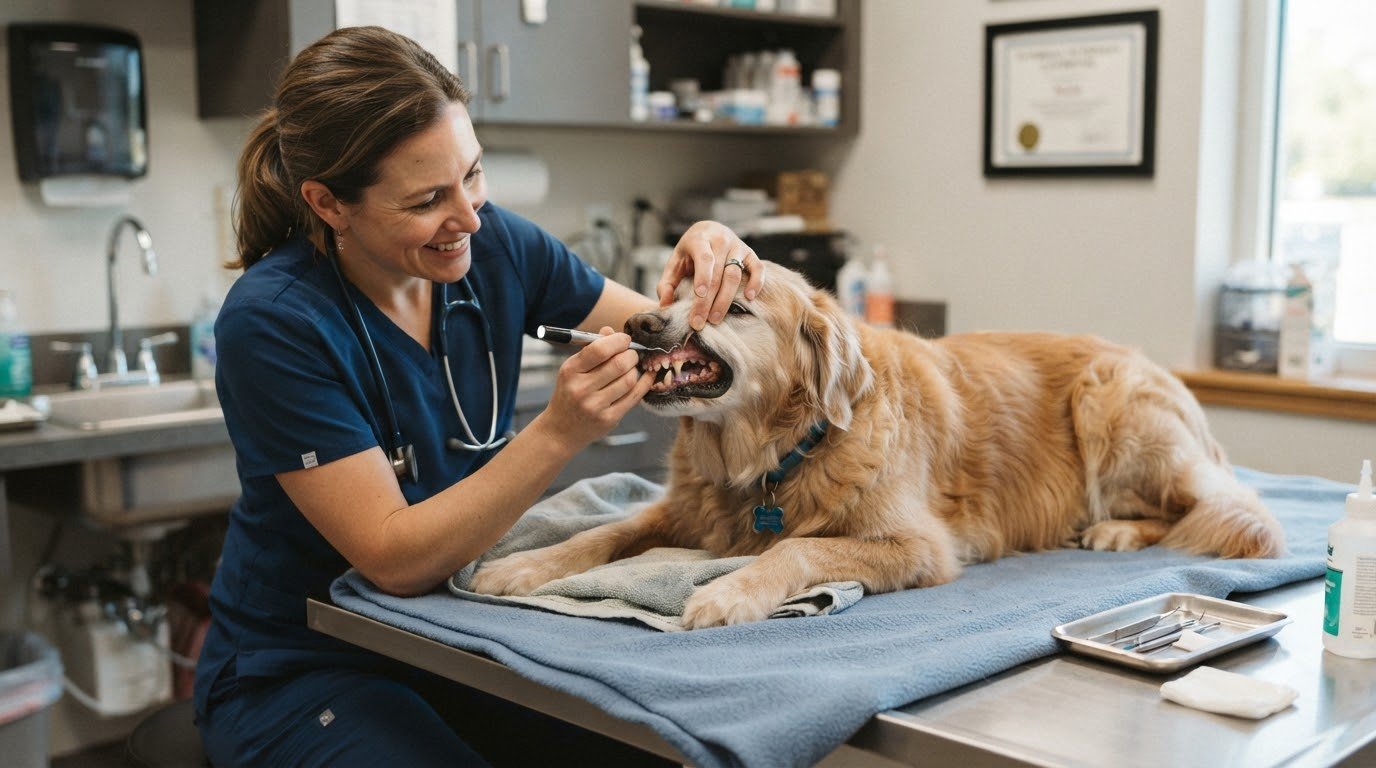
- Start senior wellness visits earlier than you would for a medium or small breed — around 5-6 years rather than 7-plus
- Ask your vet about cardiac screening, given the breed’s elevated risk
- Feed multiple smaller meals rather than one large one, and avoid vigorous exercise right after eating, to reduce bloat risk
- Adjust calories as activity naturally decreases, watching body condition closely rather than relying on a fixed portion
- Invest early in supportive furniture (ramps, orthopedic beds) given how much weight-bearing strain a giant frame puts on joints