Weight loss in cats isn’t just a slower version of weight loss in dogs — cats have a specific vulnerability that makes rapid or severe calorie restriction genuinely risky, which is exactly why “just feed less” isn’t safe advice for an overweight cat.
Why Can’t You Just Cut a Cat’s Food Drastically?
If a cat’s body fat is mobilized too quickly — which can happen with sudden, severe calorie restriction or a cat that simply stops eating — the liver can become overwhelmed processing the fat, leading to a serious condition called hepatic lipidosis (fatty liver disease). This is a real risk specific to cats, and it’s why any weight-loss plan for a cat needs to be gradual and ideally guided by a vet, rather than an abrupt diet change.
How Much Weight Loss Per Week Is Considered Safe?
Veterinary guidance generally recommends a slow, steady pace — often around 0.5-2% of body weight per week — rather than an aggressive timeline. For an overweight cat, this usually means the weight-loss process takes months, not weeks, and that’s expected and appropriate rather than a sign the plan isn’t working.
What Actually Helps an Indoor Cat Lose Weight?
- A vet-guided target calorie amount: Rather than guessing at a reduced portion, get a specific daily calorie target based on your cat’s ideal weight
- Measured feeding: Use a kitchen scale or measuring cup consistently rather than eyeballing portions, which is one of the most common places a diet plan quietly fails
- A weight-management or higher-protein food: These are formulated to help a cat feel satisfied on fewer calories, which matters a lot for compliance
- Reduced treats, or lower-calorie treat options: Treats can add up to a meaningful share of daily calories without an owner realizing it
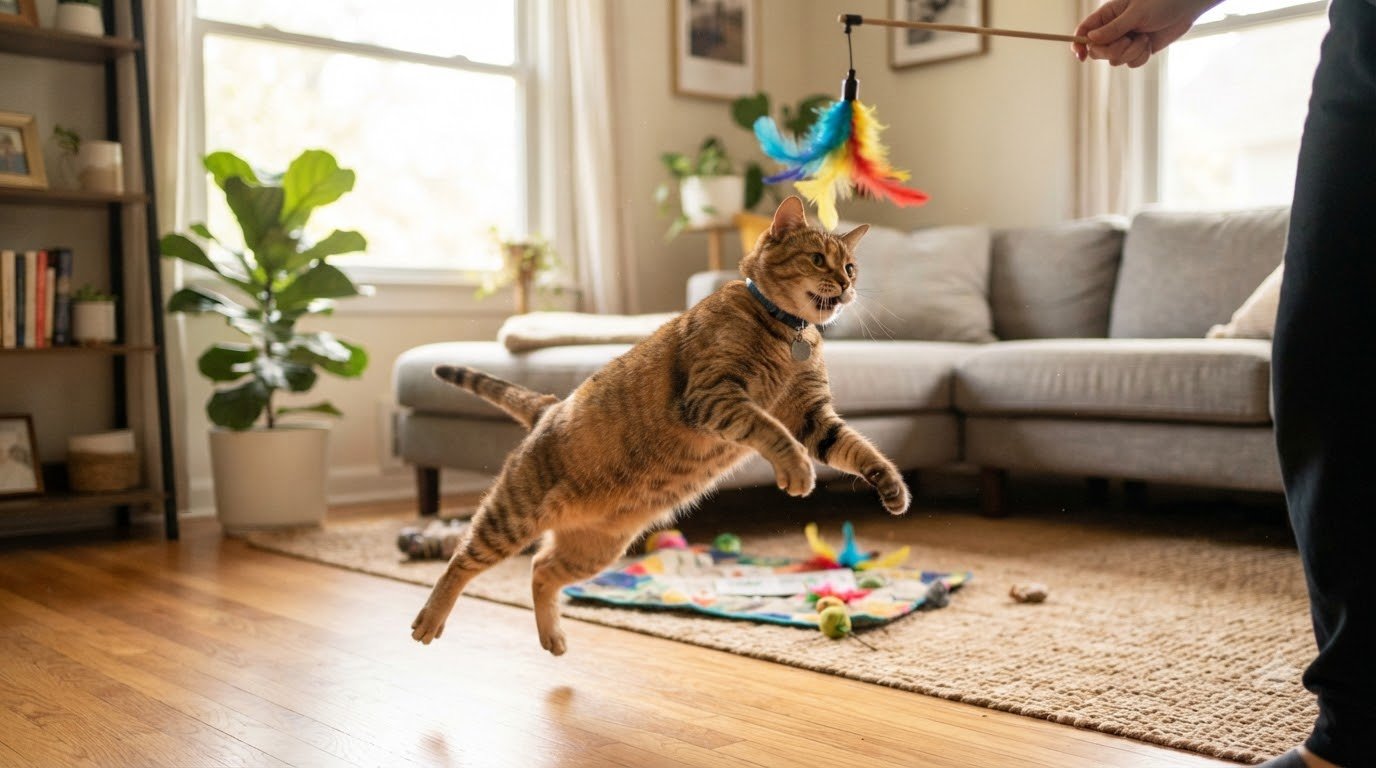
- More activity through play, not forced exercise: Cats respond much better to short bursts of interactive play than to being physically pushed to move
How Do You Add Activity Without Overwhelming an Indoor Cat?
- Use wand toys or laser pointers for several short (2-5 minute) sessions across the day rather than one long session
- Introduce food puzzles or slow feeders that require some physical effort to access meals
- Place food and water in a different room from resting areas to encourage some natural movement
- Add vertical space like cat trees, which encourage climbing and natural activity patterns
- Rotate toys periodically, since novelty tends to re-engage interest better than the same toy every day
What’s the Right First Step?
Before starting any weight-loss plan, a vet visit is worth it — partly to get a genuine target calorie range, and partly to rule out medical causes of weight gain like hypothyroidism or other metabolic issues that diet changes alone won’t fix. Once a plan is in place, patience is the main ingredient: slow, steady weight loss is both safer and more likely to actually stick for an indoor cat.