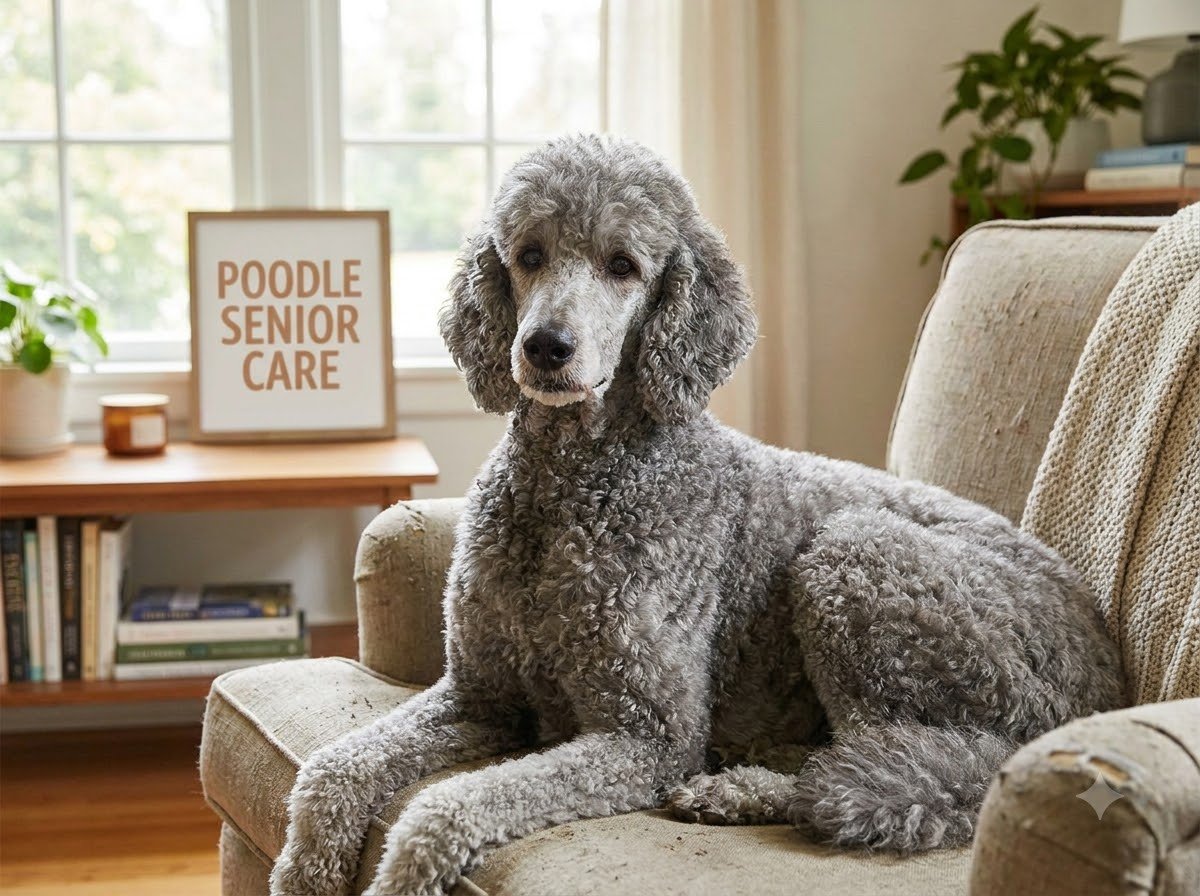
Poodles bring a specific combination of needs into their senior years: a coat that requires consistent grooming regardless of age, a joint profile that varies significantly by size (Toy, Miniature, or Standard), and — as one of the most intelligent dog breeds — an unusually strong benefit from ongoing mental stimulation as cognitive changes become more likely.
Why Does Grooming Become More Critical for Aging Poodles?
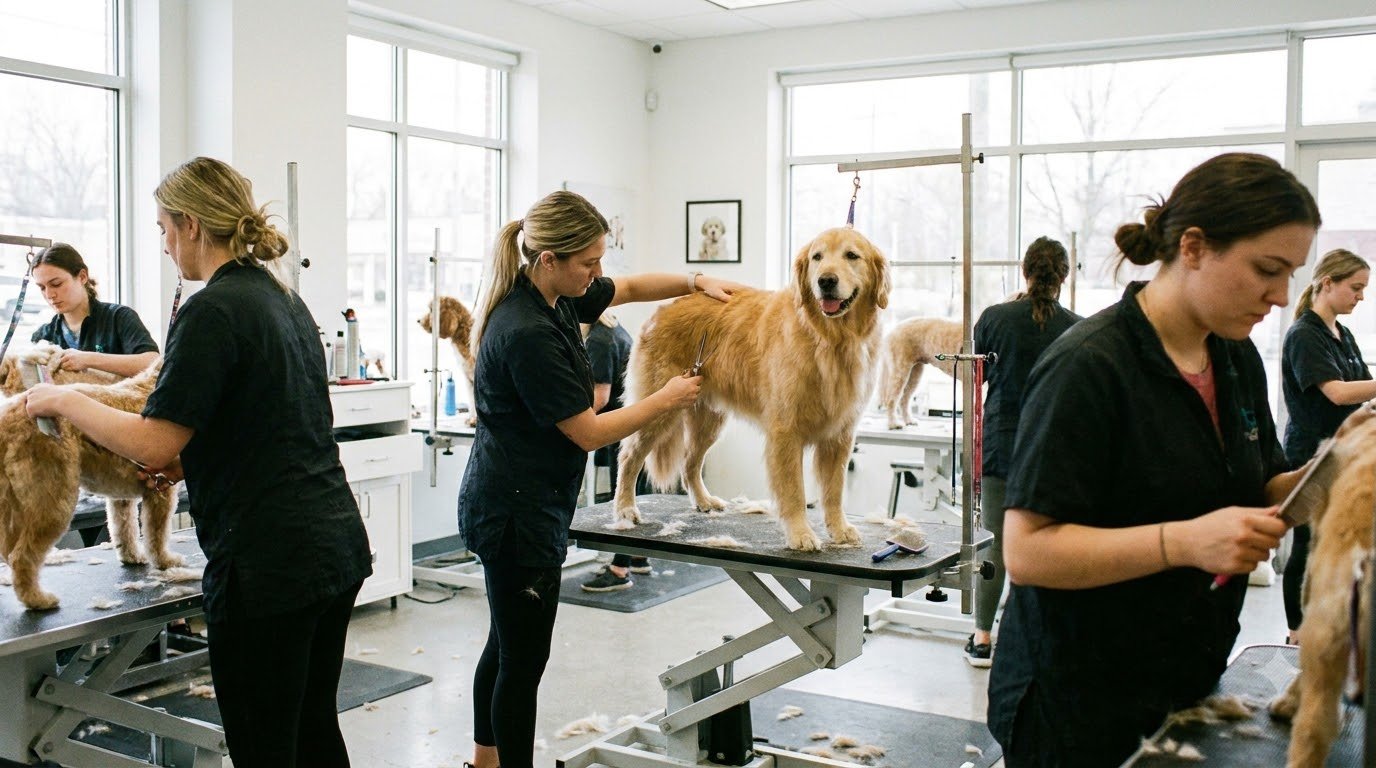
A Poodle’s curly coat grows continuously and mats easily without regular maintenance — something manageable when a dog is agile enough to shift positions and tolerate handling easily. As joint stiffness or reduced flexibility sets in with age, self-grooming becomes harder, making consistent professional or at-home grooming more important, not less, in the senior years.
What Joint and Mobility Issues Should Owners Watch For?
- Patellar luxation — a kneecap issue seen across all Poodle sizes, which can worsen or become more symptomatic with age
- Hip dysplasia — more relevant for Standard Poodles given their larger size, similar to other medium-large breeds
- General stiffness — even without a specific diagnosed condition, reduced flexibility affects a Poodle’s ability to maintain its own coat and hygiene
How Can You Support Cognitive Health in an Aging Poodle?
- Keep up regular mental stimulation — puzzle toys, new commands, varied walking routes — rather than assuming a senior dog needs less engagement
- Watch for early cognitive changes: disorientation, altered sleep patterns, or house-training lapses, and mention them to your vet rather than dismissing them as “just old age”
- Maintain a predictable routine, which tends to reduce anxiety in dogs experiencing early cognitive changes
- Combine physical and mental exercise where possible — scent games during walks engage both at once