Air purifiers are genuinely useful for pet dander and odor, but a lot of what makes one work well isn’t obvious from packaging alone — the marketing term “pet air purifier” doesn’t guarantee the two features that actually matter for pet owners: real particle filtration and real odor filtration.
What’s the Difference Between Dander Filtration and Odor Filtration?
These are two separate jobs handled by two separate filter types, and a purifier needs both to fully address a pet household:
- HEPA filtration captures airborne particles — dander, hair, dust — by trapping them as air passes through a dense mesh of fibers.
- Activated carbon filtration absorbs gas-phase odor molecules through a chemical process, which is a completely different mechanism than trapping particles.
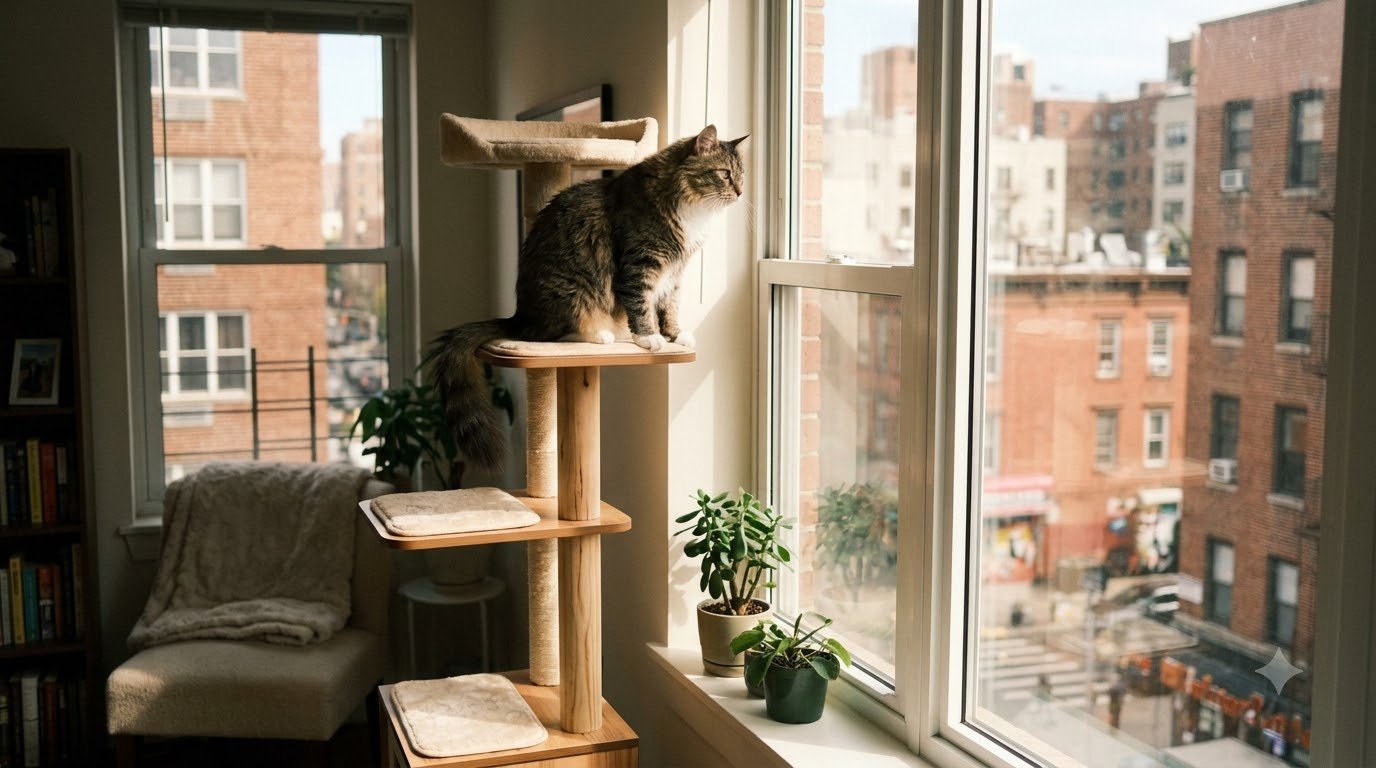
A purifier with only HEPA filtration will reduce visible dust and allergens but won’t meaningfully reduce smell. A purifier with only a thin carbon layer will do little for either job. For a pet household dealing with both dander and odor — a litter box area, for example — you want both stages present, and you want the carbon stage to be substantial rather than a token addition.
What Does “True HEPA” Actually Mean?
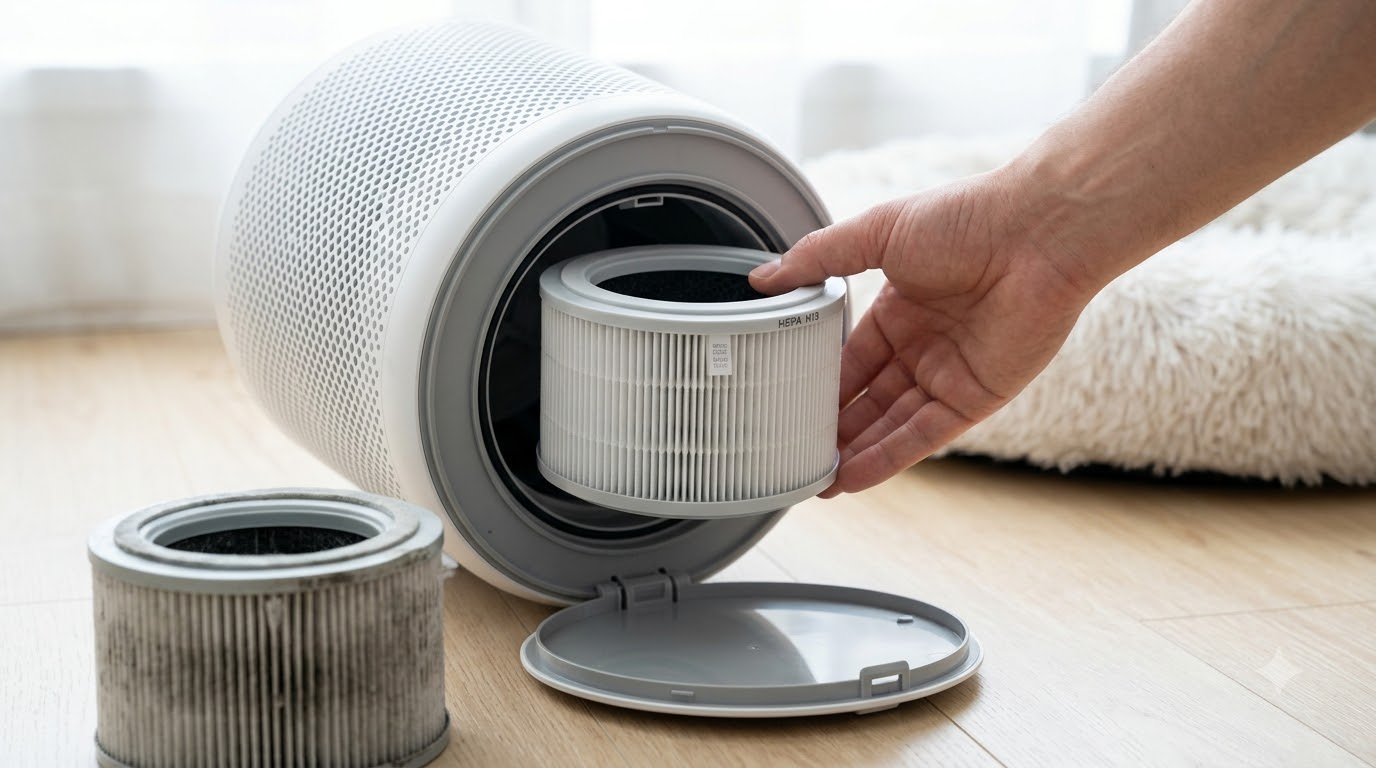
True HEPA (or the equivalent H13 HEPA rating) refers to a filter that captures at least 99.97% of particles at 0.3 microns, the standard used across the industry. “HEPA-type” or “HEPA-like” filters are not held to this standard and generally perform worse. Third-party certifications like AHAM VERIFIDE offer an additional layer of confidence that a manufacturer’s performance claims hold up.
How Do You Read a CADR Rating?
Clean Air Delivery Rate (CADR) measures how much filtered air a purifier delivers per minute, and manufacturers publish separate CADR numbers for smoke, dust, and pollen because filtration efficiency varies by particle type. For pet dander specifically, the dust CADR is the most relevant number, since dander falls in a comparable particle size range. As a rule of thumb, look for a unit rated to fully cover your room size with margin — a purifier technically rated for your square footage at its minimum effective coverage will underperform compared to one with headroom.
What Actually Matters When Choosing One?
- True HEPA or H13-rated filtration for particles, not a vague “HEPA-type” claim
- A real activated carbon stage — thicker carbon pellet beds generally outperform thin carbon-infused foam for odor
- A CADR rated above your actual room size, not just matching it
- Filter replacement cost and availability, since ongoing filter costs add up and a purifier is only as good as its (regularly replaced) filter
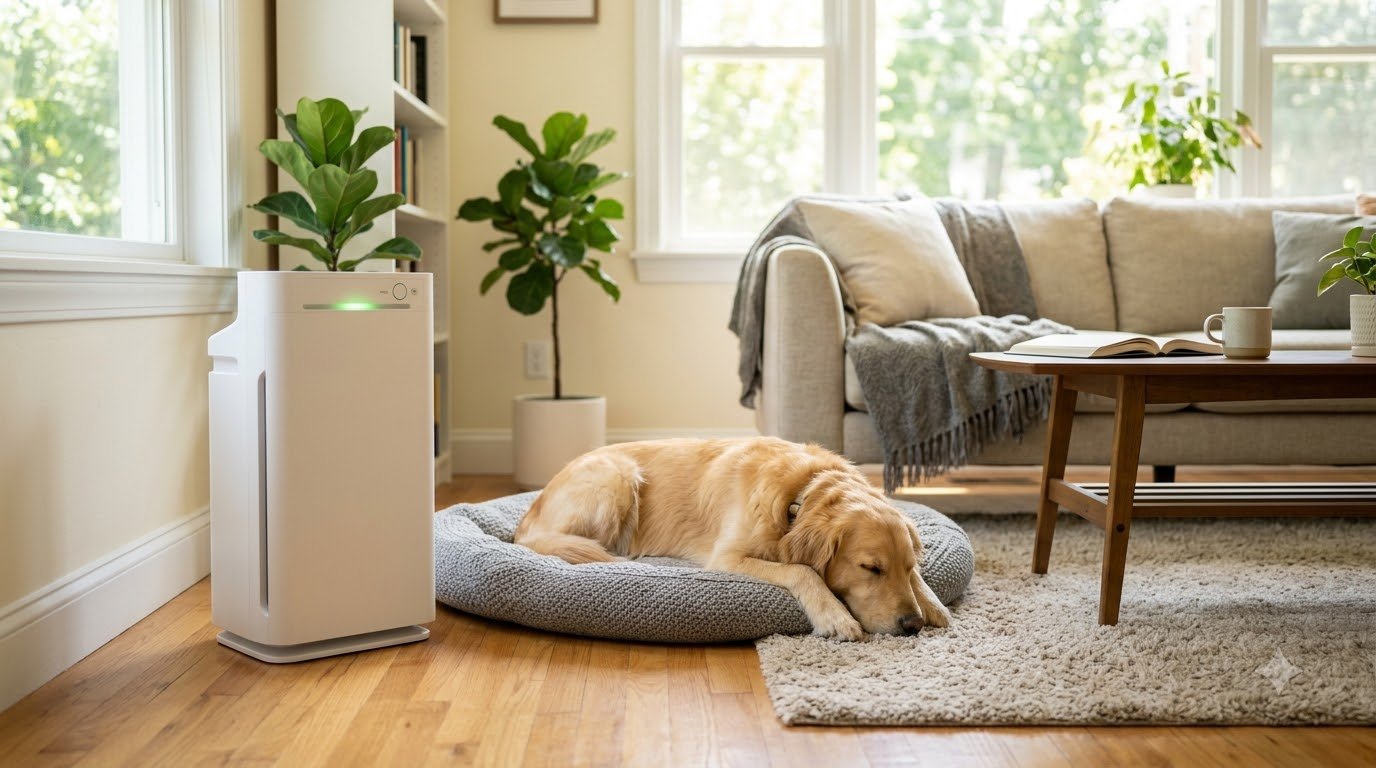
- Placement — near the litter box, cage, or the pet’s main resting area tends to outperform a purifier tucked in a corner of the room
Is an Air Purifier a Substitute for Regular Cleaning?
No — vacuuming with a HEPA-filtered vacuum, regular grooming, and frequent litter box or cage cleaning all reduce the source of dander and odor at the root, while an air purifier manages what’s already airborne. The two work best together, not as alternatives to each other.