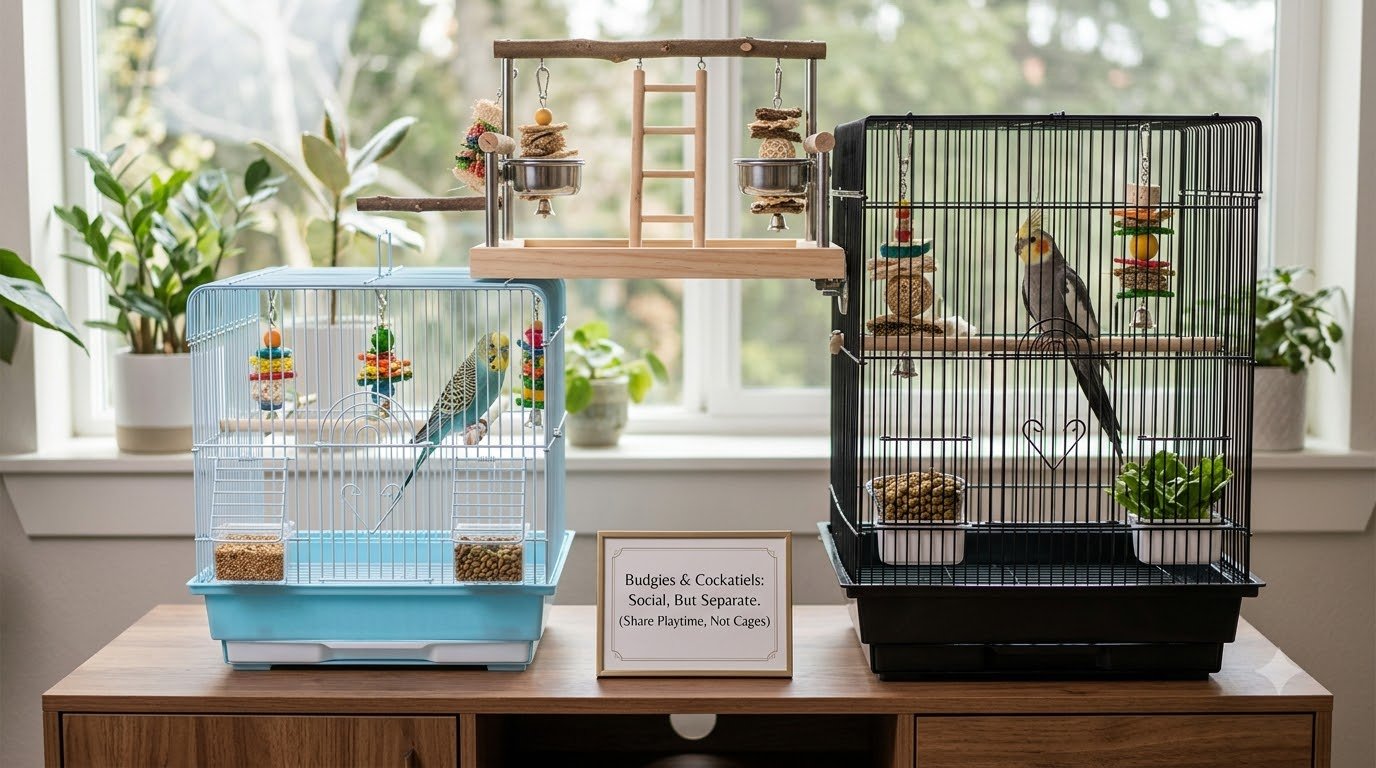
A cage that’s too small, poorly placed, or missing the right accessories is one of the most common — and most fixable — sources of stress for a pet bird.
How Do You Choose the Right Cage Size?
Bigger is almost always better, and width matters more than height since birds fly horizontally:
- Budgies/parakeets: minimum 18x18x18 inches, larger if housing a pair
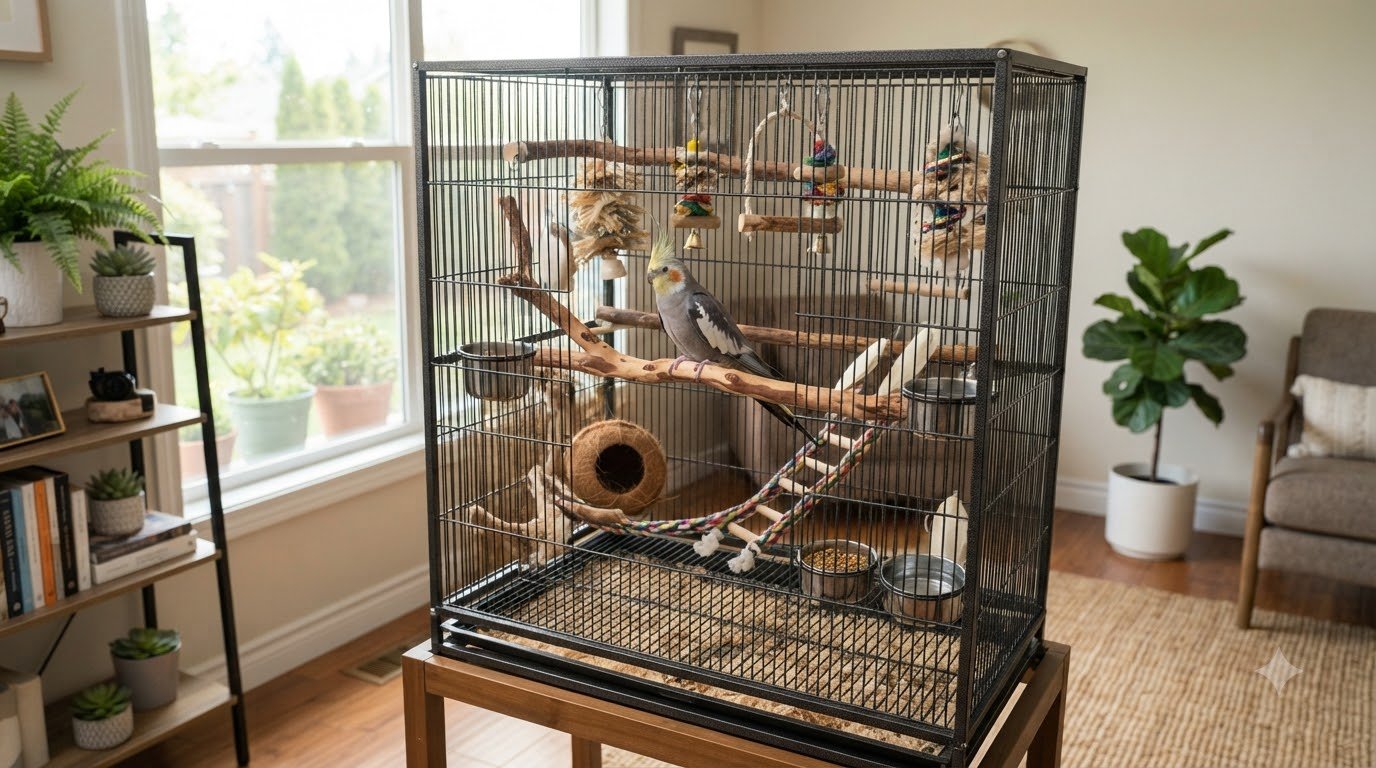
- Cockatiels: minimum 20x20x24 inches given their larger size and longer tail
- Larger parrots: cage requirements scale up significantly — research species-specific minimums before buying
Bar spacing matters as much as overall size — bars too widely spaced create a real escape and head-entrapment risk for small species.
Where Should You Place the Cage?
- A well-trafficked family room where the bird gets regular social exposure, not an isolated spare room
- Away from direct sunlight for extended periods and away from drafty windows or doors
- Away from the kitchen — fumes from cooking, especially overheated non-stick cookware, can be fatal to birds within minutes
- Against a wall on at least one or two sides, which helps most birds feel more secure than a fully exposed, open placement
What Are the Essential Cage Accessories?
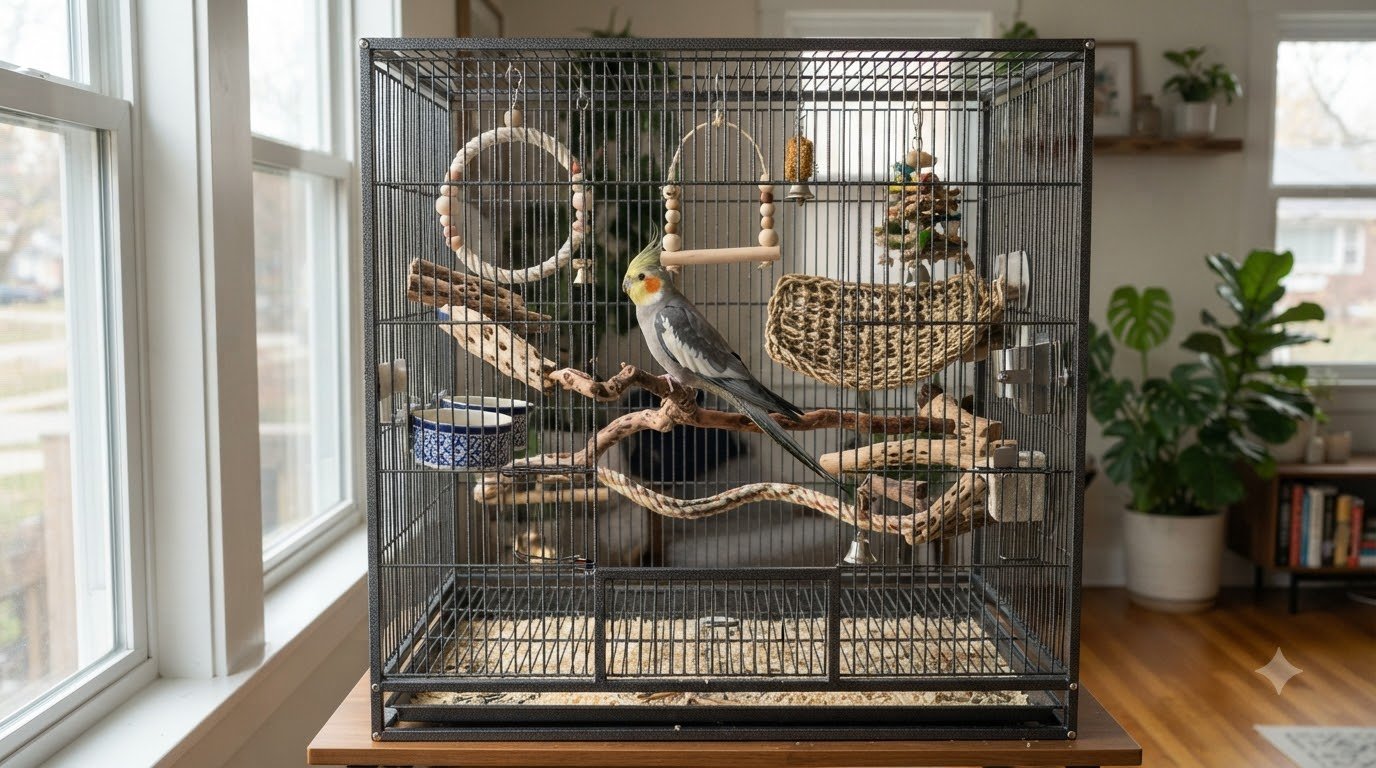
- Varied perches: 2-3 perches of different diameters and materials (natural wood branches, not just uniform plastic dowels) to exercise feet differently
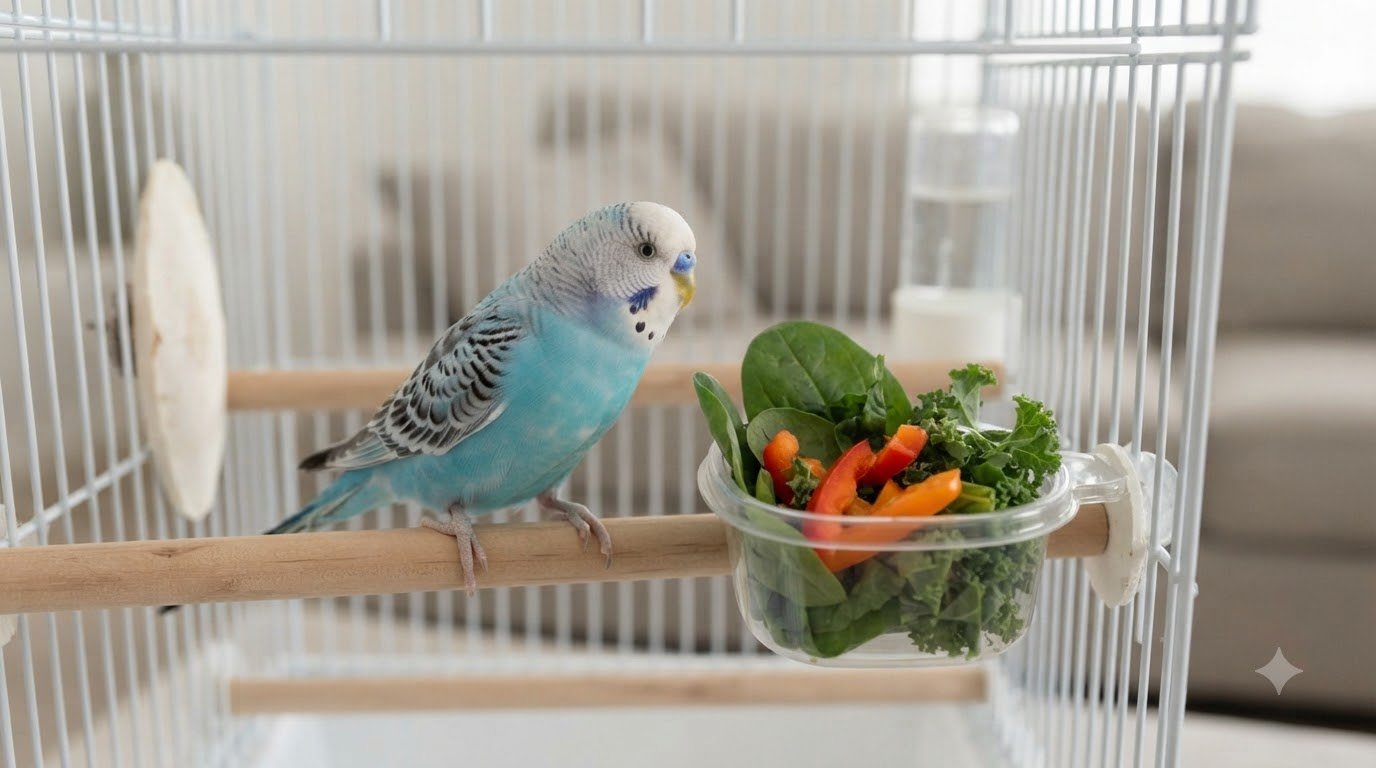
- Multiple food and water dishes: separate dishes for pellets/seed, fresh vegetables, and water, cleaned daily
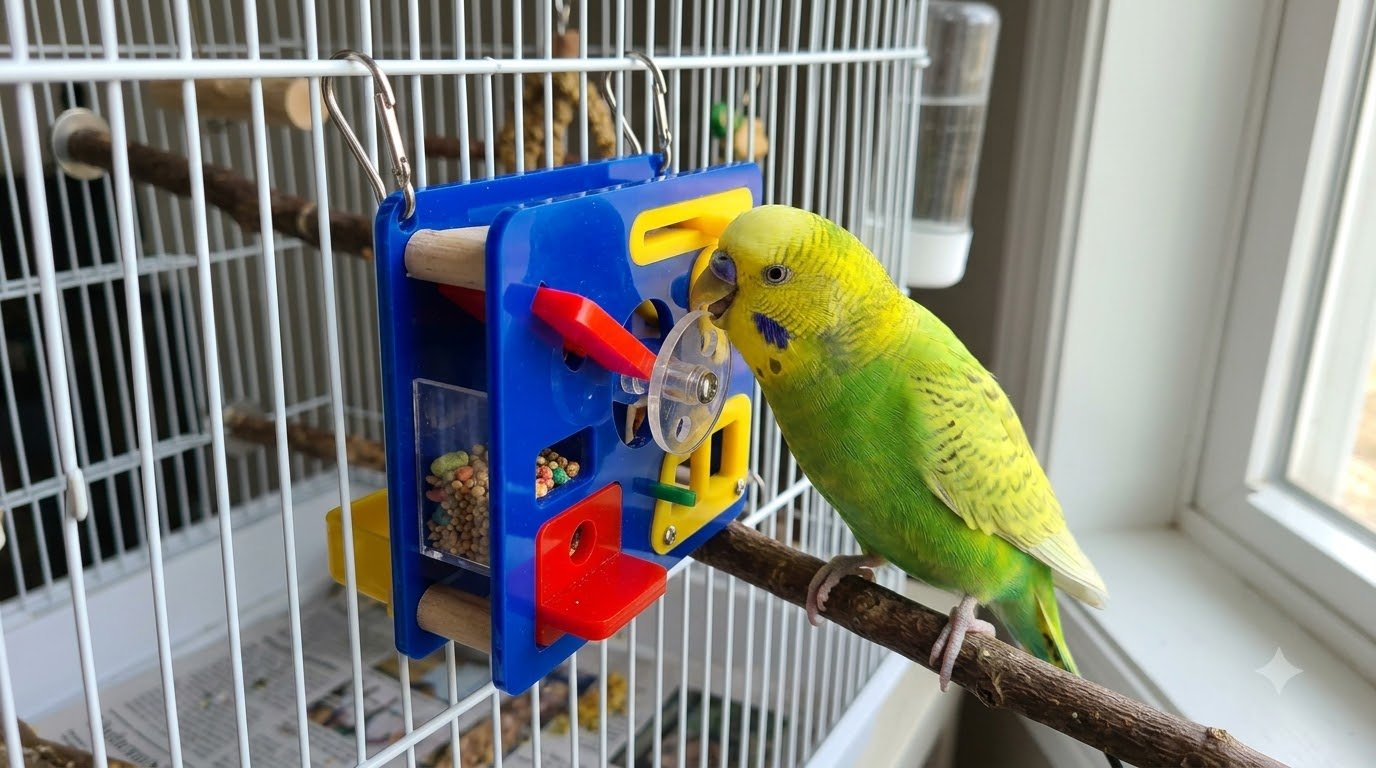
- Toys for mental stimulation: rotate every 1-2 weeks to prevent boredom, especially for intelligent species
- A cage cover: useful for establishing a consistent sleep schedule, since birds generally need 10-12 hours of uninterrupted darkness
What Cleaning Schedule Should You Follow?
- Daily: replace water, spot-clean droppings, wash food dishes
- Weekly: full cage liner change and wipe-down of bars and perches
- Monthly: deep clean with a bird-safe disinfectant, rinsing thoroughly before the bird returns
A well-set-up cage isn’t just about aesthetics — proper spacing, placement, and rotation directly affect a bird’s physical health and behavioral wellbeing over its lifetime.