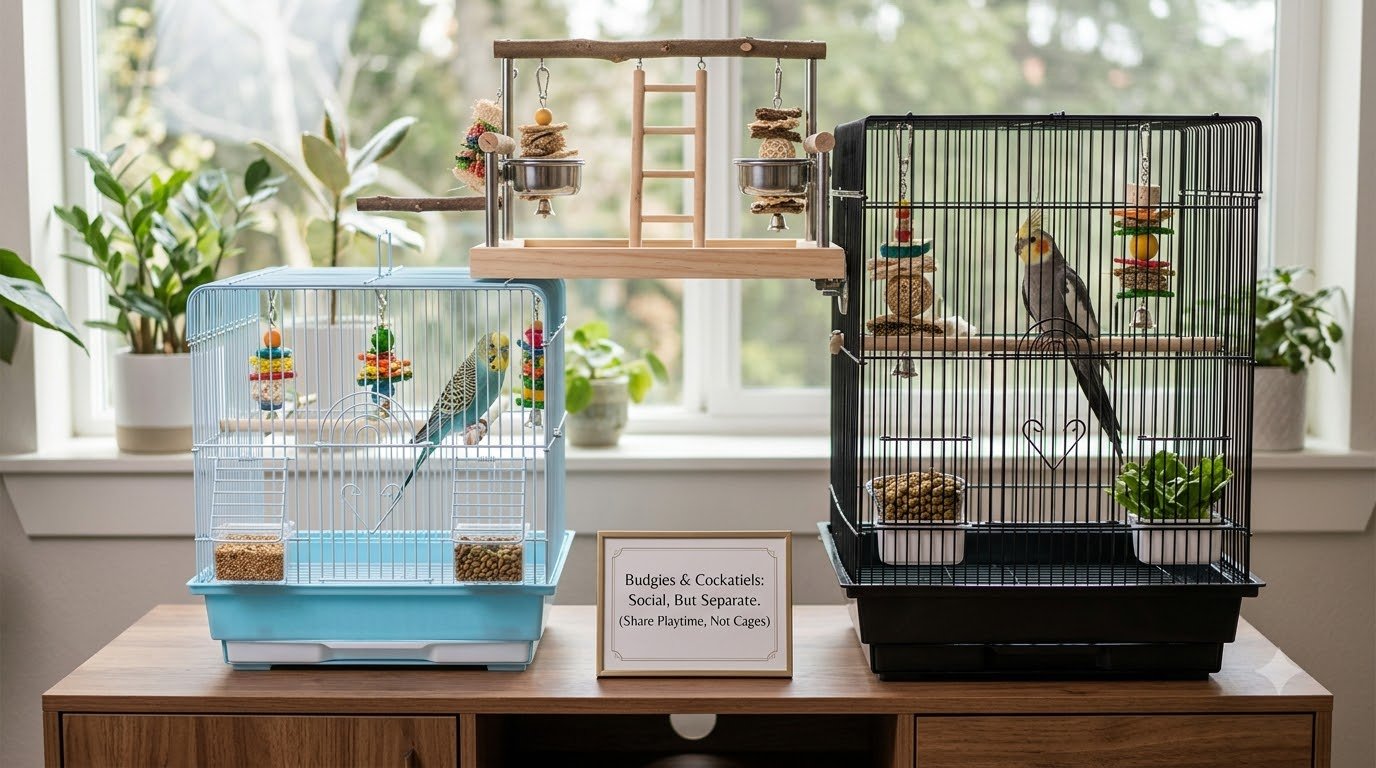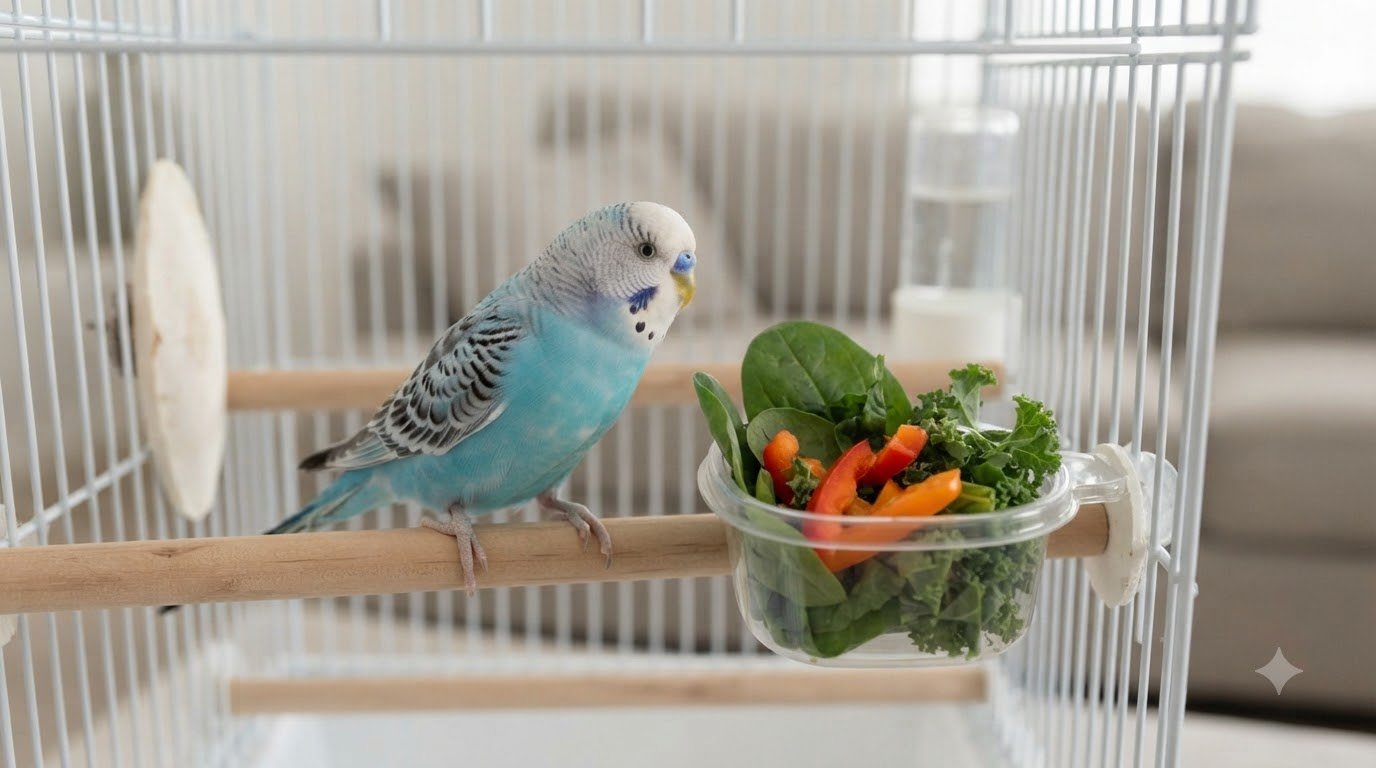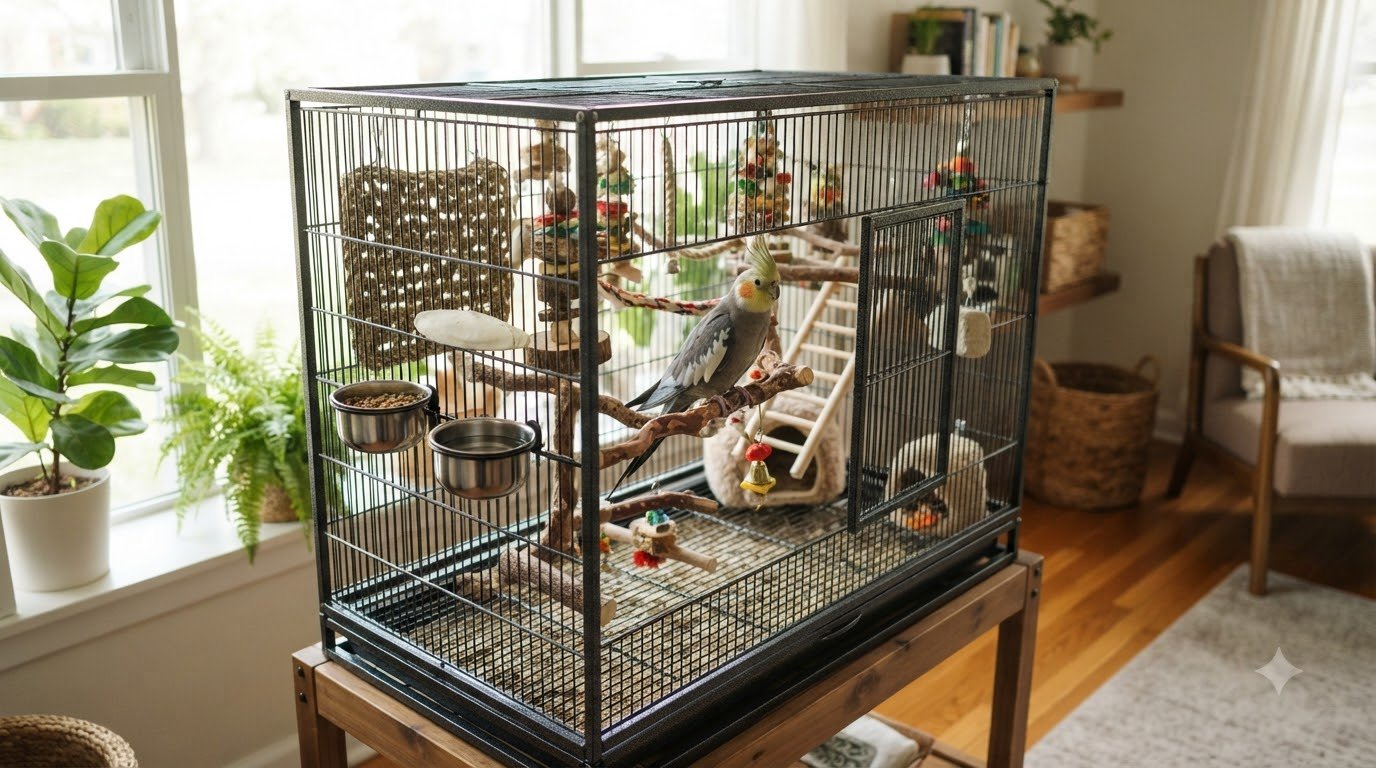
In the wild, birds spend a significant part of their day actively foraging for food — in a cage with a simple dish, that entire behavior disappears, and the resulting boredom is a leading contributor to the destructive and stress-related behaviors many pet bird owners struggle with.
Why Does Boredom Cause Behavioral Problems in Birds?
Wild birds spend hours each day searching for and working to access food. A pet bird with food simply available in a dish has that entire natural behavior pattern removed, along with much of the mental stimulation that comes with it. Without another outlet, that unused mental and physical energy often shows up as problem behaviors — excessive screaming, feather plucking, or destructive chewing on cage bars or furniture.
What Is a Puzzle Feeder, and How Does It Help?
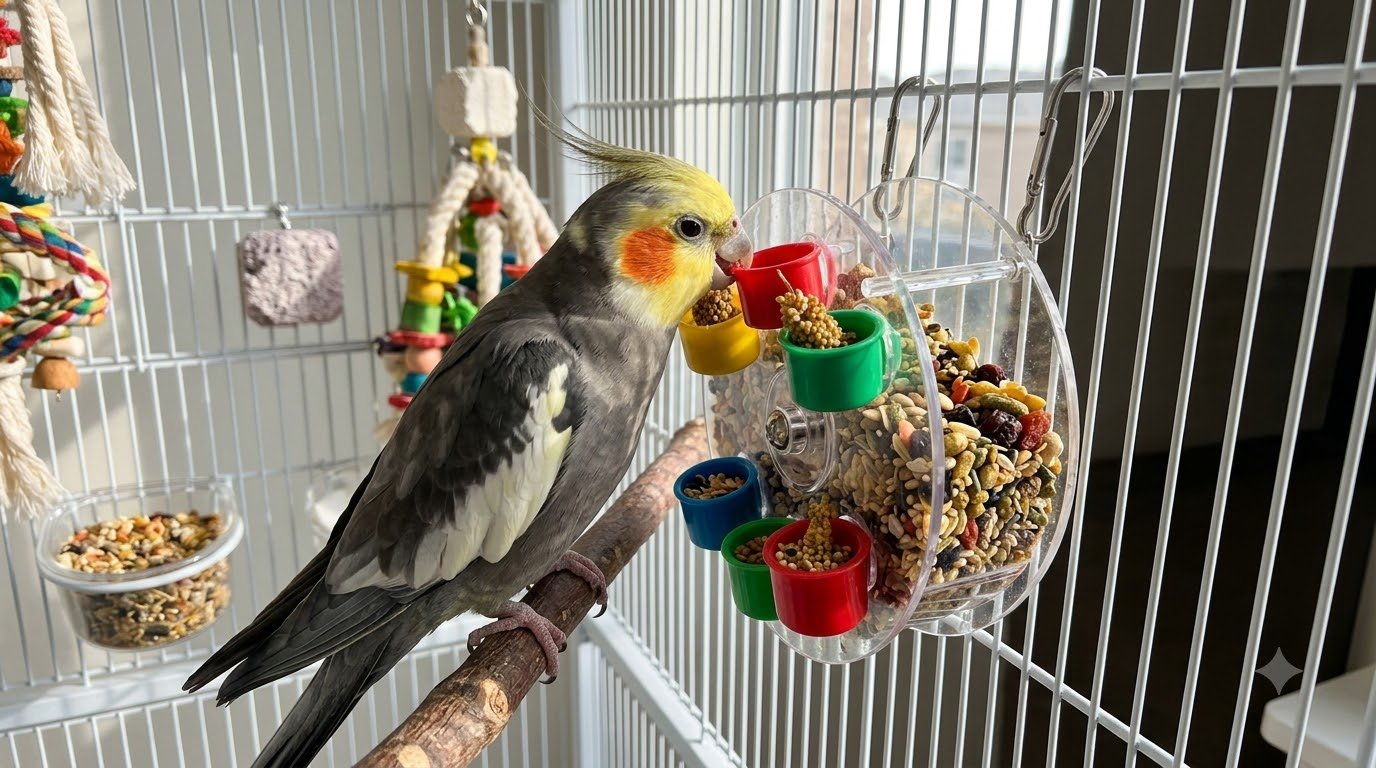
A puzzle feeder is any device that requires a bird to work — manipulating, unwrapping, or solving a small physical challenge — to access food, rather than having it freely available. This re-introduces some of the natural foraging behavior birds are wired for, giving them a productive outlet for mental energy. Puzzle feeders range from simple foraging boxes to more complex, multi-step puzzle toys, and can be scaled to your bird’s experience level.
How Should You Introduce Enrichment to Your Bird?
- Start with an easier puzzle, since a bird encountering its first foraging challenge can get frustrated by something too difficult right away
- Make the first few experiences rewarding by using a favorite treat as the “prize,” so your bird builds a positive association with the effort
- Introduce one new type of enrichment at a time rather than several changes at once, which can be overwhelming for some birds
- Rotate toys and puzzles periodically, since novelty helps maintain engagement over time
- Watch how your bird responds and adjust difficulty — too easy stops being stimulating, too hard can cause frustration instead of engagement
What Other Forms of Enrichment Help Beyond Food Puzzles?
- Foraging trays or shredding materials: Let birds engage in natural shredding and searching behavior outside of mealtime
- Rotating toy selection: Keeping a few toys in the cage at a time and rotating in “new” ones from a stored set keeps novelty high without overwhelming the space
- Supervised out-of-cage time: Time outside the cage in a bird-safe space adds physical activity and mental stimulation that a cage alone can’t fully provide
- Training sessions: Short, positive-reinforcement-based training sessions double as mental enrichment and strengthen the bond with your bird
When Is Boredom Not the Full Explanation?
Behaviors like feather plucking or excessive screaming can also stem from medical issues, so if you introduce enrichment and don’t see improvement — or if the behavior is severe — an avian vet visit is worth it to rule out an underlying health cause before assuming boredom is the sole driver. Enrichment is a genuinely important part of a pet bird’s wellbeing, but it’s not a substitute for medical evaluation when something seems seriously wrong.