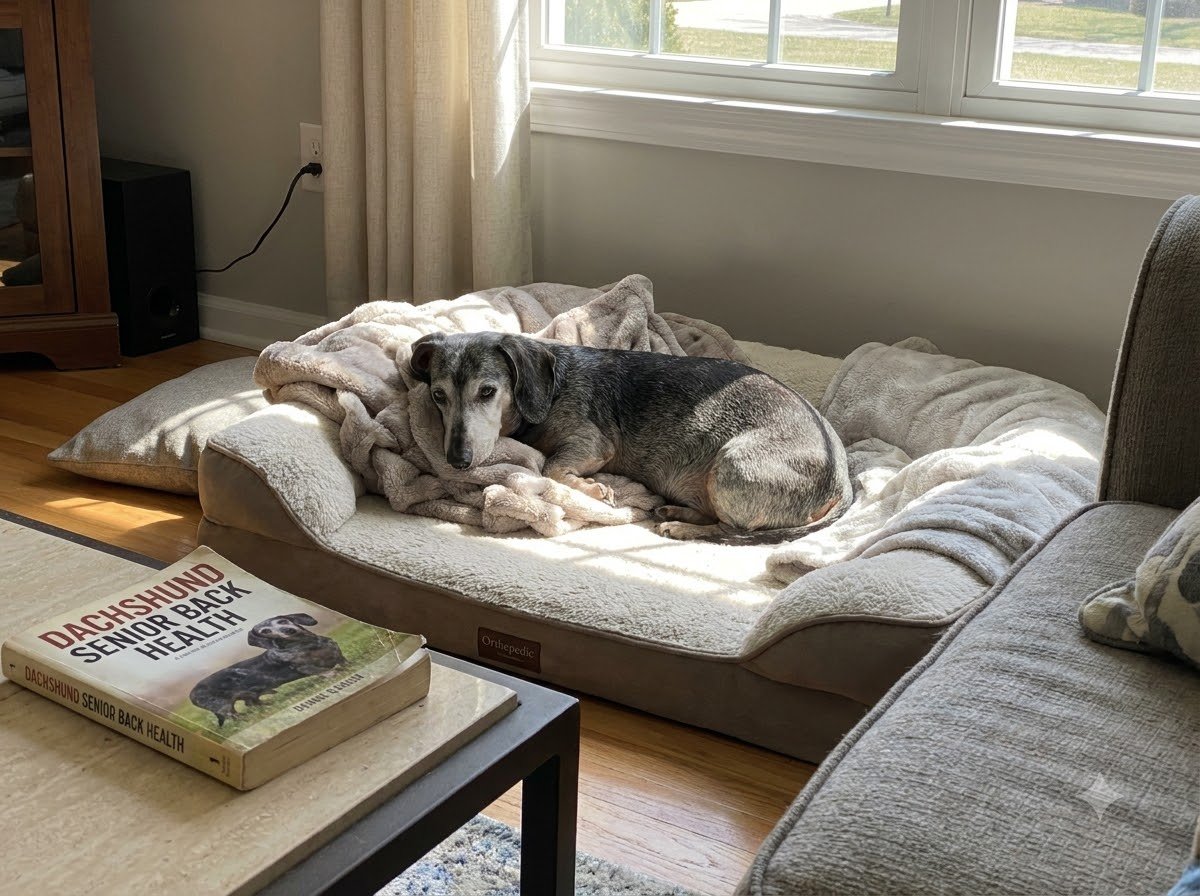
Dachshunds carry a lifelong, breed-defined risk of intervertebral disc disease (IVDD) because of their characteristically long spine and short legs — a body shape that causes their spinal discs to degenerate earlier than in most other breeds. That risk doesn’t go away with age; if anything, the senior years are when cumulative wear makes an episode more likely.
Why Are Dachshunds So Prone to Back Problems?
The same chondrodystrophic body shape that gives Dachshunds their signature look also causes their spinal discs to harden and lose flexibility earlier in life than in normally-proportioned breeds. This makes them significantly more likely than most dogs to experience a disc bulge or rupture, sometimes triggered by something as ordinary as jumping off a couch.
What Are the Warning Signs Owners Should Watch For?
- A hunched or tense back, or reluctance to be touched along the spine
- Yelping or flinching when picked up or when going up and down stairs
- Dragging of the hind paws, or visible weakness in the back legs
- Sudden reluctance to jump onto furniture the dog previously used easily
Any of these, especially appearing suddenly, warrants a same-day vet visit — IVDD can progress quickly, and early treatment meaningfully affects the outcome.
How Can You Reduce Back Strain as a Dachshund Ages?
- Use ramps or steps for furniture and cars instead of allowing jumping
- Keep the dog lean — even a small amount of extra weight adds meaningful strain to a vulnerable spine
- Support the full body (front and back) when picking them up, never just under the front legs
- Choose a harness over a neck collar to avoid added strain near the spine
- Watch closely for the early warning signs above rather than waiting for a dramatic episode