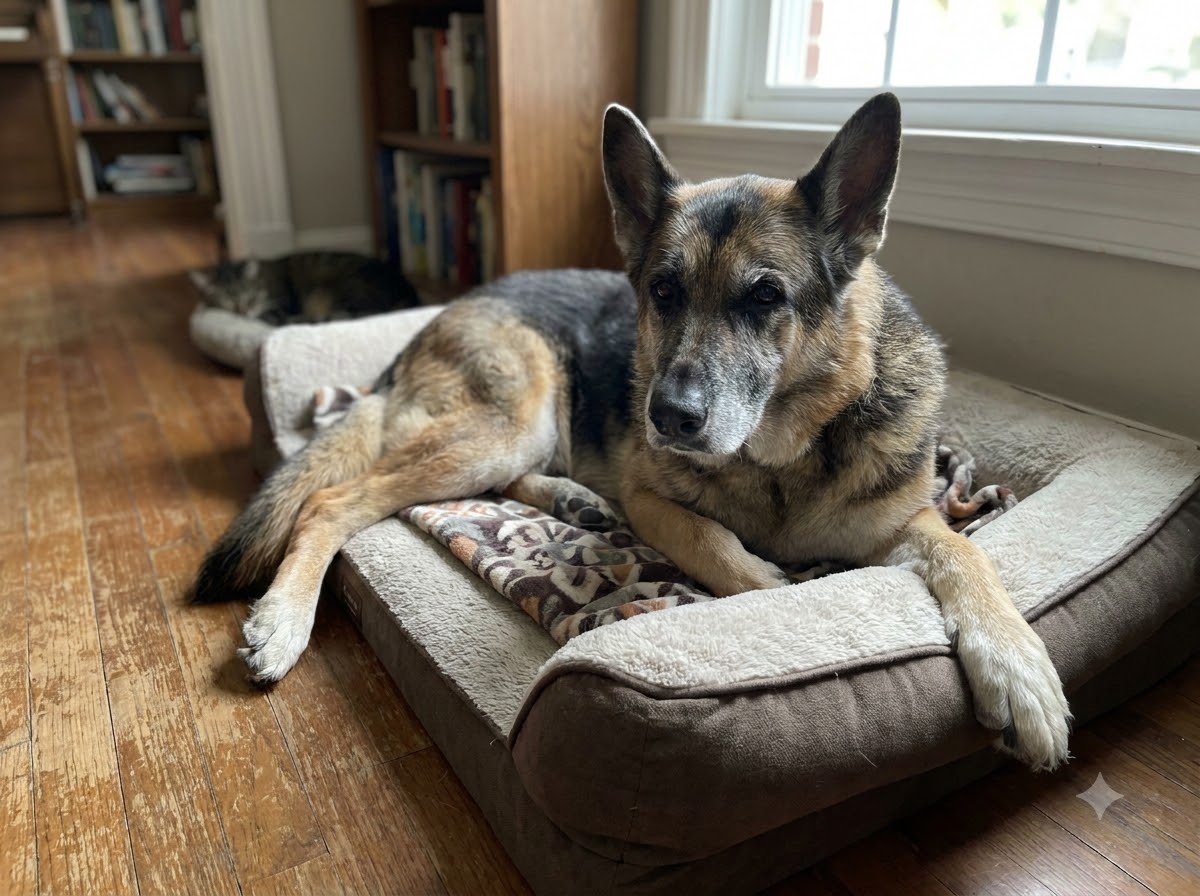
German Shepherd puppies grow fast, learn fast, and — if the first year is handled well — turn into exactly the loyal, confident working breed the German Shepherd is known for. Most of what determines that outcome happens in the first twelve months, not later.
What Should You Know Before Bringing a German Shepherd Puppy Home?
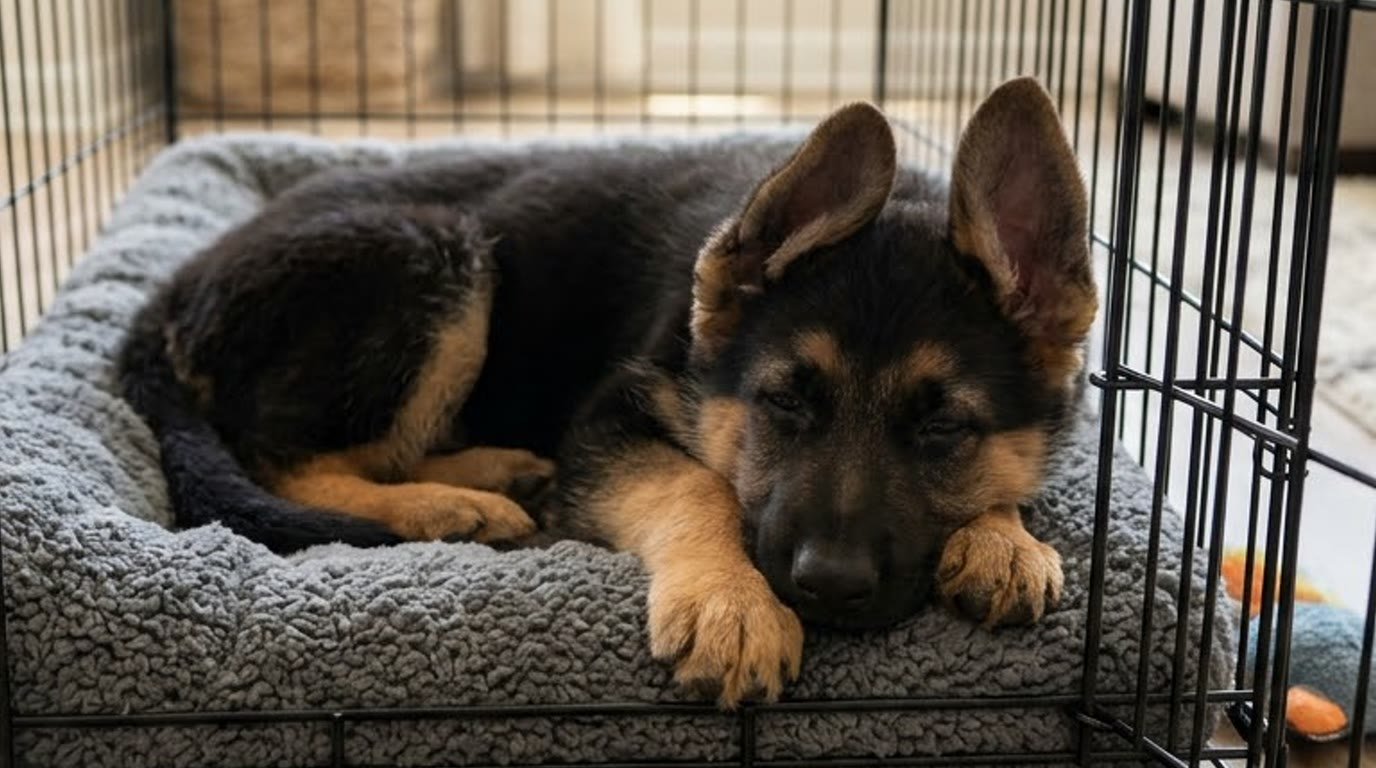
German Shepherd puppies are bred from a working line, which means even as tiny puppies they tend to be alert, food-motivated, and quick to pick up on routines — good news for training, but it also means an under-stimulated puppy gets bored and destructive faster than a lower-drive breed would. Puppy-proofing should assume a curious, mouthy dog that will chew anything within reach, and a crate or safe confinement area is worth setting up before the puppy arrives, not after the first accident.
How Much Exercise Does a German Shepherd Puppy Need?
Puppy exercise should be deliberately limited, not maximized. A commonly used guideline is about 5 minutes of structured exercise per month of age, twice a day, rather than long runs or repeated jumping — the growth plates in a large breed like this stay open well into the second year, and repetitive high-impact activity during that window raises the risk of joint problems later, including the hip dysplasia this breed is already predisposed to. Mental stimulation through short training sessions and puzzle feeding tires a GSD puppy out just as effectively with far less physical strain.
What Does Early Training and Socialization Look Like?
- Socialization window (roughly 3-14 weeks) — controlled, positive exposure to new people, dogs, sounds, and environments matters more during this period than at any later point in the dog’s life
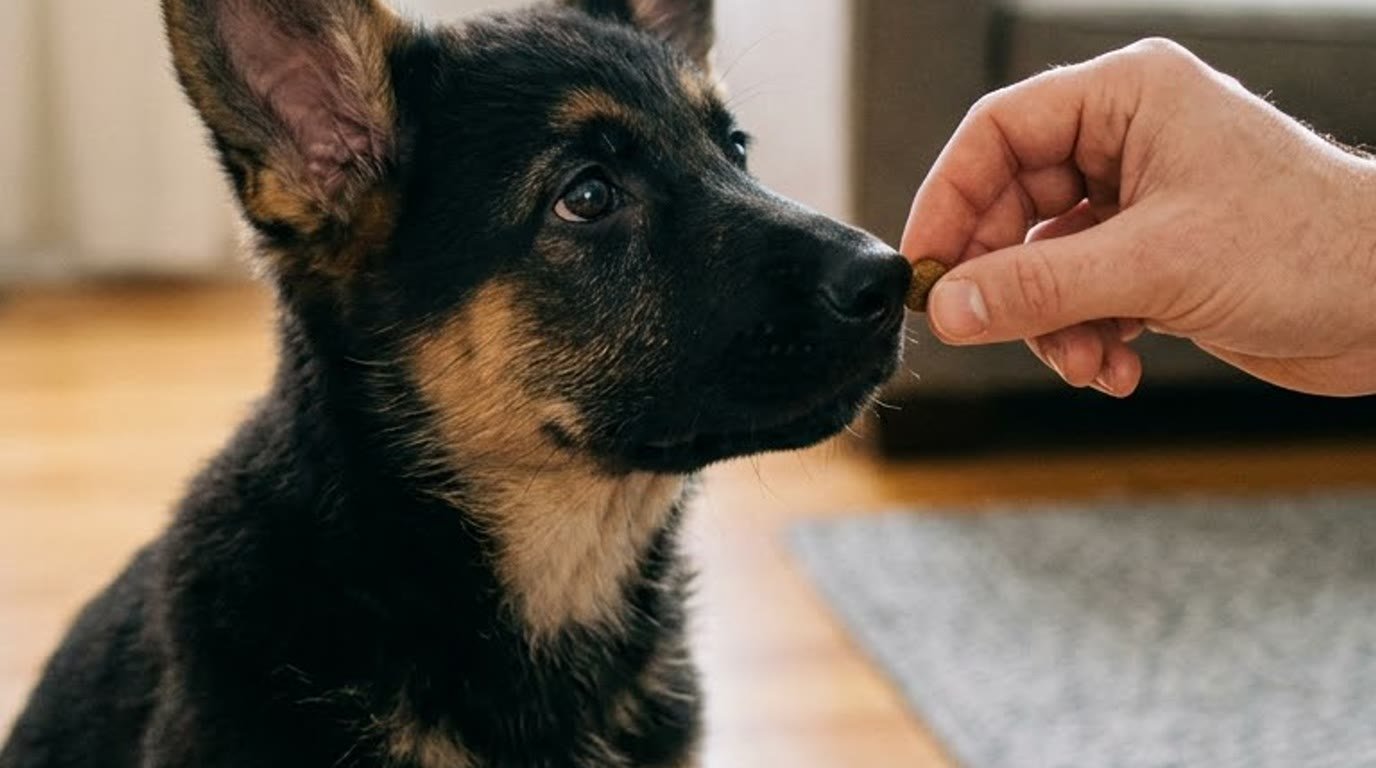
- Basic obedience — sit, stay, come, and loose-leash walking can all start immediately at home, in short, food-motivated sessions
- Bite inhibition — GSD puppies are naturally mouthy; consistent, gentle redirection early prevents this from becoming a bigger problem in an adult dog with a powerful bite
- Crate training — pairs well with this breed’s structure-seeking temperament and pays off for vet visits, travel, and general house manners later
What Health Screening Matters Most at This Age?
Early vet visits should cover the standard puppy vaccination series, but it’s also worth asking specifically about this breed’s known predispositions — hip and elbow dysplasia screening becomes relevant as the puppy approaches a year old, and keeping the puppy lean throughout growth is one of the few controllable factors that measurably reduces lifetime joint risk. Overfeeding a large-breed puppy to make it grow faster is a common mistake that works against this.
What Should Guide Your First-Year Checklist?
- Start training and socialization immediately — don’t wait for a certain age
- Keep exercise structured and low-impact until growth plates close
- Feed a large-breed puppy formula with portion control, not free-feeding
- Book hip/elbow screening conversations with your vet well before the first birthday
- Budget for a breed that will reach 65-90 lbs as an adult — crates, gear, and food costs all scale up fast