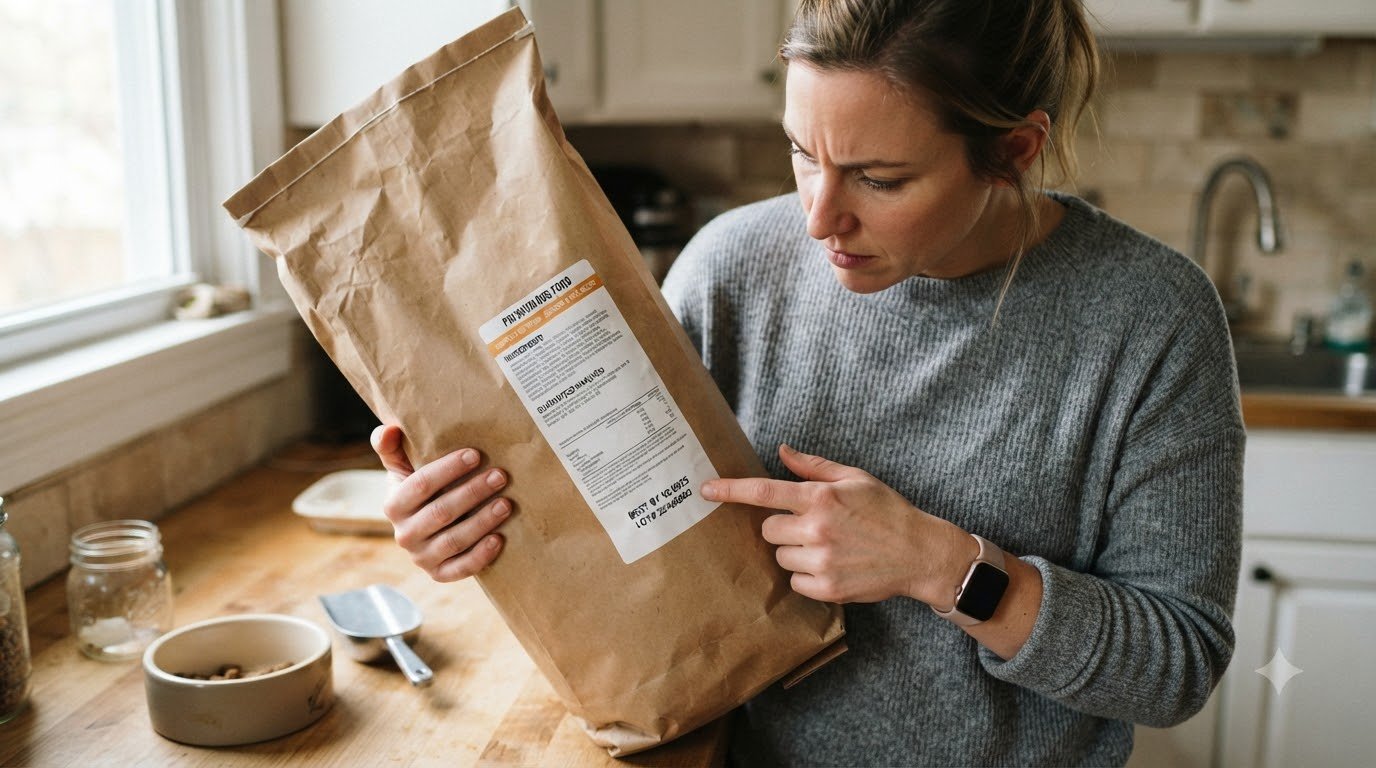
Most pet food labels are designed to be persuasive, not informative. The ingredient list, the guaranteed analysis panel, and the small-print AAFCO statement are the three things worth actually reading — everything else on the front of the bag (words like “premium,” “natural,” or a photo of fresh vegetables) is marketing copy with little regulated meaning.
What Does the Ingredient List Actually Tell You?
Ingredients are listed by weight, heaviest first, before cooking. That “before cooking” detail matters: fresh meat is roughly 70% water, so a whole chicken listed first can weigh less in actual dry nutrition than a “chicken meal” (already dehydrated) listed second or third.
- Look at the first 5 ingredients as a group, not just the first one
- Named meat sources (“chicken,” “salmon”) are more specific than vague terms (“meat,” “animal by-product”)
- Meals (like “chicken meal”) aren’t automatically worse — they’re concentrated protein sources with the water already removed
- Splitting a single ingredient into multiple listings (e.g., “peas, pea protein, pea starch”) can push it lower on the list without reducing how much of it is actually in the food
What Is the “Guaranteed Analysis” and Why Does It Matter?
The guaranteed analysis panel lists minimum percentages of crude protein and fat, and maximum percentages of fiber and moisture. It’s a legal minimum/maximum guarantee, not a precise nutritional breakdown — and it says nothing about ingredient quality or protein digestibility.
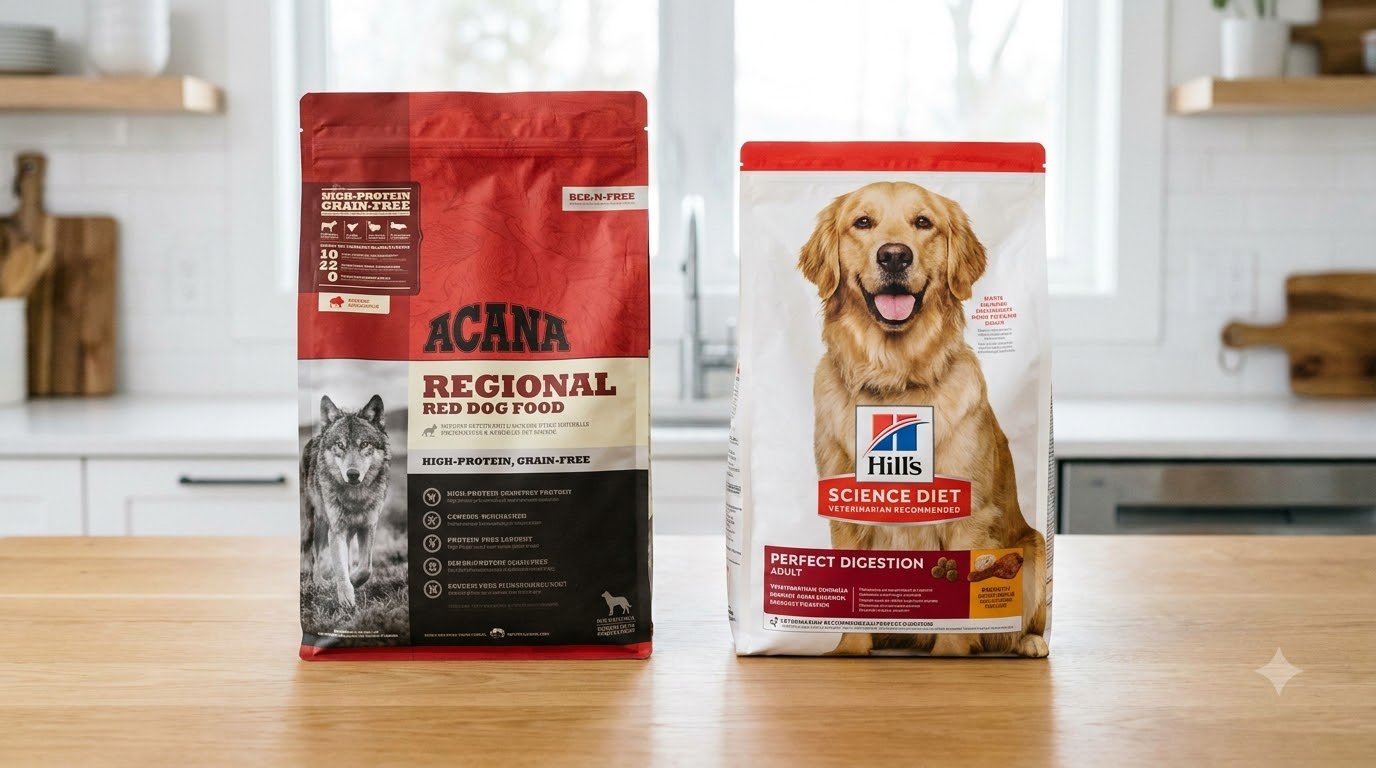
Two important caveats when comparing foods this way:
- Wet food and dry food guaranteed-analysis numbers aren’t directly comparable because of the large moisture difference — convert to a “dry matter basis” before comparing across formats
- A higher protein percentage doesn’t automatically mean better quality protein — digestibility and amino acid profile matter more than the raw number
What Does an AAFCO Statement Mean?
Look for a small-print statement confirming the food is “formulated to meet the nutritional levels established by the AAFCO Dog/Cat Food Nutrient Profiles” for a specific life stage — growth, adult maintenance, or “all life stages.” This is the single most useful regulatory signal on the entire label.
- A formulation statement means the recipe was calculated to meet nutrient minimums on paper
- A feeding trial statement means the food was actually tested on animals following AAFCO protocol — a somewhat stronger claim
- “All life stages” foods are formulated to meet the highest-demand stage (growth), which means they may exceed what an adult or senior pet actually needs
Which Marketing Claims Are Mostly Meaningless?
- “Premium,” “super premium,” “ultra” — no regulated definition; purely marketing terms
- “Natural” — has some regulatory guidance (no synthetic ingredients, with limited exceptions) but is loosely enforced
- “Holistic” — no legal definition at all
- “Human-grade” — does have a real regulatory bar to clear, but is rarely used correctly; most foods claiming it don’t formally qualify
- “Organic” — this one is genuinely regulated, similar to organic standards for human food, and requires certification

How Should You Compare Two Different Foods?
- Confirm both meet AAFCO standards for your pet’s actual life stage
- Compare guaranteed analysis on a dry-matter basis, not as printed
- Scan the first 5 ingredients for named, specific sources rather than vague ones
- Ignore front-of-bag marketing language entirely — it isn’t regulated the way the nutrition panel is
- When in doubt, ask your vet to review a specific label against your pet’s individual needs — general label-reading rules are a starting point, not a substitute for guidance on a pet with a specific health condition