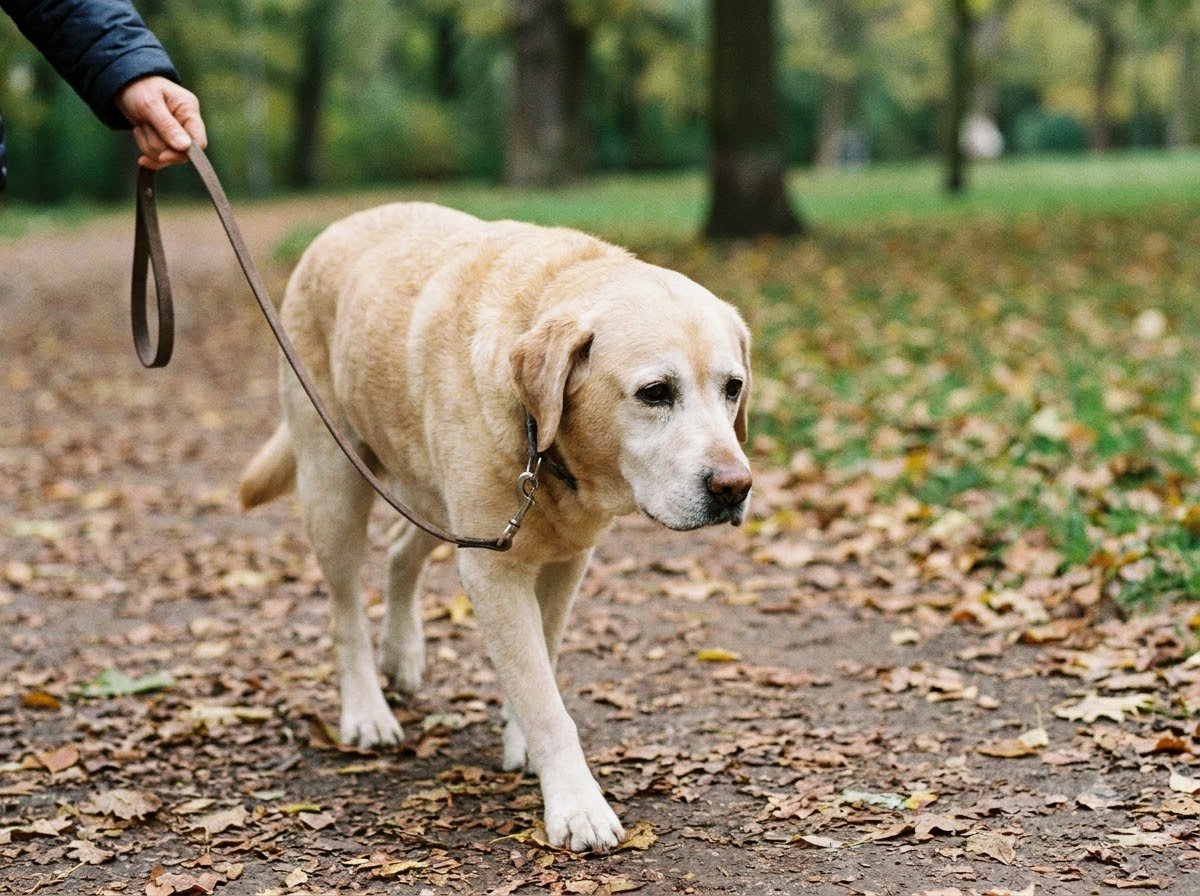
Labrador Retrievers face a particular one-two combination in their senior years: a strong genetic tendency toward weight gain, paired with a breed-wide susceptibility to hip and elbow dysplasia — and extra weight makes joint pain measurably worse. Managing both together, rather than separately, is the single most impactful thing an owner can do for a Lab’s comfortable aging.
Why Does Weight Matter So Much for This Breed Specifically?
A well-studied genetic variant common in Labradors affects how strongly they feel hunger, making overeating and begging more of a breed trait than a training failure. Combined with the breed’s existing joint vulnerability, even a small amount of extra weight meaningfully increases the load on already-compromised hips and elbows.
What Are the Early Signs of Joint Trouble in an Aging Lab?
- Slower to rise after lying down, especially on hard floors
- Reluctance to jump into cars or onto furniture they used to manage easily
- A subtle limp that comes and goes, often worse after rest
- Visible muscle loss in the hindquarters over time
How Should Care Change as a Labrador Enters Its Senior Years?
- Recalculate portions based on actual body condition, not the bag’s default guideline
- Shift toward lower-impact exercise — swimming is particularly well-suited to this breed
- Ask your vet about joint supplements or medication before pain becomes visible, not after
- Add non-slip flooring in high-traffic areas to reduce strain from slipping
- Track weight at every vet visit — small creeping gains are easy to miss month to month