No matches found. Try a different search term.
Home / Bird Care / What Do Pet Birds Eat? A Complete Diet Guide
BIRD CARE

What Do Pet Birds Eat? A Complete Diet Guide

Last updated: August 13, 2026 · Written by PetsBeyondMiles Editorial Team
A complete guide to feeding pet birds — why seed-only diets fall short, what a balanced pellet-and-produce diet looks like, and foods to avoid.

Diet is one of the most misunderstood parts of pet bird care — a seed-only diet, while traditional, is now understood to be nutritionally incomplete and a leading cause of preventable health problems.
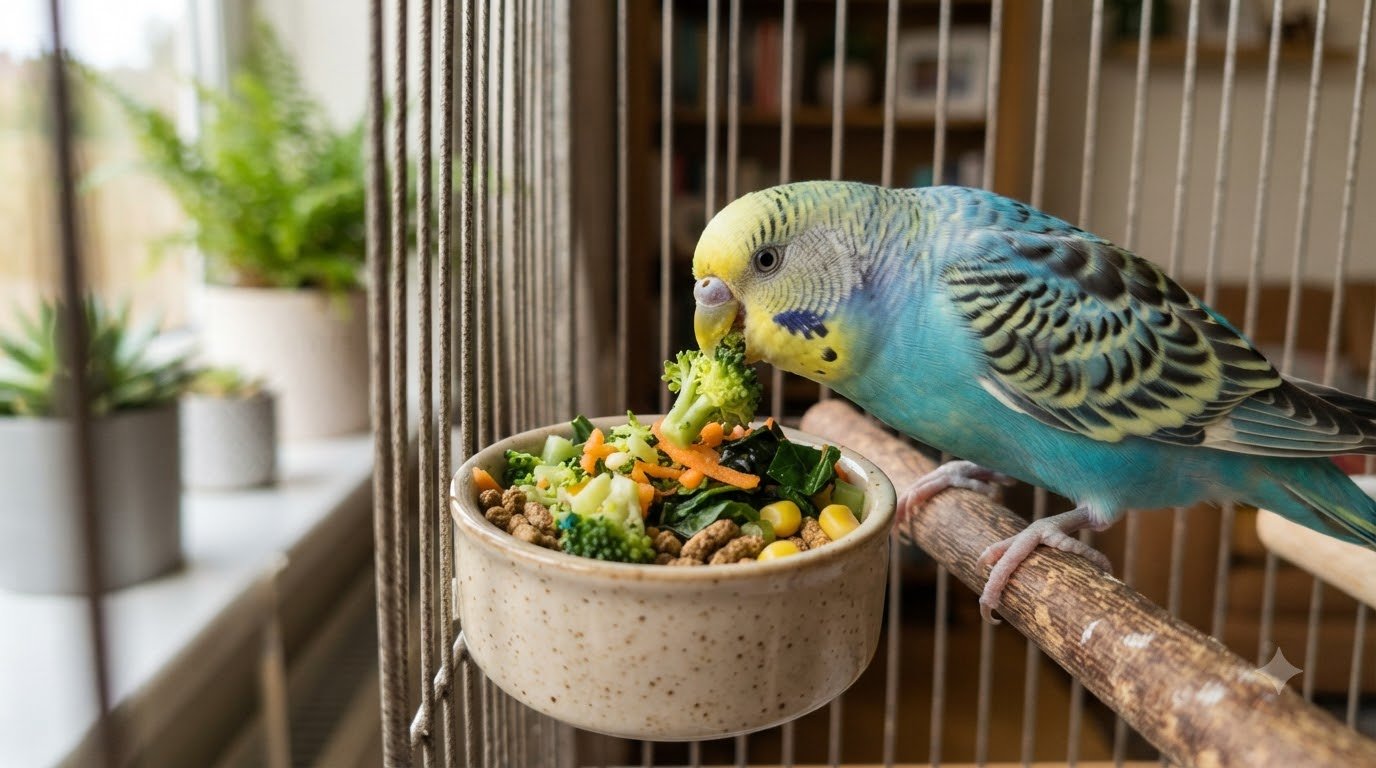
A parakeet eating fresh vegetables close up
Fresh vegetables should make up a meaningful share of a bird's daily diet, not just an occasional treat.

Why Do Seed-Only Diets Fall Short?

Seeds are calorie-dense but nutritionally narrow — high in fat, low in vitamins A and D, calcium, and other nutrients birds need. A bird fed only seeds, even a varied seed mix, is at real risk of obesity, fatty liver disease, and deficiency-related illness over time.

What Does a Balanced Diet Look Like?

Most avian vets recommend a diet built around:

  • Pellets (60-70%): formulated to provide complete, balanced nutrition, unlike seed alone
  • Fresh vegetables (20-25%): dark leafy greens, carrots, broccoli, bell peppers
  • Fruit and seeds (10-15%): as a smaller portion and occasional treat, not the diet’s foundation

What Foods Are Toxic to Birds?

Keep these away from any pet bird, without exception:

  • Avocado — can be fatal even in small amounts
  • Chocolate and caffeine — toxic to birds, similar to dogs and cats
  • Alcohol — even small amounts can be dangerous
  • Onions and garlic — can damage red blood cells over time
  • High-salt or high-sugar human foods — birds process these far less efficiently than humans
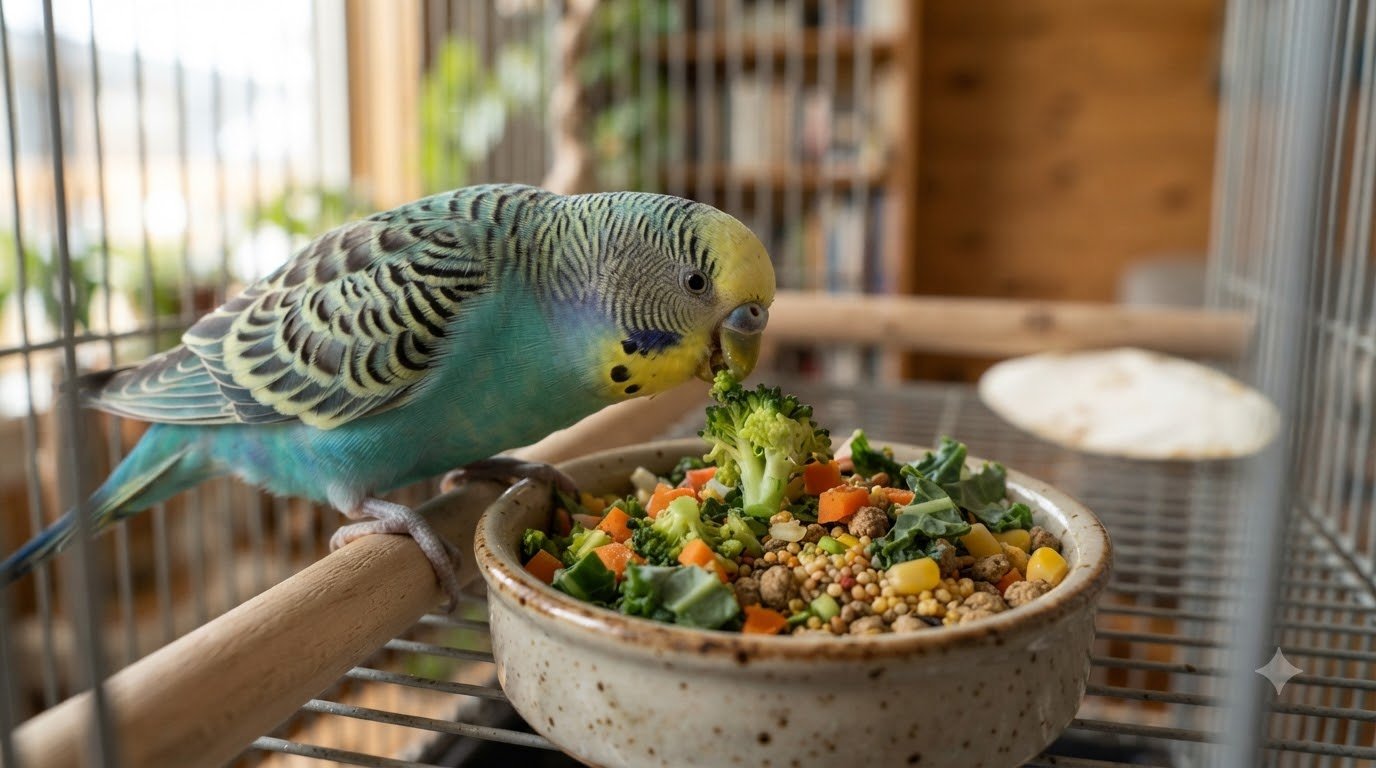
A parakeet eating from a dish of fresh vegetables and pellets
A balanced diet mixes pellets with fresh produce rather than relying on seed alone.

How Do You Transition From Seeds to Pellets?

Birds can be surprisingly stubborn about unfamiliar foods, so transition gradually:

  1. Offer pellets alongside the existing seed mix rather than replacing it outright
  2. Gradually increase the pellet ratio over several weeks
  3. Try different pellet shapes or flavors if the bird initially refuses — preference varies by individual
  4. Monitor weight and droppings during the transition to confirm the bird is actually eating enough

A nutritionally complete diet is one of the single biggest factors in a pet bird’s long-term health — far more impactful than cage size or toy variety alone.
FAQ

Is a seed-only diet bad for pet birds?
Yes — seed-only diets are one of the most common nutritional problems in pet birds, since seeds are high in fat and low in essential vitamins and minerals, often leading to obesity and nutritional deficiencies over time.
What percentage of a bird's diet should be pellets?
Most avian vets recommend pellets make up 60-70% of a bird's daily diet, formulated to provide complete, balanced nutrition, with fresh vegetables and a smaller portion of seeds or fruit rounding out the rest.
What foods are toxic to pet birds?
Avocado, chocolate, caffeine, alcohol, onions, garlic, and foods high in salt or sugar are all toxic or harmful to birds — avocado in particular can be fatal even in small amounts.
Can pet birds eat fruits and vegetables?
Yes, and they should — dark leafy greens, carrots, broccoli, and most fruits (in moderation, due to sugar content) provide vitamins and variety that a pellet-only or seed-only diet misses.
How do you switch a bird from seeds to pellets?
Gradually, over several weeks — mix increasing amounts of pellets into the seed mix, or offer both separately at first, since birds can be slow to accept unfamiliar foods and may need patience during the transition.

Related Articles