A budgie that suddenly goes quiet can understandably worry an owner used to regular chatter, but there are several possible explanations, ranging from completely normal to genuinely concerning.
What Are Common Normal Reasons a Budgie Goes Quiet?
- Molting: growing new feathers takes real energy and can be mildly uncomfortable, commonly leading to reduced vocalization and activity until the molt completes
- Environmental change: moving the cage to a new location, a change in household routine, a new person or pet in the home, or rearranged cage items can all cause a temporary quiet period
- Normal mood variation: like any animal, budgies have quieter and more vocal days without every shift meaning something is wrong
- Time of day and lighting changes: shifts in daylight length or lighting schedule can affect a budgie’s vocal patterns
- A single bird missing a companion: if a cage mate was recently removed or passed away, reduced vocalization can reflect a period of adjustment
When Might Quietness Signal Illness?
Watch for these signs alongside reduced chirping, since together they point toward a health issue rather than a normal quiet phase:
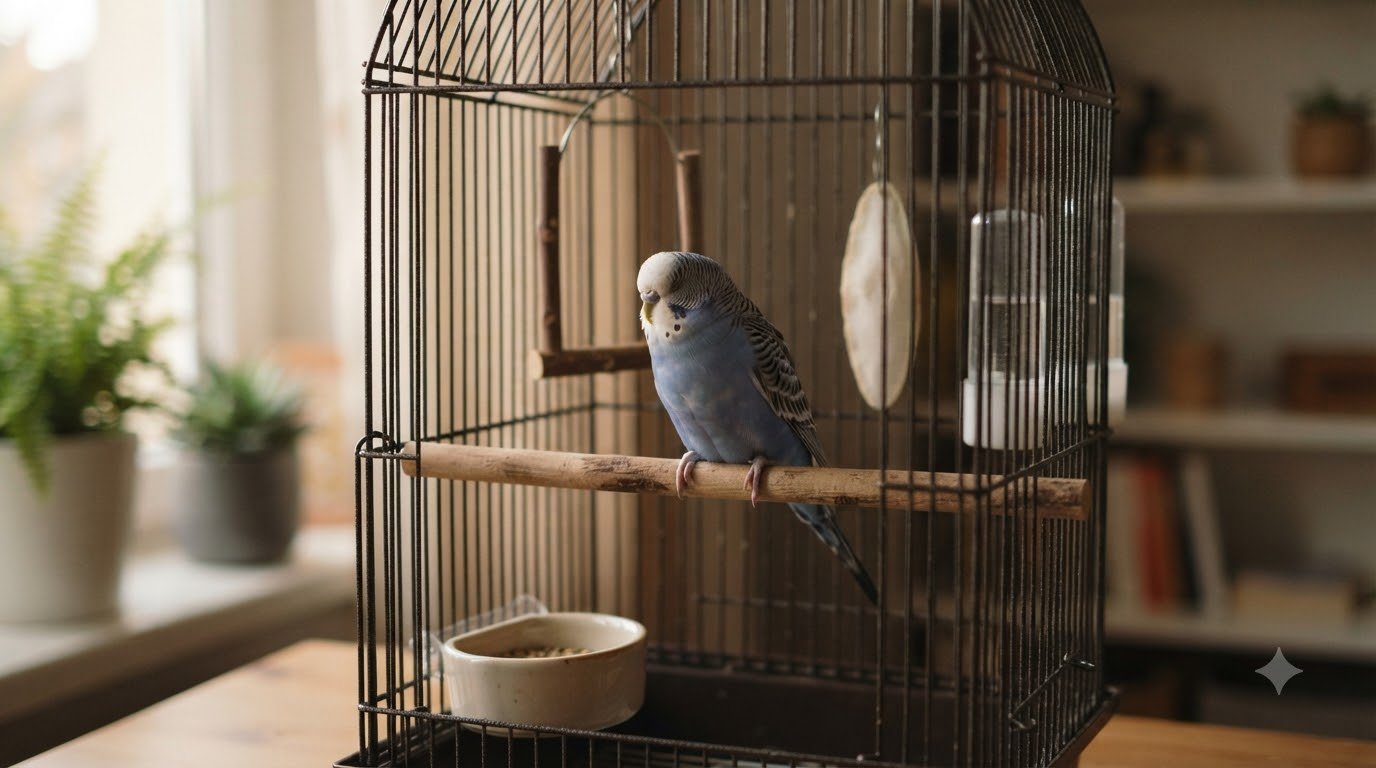
- Fluffed-up feathers held for extended periods, especially outside normal sleep time
- Sitting at the bottom of the cage instead of on perches
- Reduced appetite or noticeable weight loss
- Changes in droppings — color, consistency, or frequency
- Labored breathing, tail bobbing while breathing, or discharge from eyes or nostrils
- General lethargy or decreased activity beyond just quietness
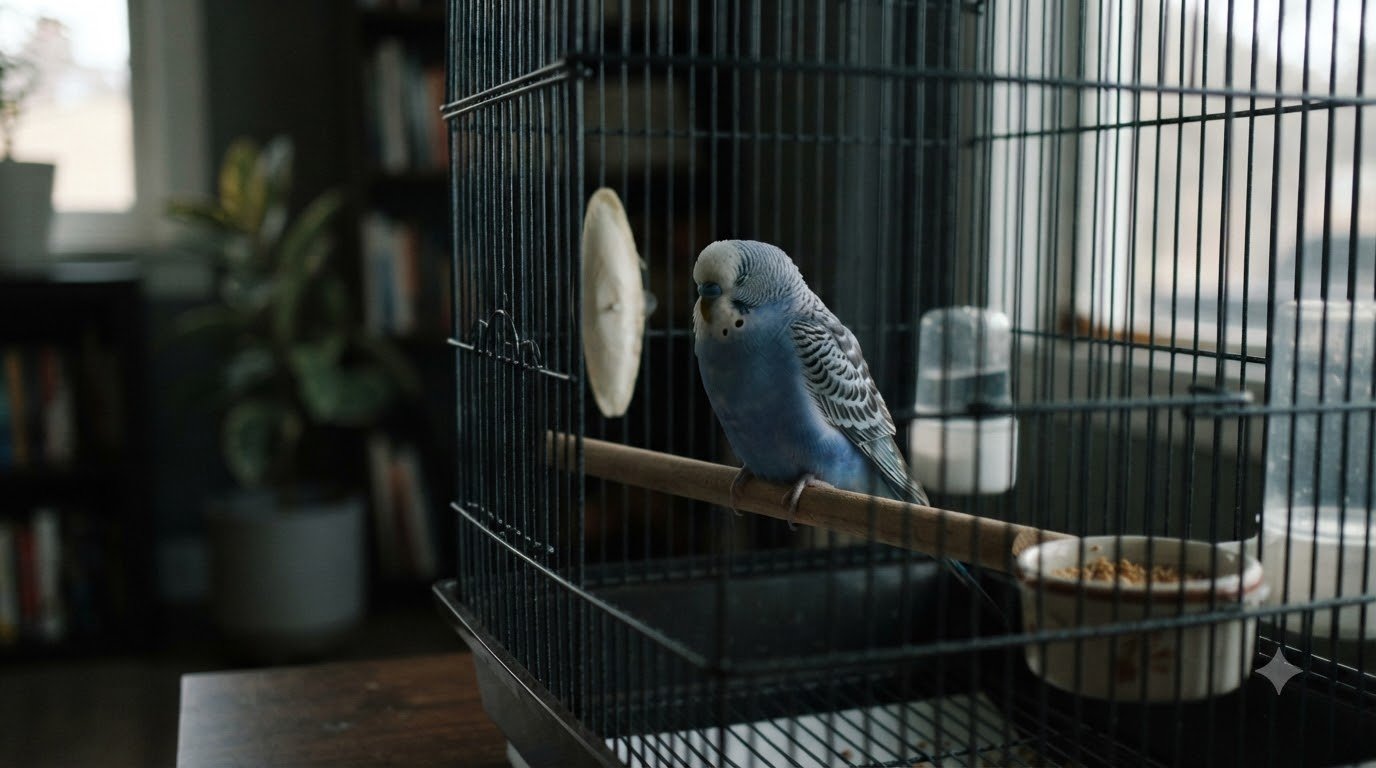
How Do You Tell the Difference?
Consider the full context: has anything changed in the environment recently? Is the budgie molting? Is everything else — eating, activity, droppings, posture — otherwise normal? A quiet budgie that’s still eating, active, and behaviorally normal in every other way is less concerning than one that’s quiet and showing any of the illness-related signs above.
What Should You Do?
If the quietness is isolated and everything else seems normal, giving it a few days while watching closely is reasonable. If quietness persists for more than a few days without an obvious explanation, or if any illness-related signs appear alongside it, contact an avian-experienced vet — birds mask illness effectively, so a cluster of subtle changes, including reduced vocalization, is worth taking seriously rather than waiting for more obvious symptoms to develop.