Cold weather risk for dogs isn’t limited to extreme temperatures — frostbite and hypothermia can develop faster than many owners expect, especially in small, short-coated, senior, or unwell dogs, which makes recognizing early signs more useful than relying on a single “safe” temperature number.
Why Do Some Dogs Handle Cold Better Than Others?
Coat type, body size, age, and health all change how much cold a dog can safely tolerate. A heavily coated, cold-adapted breed can comfortably handle conditions that would put a small, short-coated, or senior dog at real risk in a fraction of the time — which is why blanket temperature guidelines are less useful than watching your own dog’s specific signs.
What Are the Early Warning Signs to Watch For?
During or right after time outdoors in cold weather, watch for:
- Shivering or visible discomfort
- Whining, anxious behavior, or reluctance to keep moving
- Slowing down, lifting paws off the ground repeatedly, or stopping
- Seeking out somewhere warm to burrow or hide
Any of these are a signal to head inside — not to wait and see if it passes.
How Do You Prevent Frostbite and Hypothermia?
- Limit outdoor exposure on freezing or near-freezing days — shorter, more frequent walks generally beat one long outing
- Use protective gear: coats for small, short-coated, or senior dogs, and booties to protect paw pads from ice, snow, salt, and de-icing chemicals
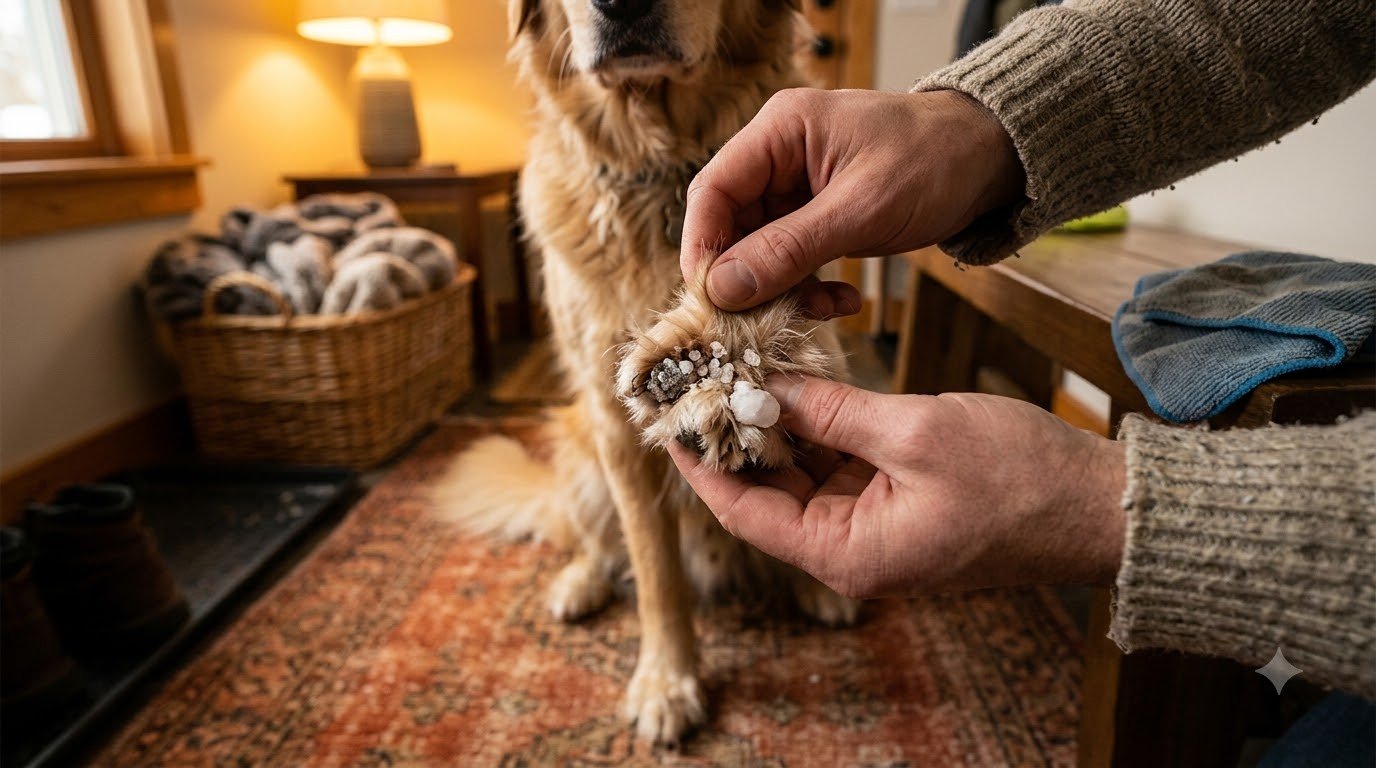
- Check paws after every walk for ice buildup between toes, cuts from sharp ice, or irritation from salt and chemical de-icers
- Towel-dry your dog promptly after coming inside if they’re wet from snow or slush
What Should You Do If You Suspect Hypothermia or Frostbite?
For suspected hypothermia: bring your dog inside immediately, wrap them in warm (not hot) blankets, and consider a warm water bottle wrapped in a towel to help raise their temperature gradually. For suspected frostbite (commonly affecting ears, tail, and paws): bring your dog inside, gently warm the area with warm — never hot — water, and avoid rubbing or massaging it, which can worsen tissue damage. Either situation warrants prompt veterinary attention, especially if symptoms don’t improve quickly once your dog is warm and dry.
What Else Matters in Cold Weather?
Antifreeze is highly toxic to dogs and has a sweet taste that can attract them — clean up any spills immediately and keep dogs away from areas where it’s stored or used. Indoor time matters too: shorter outdoor sessions mean more attention to indoor exercise and mental stimulation so your dog doesn’t lose their usual activity outlet entirely during the coldest stretches of winter.