No matches found. Try a different search term.
HomeDog BreedsNewfoundland
DOG BREED PROFILE

Newfoundland

— Sweet. Patient. Water-Loving.

Bred by fishermen in Newfoundland, Canada, to haul nets, rescue drowning sailors, and pull carts, the Newfoundland combines massive size and strength with a famously sweet, patient temperament often called "nanny dog" for their gentleness with children. A natural swimmer with a water-resistant coat and webbed feet, the breed remains closely associated with water rescue work today.

Newfoundland, CanadaOrigin
Working GroupBreed Group
9 - 10 YearsLife Expectancy

QUICK OVERVIEW

Homes with space for a giant breed
Owners who can manage joint health
Families wanting a gentle giant
Hot climates without cooling access

About the Newfoundland

Bred by fishermen in Newfoundland, Canada, to haul nets, rescue drowning sailors, and pull carts, the Newfoundland combines massive size and strength with a famously sweet, patient temperament often called "nanny dog" for their gentleness with children. A natural swimmer with a water-resistant coat and webbed feet, the breed remains closely associated with water rescue work today.

Last updated: August 12, 2026
Read Full History
Key Facts

Natural swimmers with webbed feet, historically used for water rescue
Nicknamed the "nanny dog" for a famously gentle temperament with children
Bred to work alongside fishermen, hauling nets and rescuing sailors overboard
Among the strongest dog breeds relative to size, historically used to pull carts

Is Newfoundland Right for You?

Homes with space for a giant breed
Owners who can manage joint health
Families wanting a gentle giant
Hot climates without cooling access
Explore More Breeds →

Photo Gallery

View All Breeds →

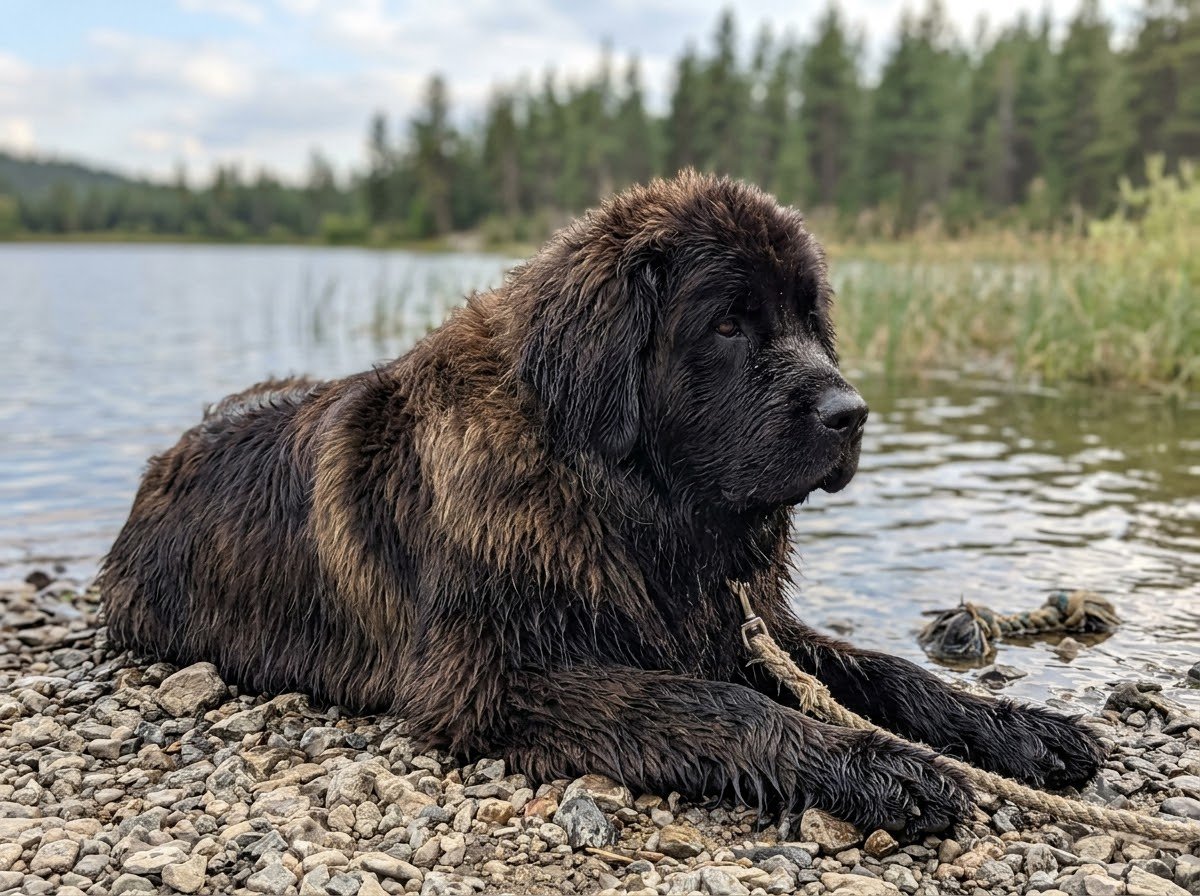
The Newfoundland has a thick, water-resistant double coat coat in black, brown, gray, landseer (black and white), with heavy shedding year-round.

Personality

SweetKnown for an unusually gentle, calm temperament despite their massive size and strength.
PatientTolerates handling and household chaos with notable composure, a key reason for their "nanny dog" reputation.
Water-LovingA natural swimmer that genuinely enjoys water, historically bred for maritime rescue work.
DevotedForms close, protective bonds with their family without typically being aggressive or reactive.

Care & Needs

Joint SupportAs a giant breed, controlled growth during puppyhood and joint-supportive nutrition matter significantly for long-term mobility.
Heat ManagementTheir thick coat makes them highly prone to overheating — limit strenuous activity and ensure shade, water, and AC access in warm weather.
GroomingHeavy shedding requires frequent brushing, particularly during seasonal coat blowouts.
Living SpaceNeeds significant indoor space to move and rest comfortably, along with a cooler climate or reliable AC access.

Did You Know?

Author J.M. Barrie's beloved dog, a Newfoundland named Porthos, is widely believed to have inspired the character of Nana, the nursemaid dog in Peter Pan.

Newfoundlands have been serving humans in many important roles including: Water Rescue Dogs , Nanny Dogs and Draft Dogs .

Health & Common Issues

Hip and Elbow DysplasiaVery common in giant breeds; controlled growth and joint-supportive care during puppyhood help manage lifetime risk.
Subvalvular Aortic StenosisA heart condition documented at higher rates in Newfoundlands, making cardiac screening a valuable part of preventive care.
Bloat (GDV)Deep-chested giant breeds face elevated risk of this life-threatening emergency, managed partly through smaller, frequent meals.

Training & Exercise

  • Begin obedience training early while puppies are still manageable in size, since a fully grown, untrained Newfoundland is difficult to physically control.
  • Use calm, positive, consistent training — this gentle breed responds poorly to harsh handling.
  • Introduce swimming early if accessible, tapping into their natural water-rescue instincts for both exercise and enrichment.
  • Avoid excessive jumping or high-impact exercise during the first 18-24 months while bones and joints are still developing.

History & Origin

1700s Developed by fishermen in Newfoundland, Canada, likely from crosses between local dogs and those brought by European fishing crews.
1800s Gained a reputation for water rescue heroics, with numerous documented accounts of Newfoundlands saving drowning people.
1886 Officially recognized by The Kennel Club in England.
Today Valued as both a devoted family companion and an active water rescue and therapy dog breed.

Frequently Asked Questions

Are Newfoundlands good with children?
Yes, exceptionally so — their nickname "nanny dog" reflects a genuinely well-documented gentle, patient temperament with children, though their giant size still means supervision matters to prevent accidental injury.
Do Newfoundlands like water?
Yes, generally — they're natural swimmers with webbed feet and a water-resistant coat, bred specifically for maritime rescue work, and most individuals genuinely enjoy swimming when given the opportunity.
How much space does a Newfoundland need?
A significant amount indoors to move and rest comfortably, along with a cooler climate or reliable air conditioning, since their thick coat makes heat management a genuine consideration.

Related Guides for Newfoundland Owners

You Might Also Like

Love Newfoundlands?
Get expert tips, care guides & stories straight to your inbox.
No spam Unsubscribe anytime 100% Free