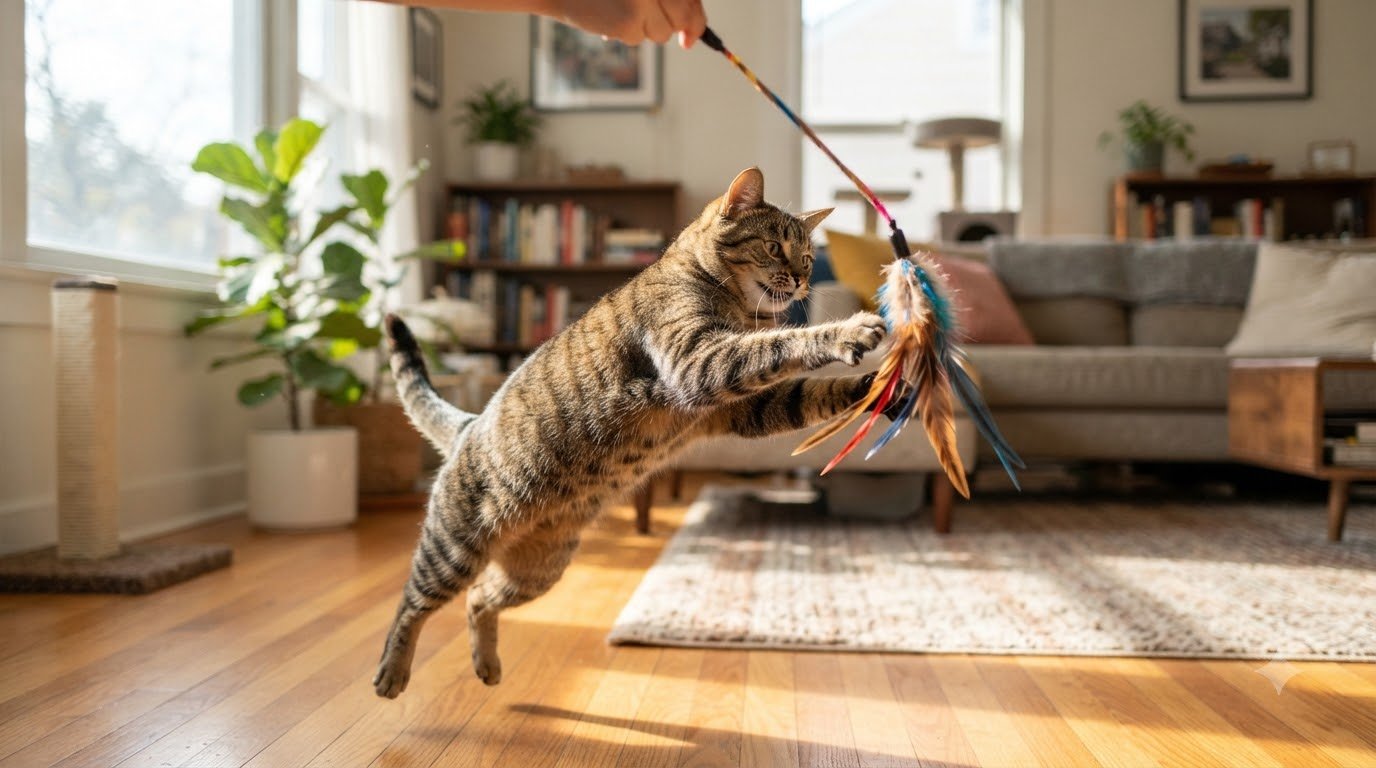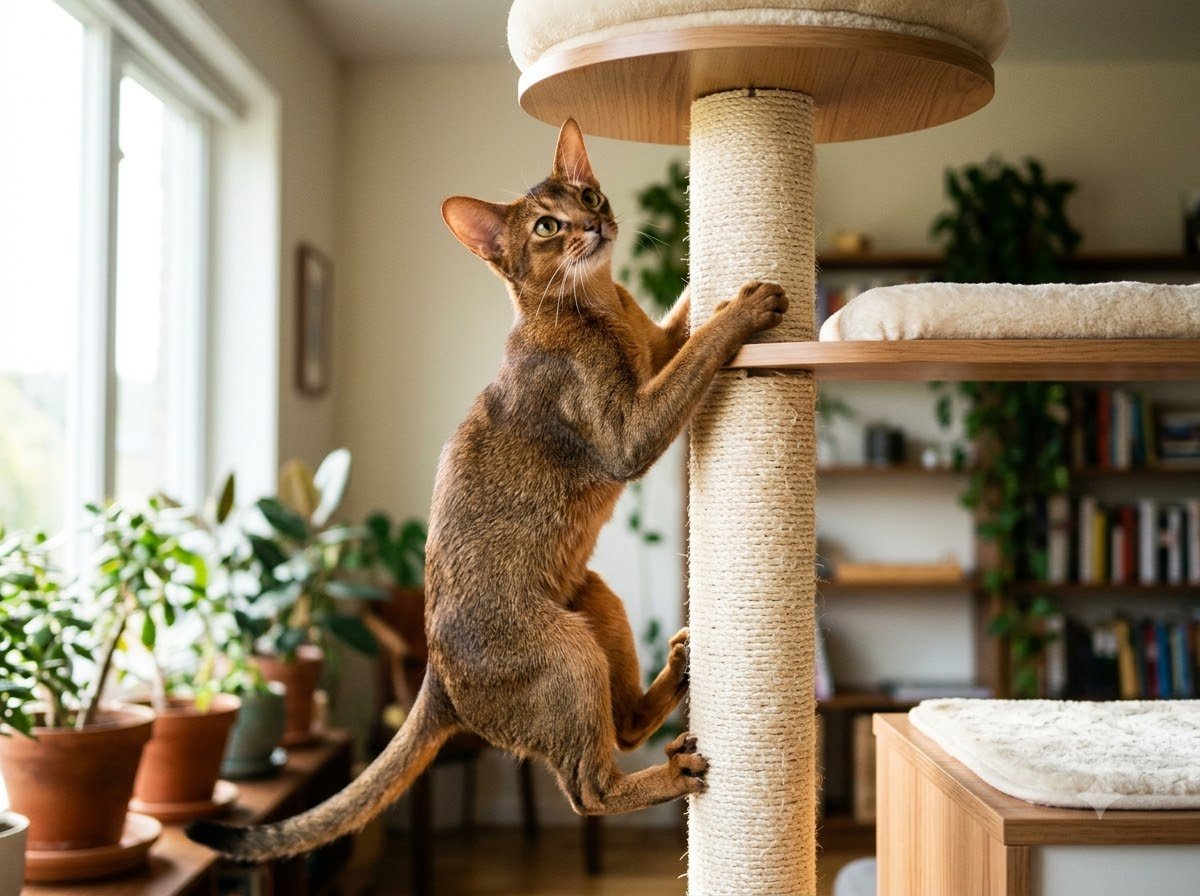
Abyssinians are widely considered one of the most active domestic cat breeds, with a near-constant need to climb, explore, and play that translates into genuinely higher calorie needs than many more sedentary breeds. That said, “naturally active” doesn’t mean weight management is a non-issue — it just shifts what matters most.
Why Do Abyssinians Have Higher Calorie Needs Than Average Cats?
This breed’s high energy and near-constant activity level mean many Abyssinians burn through calories faster than a typical, more sedentary domestic cat. Feeding based on a generic “average cat” portion chart can under- or over-feed an Abyssinian depending on how much space and stimulation it actually has to work off that energy.
What Health Considerations Should Shape an Abyssinian’s Diet?
- Some lines carry an elevated rate of a hereditary kidney condition, making balanced, high-quality nutrition particularly relevant
- The breed has been noted for a somewhat elevated diabetes risk, which ties directly to maintaining a healthy weight and appropriate carbohydrate intake
- Naturally lean and active doesn’t guarantee immunity from weight gain — an Abyssinian confined without much space or stimulation can still gain weight despite the breed’s active reputation
How Should You Feed an Abyssinian for Its Activity Level?
- Match portions to your specific cat’s actual space and activity level, not just the breed’s general reputation for leanness
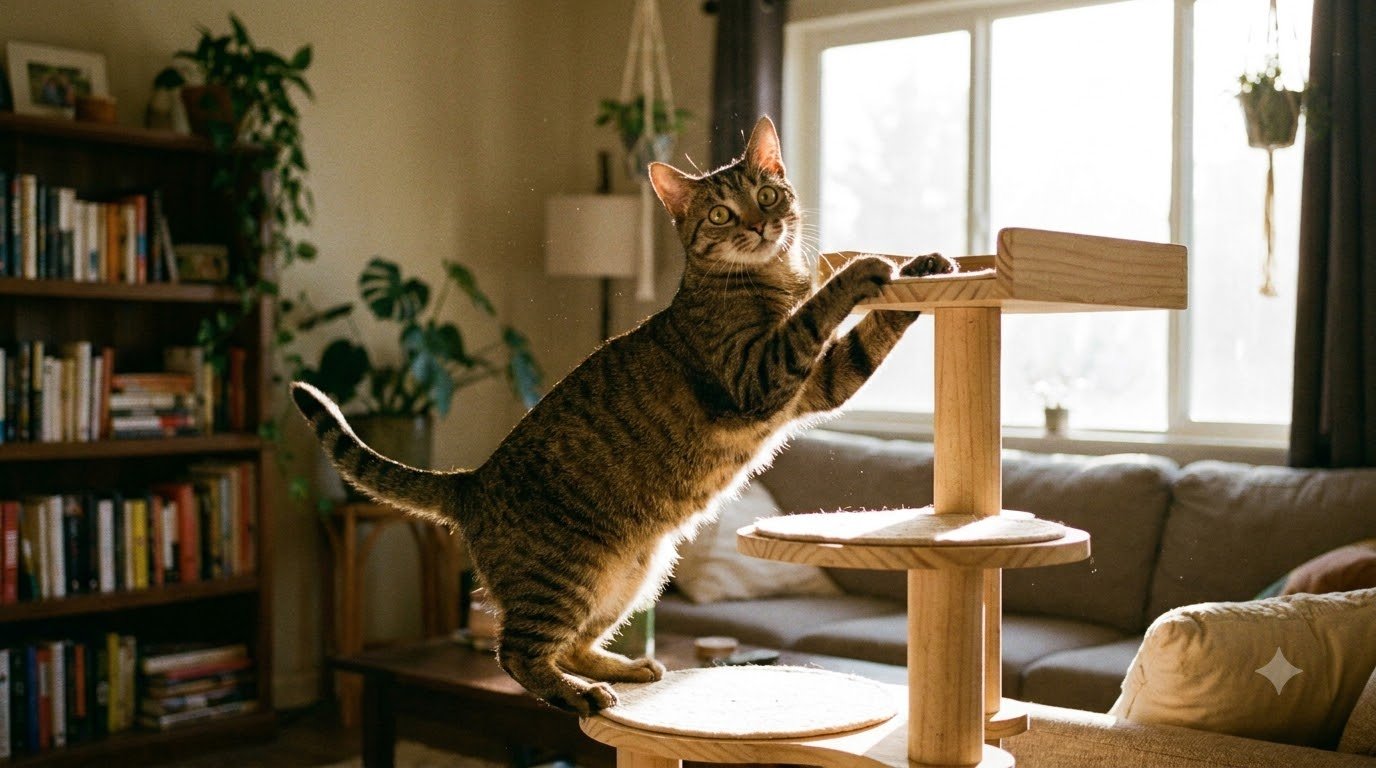
- Provide vertical climbing space and interactive play to support the breed’s natural activity needs, which also helps regulate weight naturally
- Monitor body condition regularly, since even an active breed can gain weight if confined or under-stimulated
- Discuss kidney and diabetes risk factors with your vet, given the breed’s documented predispositions, when planning long-term diet strategy