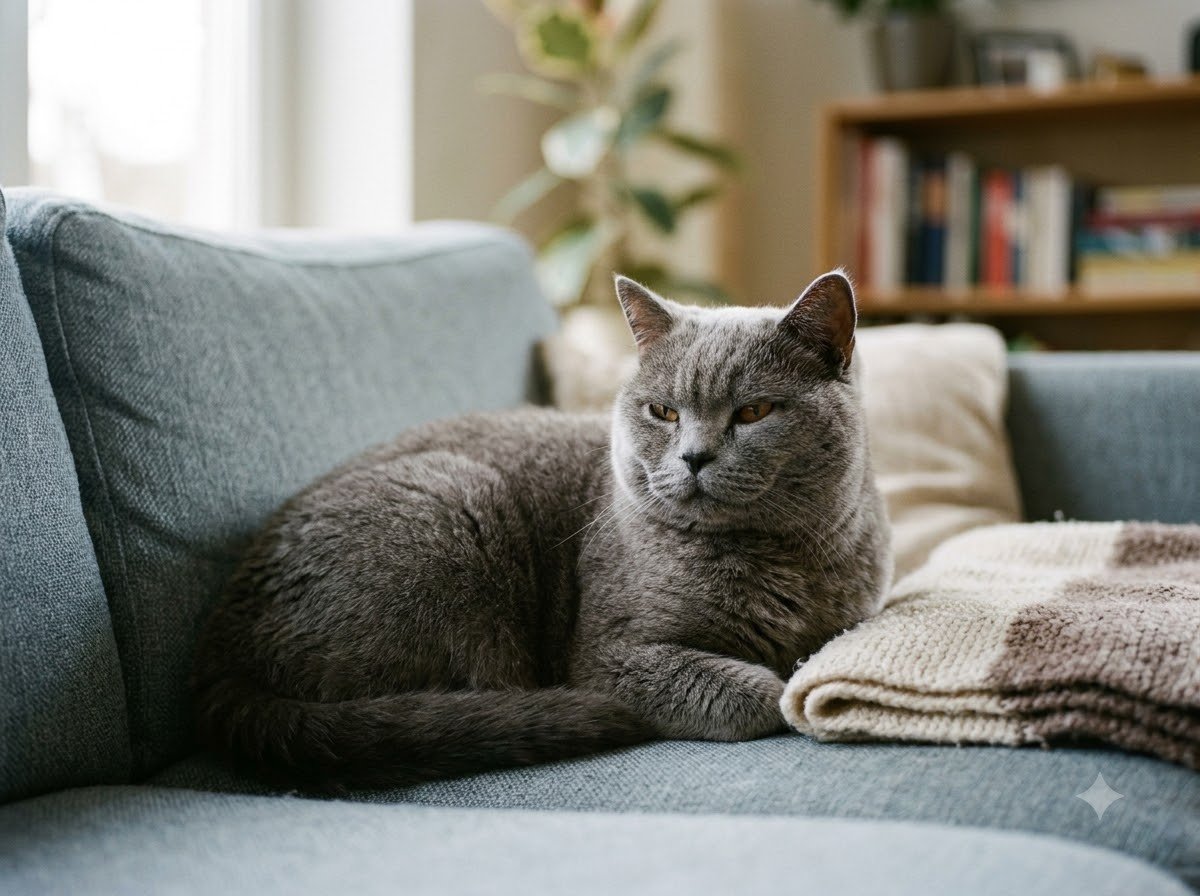
British Shorthairs are known for their calm, easygoing temperament — a trait that also makes them one of the more weight-gain-prone cat breeds, since they’re less inclined to self-regulate activity than naturally busier cats. Combined with a documented predisposition to a specific heart condition, weight and cardiac health are the two areas most worth watching as this breed ages.
Why Is Weight Management Especially Important for This Breed?
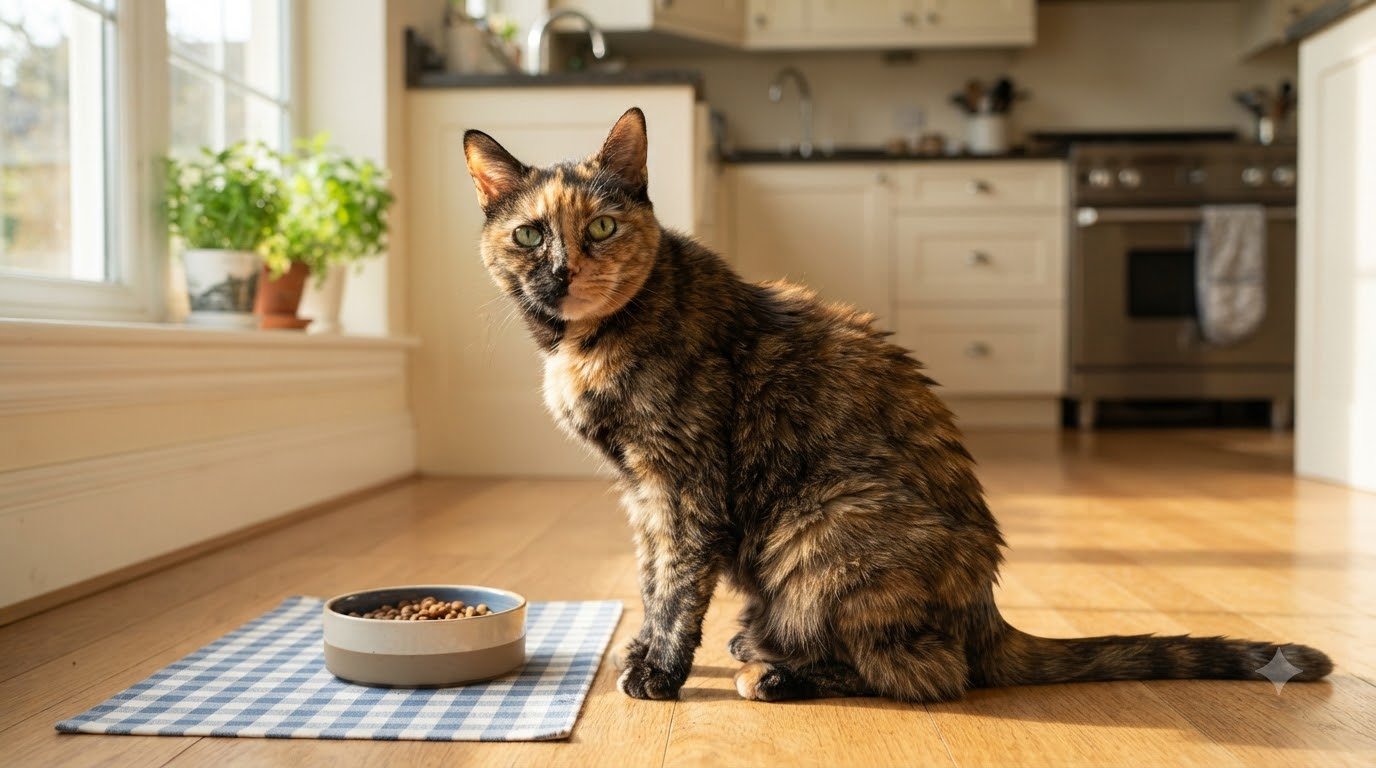
British Shorthairs’ low-key temperament means they’re often content with minimal activity, which makes portion control largely the owner’s responsibility rather than something the cat regulates through natural energy expenditure. As metabolism slows further with age, previously stable weight can start creeping up if portions aren’t reassessed.
What Heart Condition Should Owners Be Aware Of?
Hypertrophic cardiomyopathy — a thickening of the heart muscle — shows up at a higher rate in British Shorthairs than in many other breeds. It can develop without obvious symptoms until it’s fairly advanced, which is why routine cardiac screening (a vet listening for murmurs, sometimes followed by an ultrasound) is worth discussing even in an apparently healthy senior cat.
How Should You Adjust Care for an Aging British Shorthair?
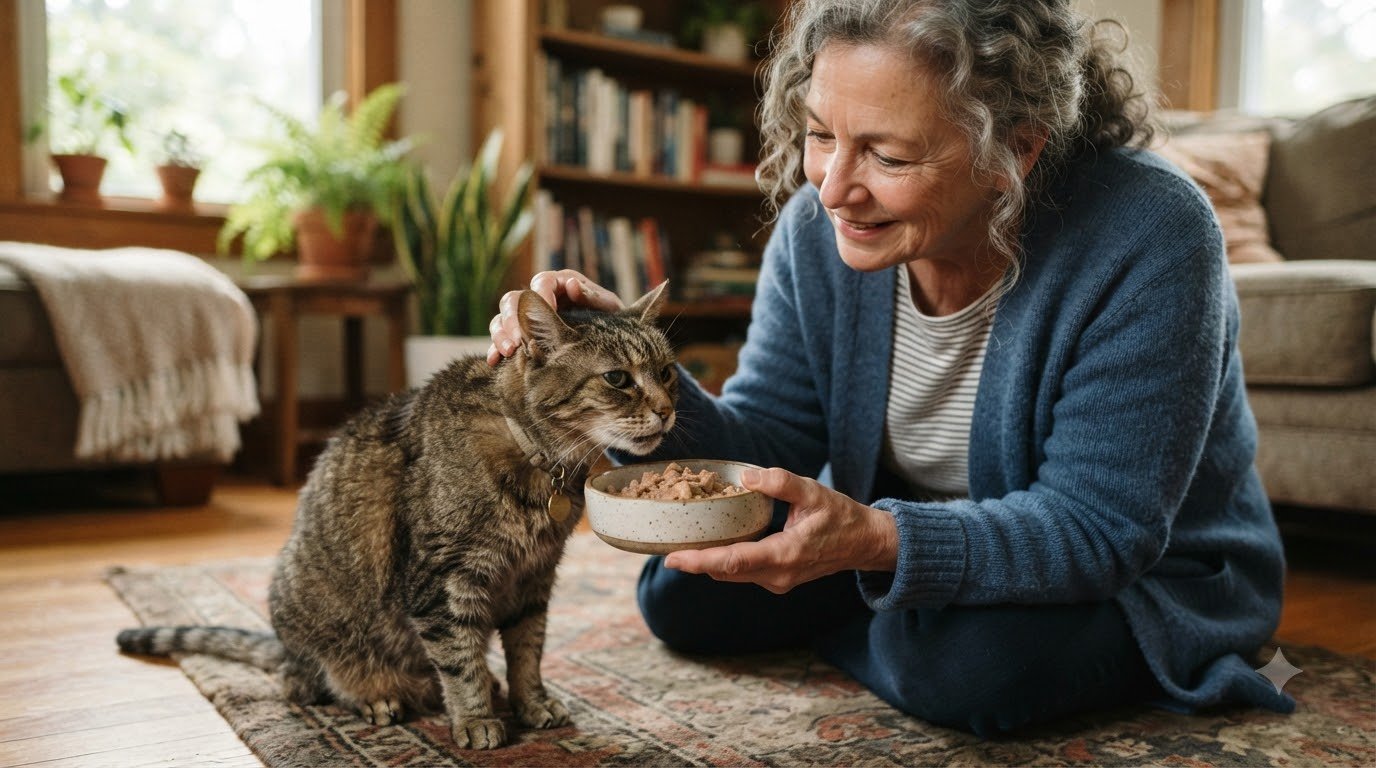
- Reassess food portions regularly rather than keeping them static as the cat ages and naturally slows down further
- Ask your vet about cardiac screening as part of routine senior wellness visits
- Encourage gentle daily play to help offset the breed’s naturally low activity baseline
- Watch body condition directly (by feel, not just weight) since a stocky, dense-boned breed can carry extra weight less obviously than a leaner cat