When a senior cat that’s used the litter box reliably for years suddenly stops, it’s tempting to treat it as a behavior problem — but in older cats, this change is much more often the first visible sign of a physical issue than a training lapse.
Why Does This Happen More Often in Senior Cats Specifically?
Several conditions common in older cats can directly affect litter box use: arthritis can make climbing into a box painful, kidney disease and diabetes can increase urination frequency and urgency, urinary tract infections can create discomfort associated with the box itself, and cognitive decline can cause genuine disorientation about where the box is. None of these are behavior problems in the traditional sense — they’re physical changes that happen to show up as a litter box issue.
What Medical Causes Should Be Ruled Out First?
- Arthritis: Painful joints can make the physical act of stepping into a box, especially a tall-sided one, difficult or something the cat starts to avoid
- Kidney disease or diabetes: Both increase urine volume and frequency, sometimes faster than a cat can get to the box in time
- Urinary tract infection or bladder stones: Can cause pain associated with urination that a cat starts to associate with the box itself
- Cognitive dysfunction: Can cause genuine confusion about the box’s location, especially in a cat that’s otherwise seemed fine
A vet visit with a urinalysis and bloodwork is the most direct way to check for these, and should generally come before trying to fix the issue through box changes alone.
How Can the Litter Box Itself Be Adjusted for a Senior Cat?
If a medical cause has been ruled out or addressed, box design is the next thing worth reviewing:
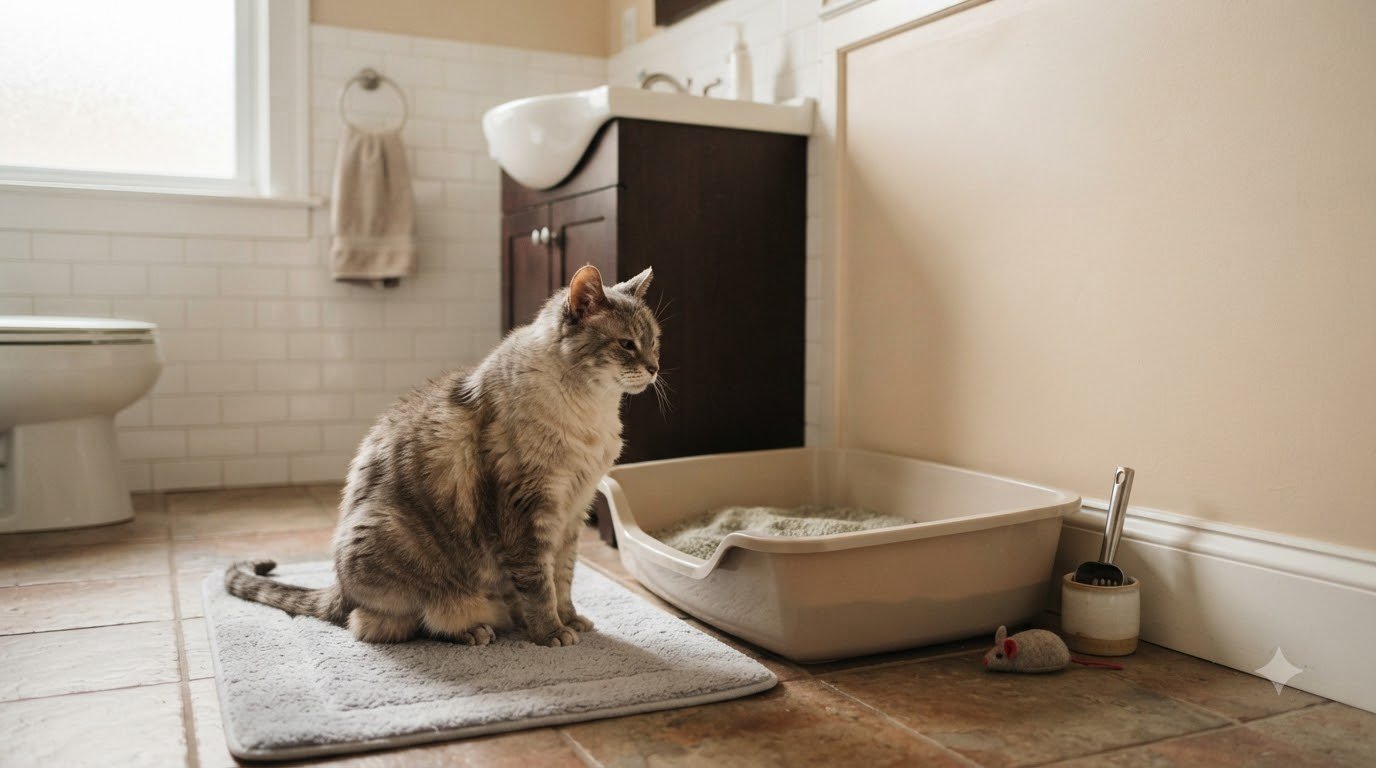
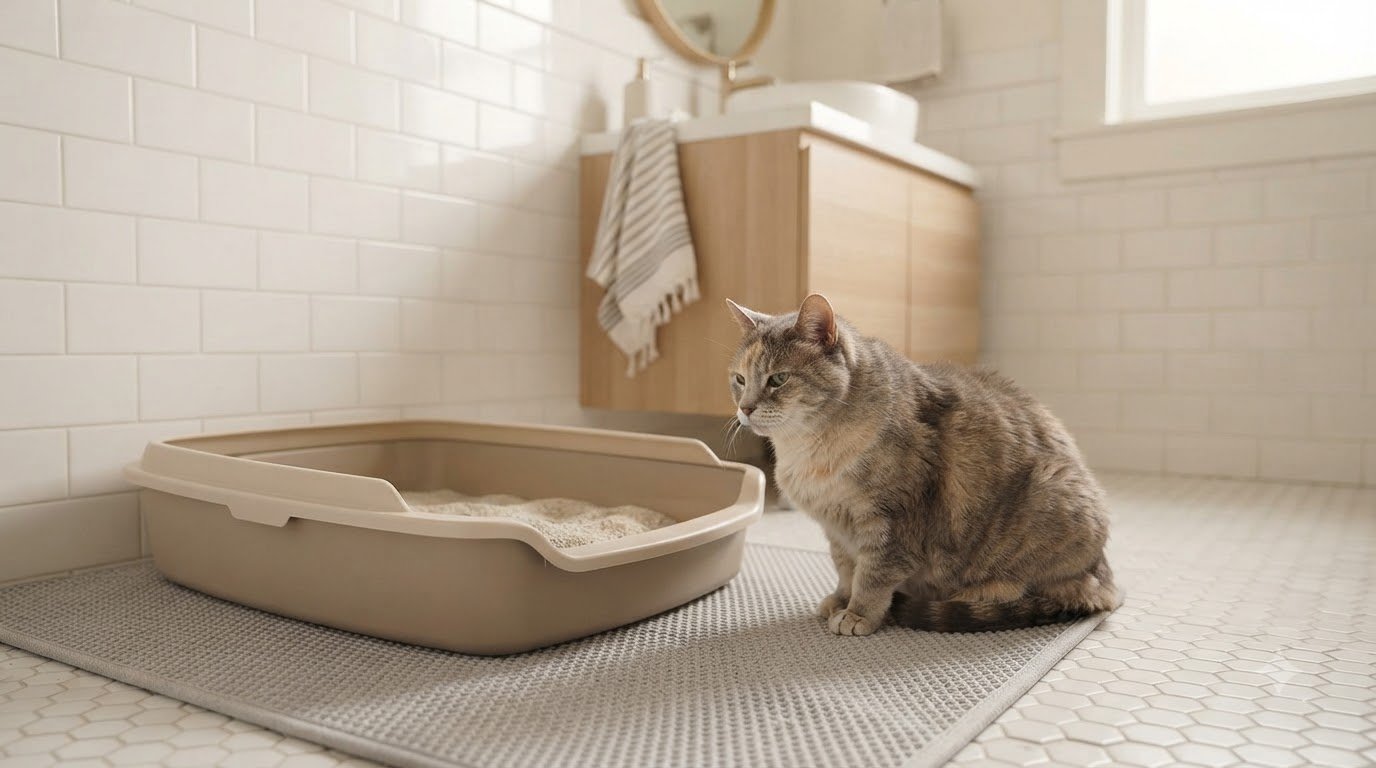
- Switch to a box with low sides that’s easy to step into without climbing
- Add a second box on a different floor of the house if your cat has mobility limits climbing stairs
- Keep the box away from high-traffic or startling areas, since older cats can be more sensitive to disruption
- Consider a larger box, since some senior cats need more room to turn and position comfortably
- Keep litter texture consistent, since sudden switches can also affect use, independent of age
When Should You See a Vet?
Any new litter box avoidance in a senior cat is worth a vet visit, ideally sooner rather than later — both because some causes (like a urinary blockage) can become urgent, and because catching arthritis or kidney disease early generally leads to better long-term management. Treating the litter box change as a signal to investigate, rather than a problem to punish, is the most effective way to actually resolve it.