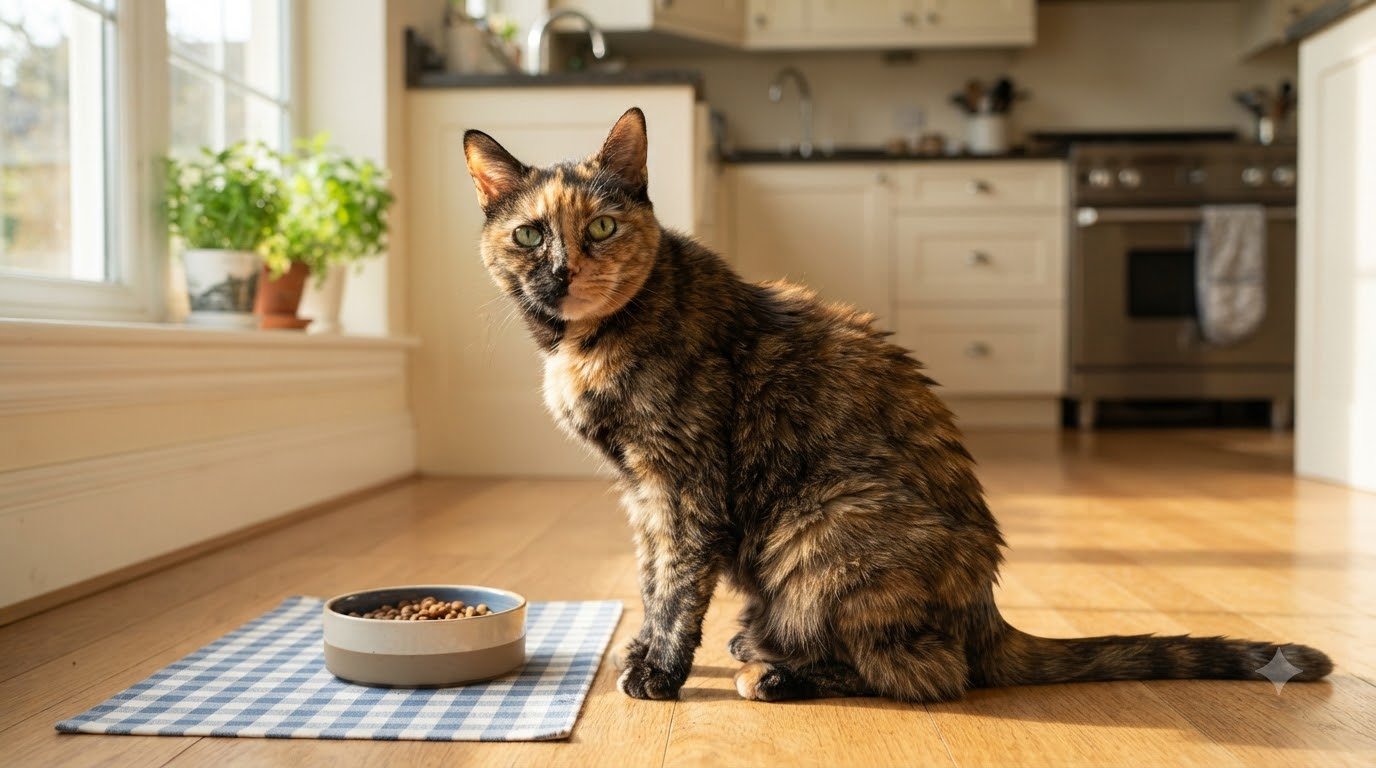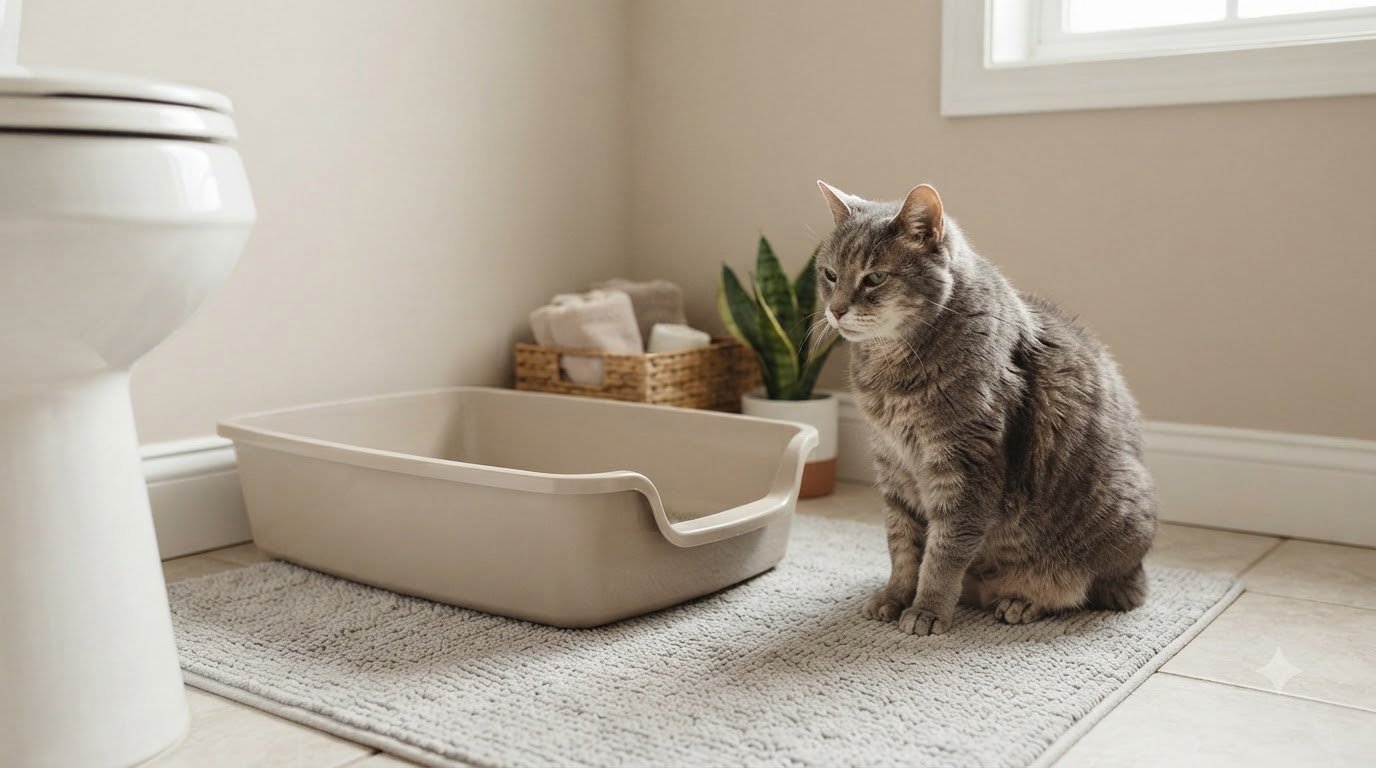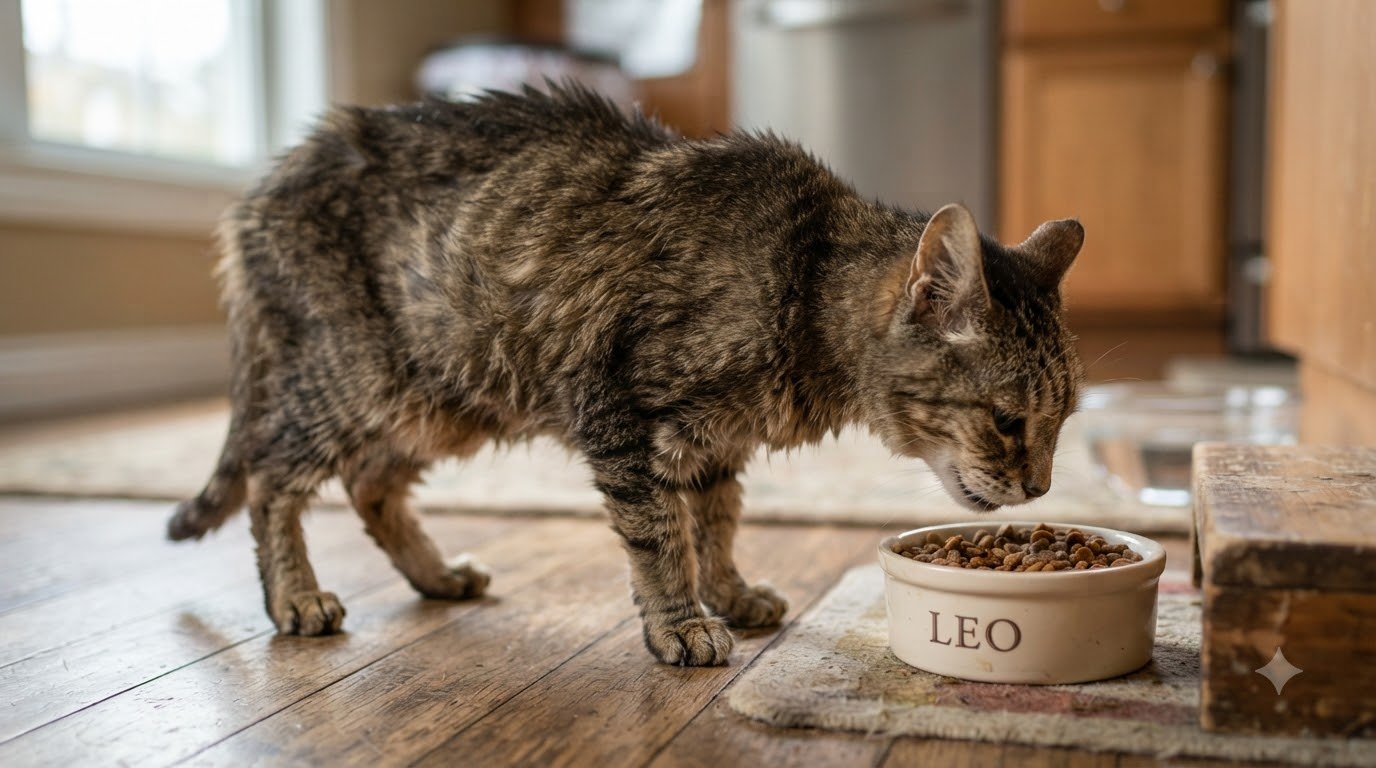
Helping an underweight senior cat gain weight back is about more than just offering more food — the right approach depends heavily on why the weight was lost in the first place.
Why Should You Start With a Diagnosis, Not a Diet Change?
Before adjusting anything about feeding, a vet visit to identify the underlying cause of weight loss is essential. Conditions like hyperthyroidism, kidney disease, or dental pain each require a specific treatment approach, and addressing the root cause is often what actually allows weight gain to happen — feeding changes alone frequently aren’t enough on their own.
What Feeding Strategies Can Help (Once Cleared by a Vet)?
- Calorie-dense food: formulas designed for weight gain or senior support pack more calories into less volume, useful for cats with a reduced appetite
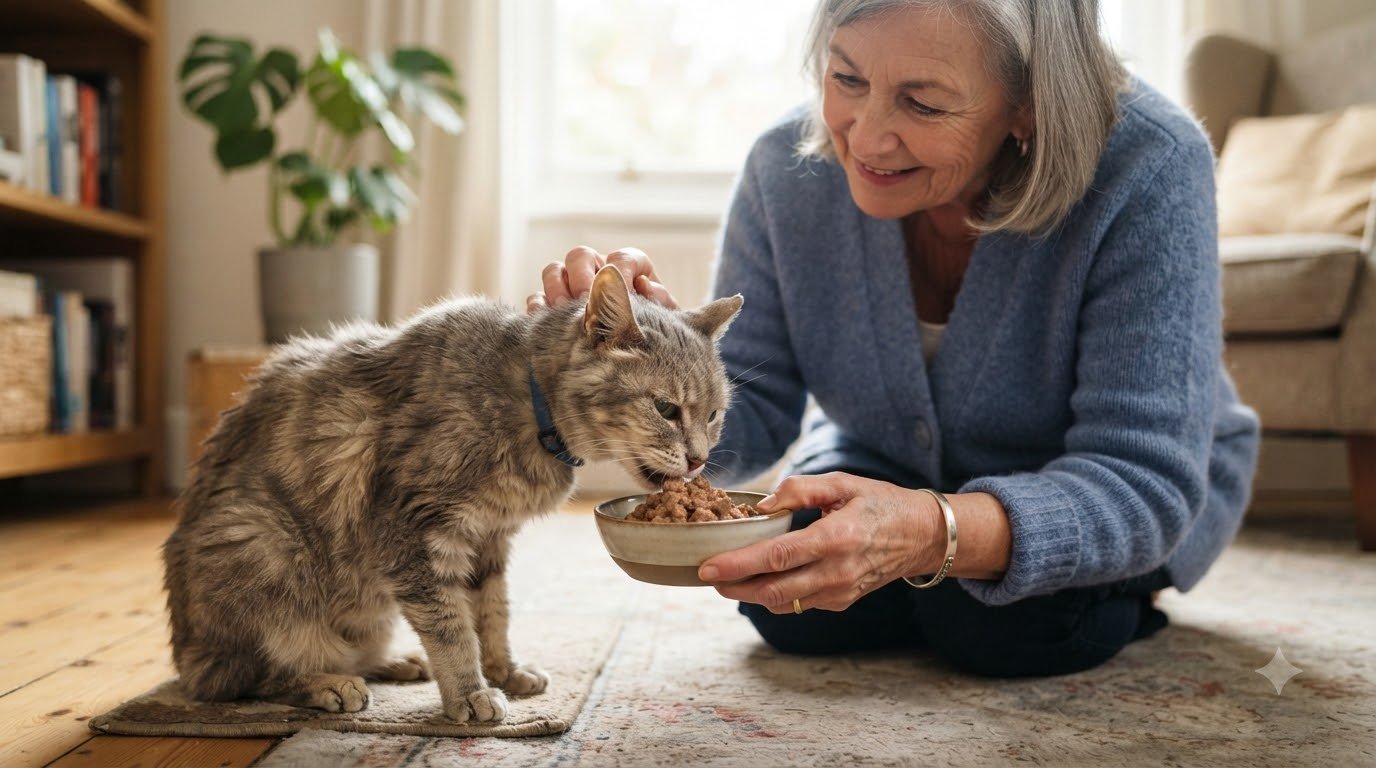
- Smaller, more frequent meals: several small meals throughout the day are often easier for a senior cat to manage than two large ones
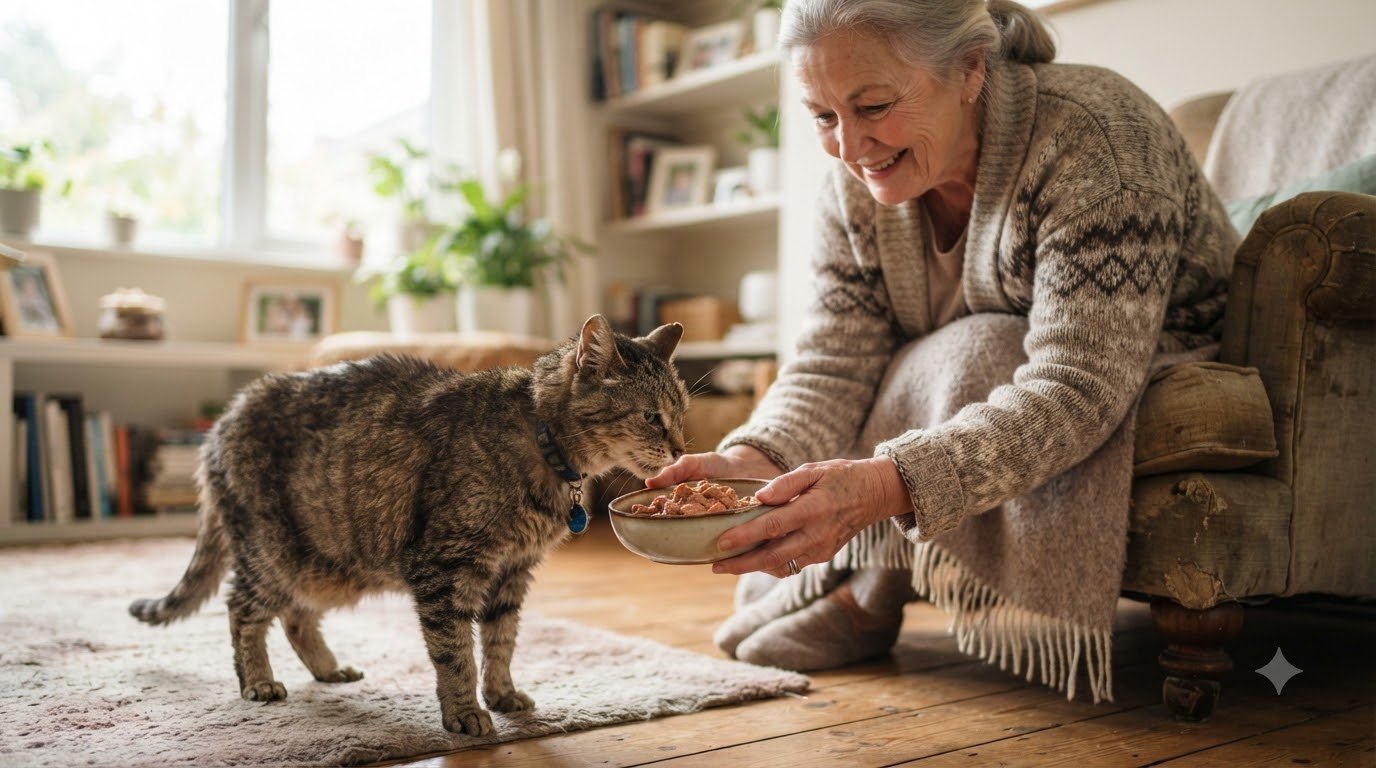
- Warming wet food slightly: enhances aroma and palatability, which can meaningfully increase how much a cat actually eats
- Adding variety in texture and flavor: some senior cats respond better to a rotation of options rather than the same food repeatedly
- Reducing competition at mealtimes: in multi-cat households, feeding separately can help a slower or less assertive cat eat undisturbed
What Should You Avoid?
- Don’t assume more food alone solves the problem without addressing an underlying medical cause
- Avoid sudden, large diet changes, which can cause digestive upset in a cat that’s already not doing well
- Don’t rely on human weight-gain approaches (like adding butter or cream) — these aren’t appropriate for cats and can cause digestive issues
How Do You Track Progress?
Weekly weigh-ins at home, using the same scale and time of day for consistency, give you and your vet an objective way to see whether the current plan is working. Bring this data to follow-up appointments — it’s more useful than a general impression of “looking a bit better.”
When Should You Go Back to the Vet?
If weight isn’t trending in the right direction after a few weeks on a vet-approved feeding plan, or if new symptoms appear, it’s worth a follow-up rather than continuing to adjust feeding on your own. Weight gain in a senior cat with an underlying condition is often a gradual process tied closely to how well that condition is being managed.