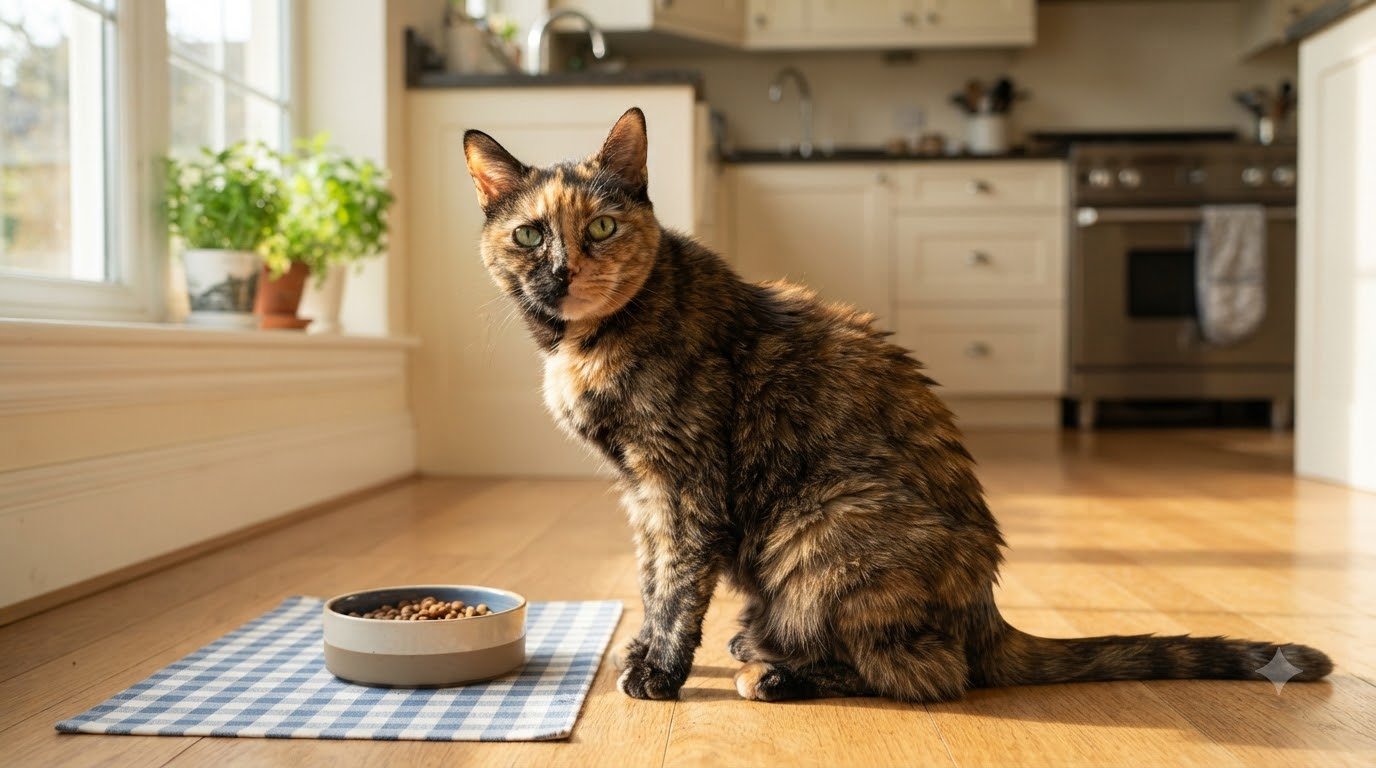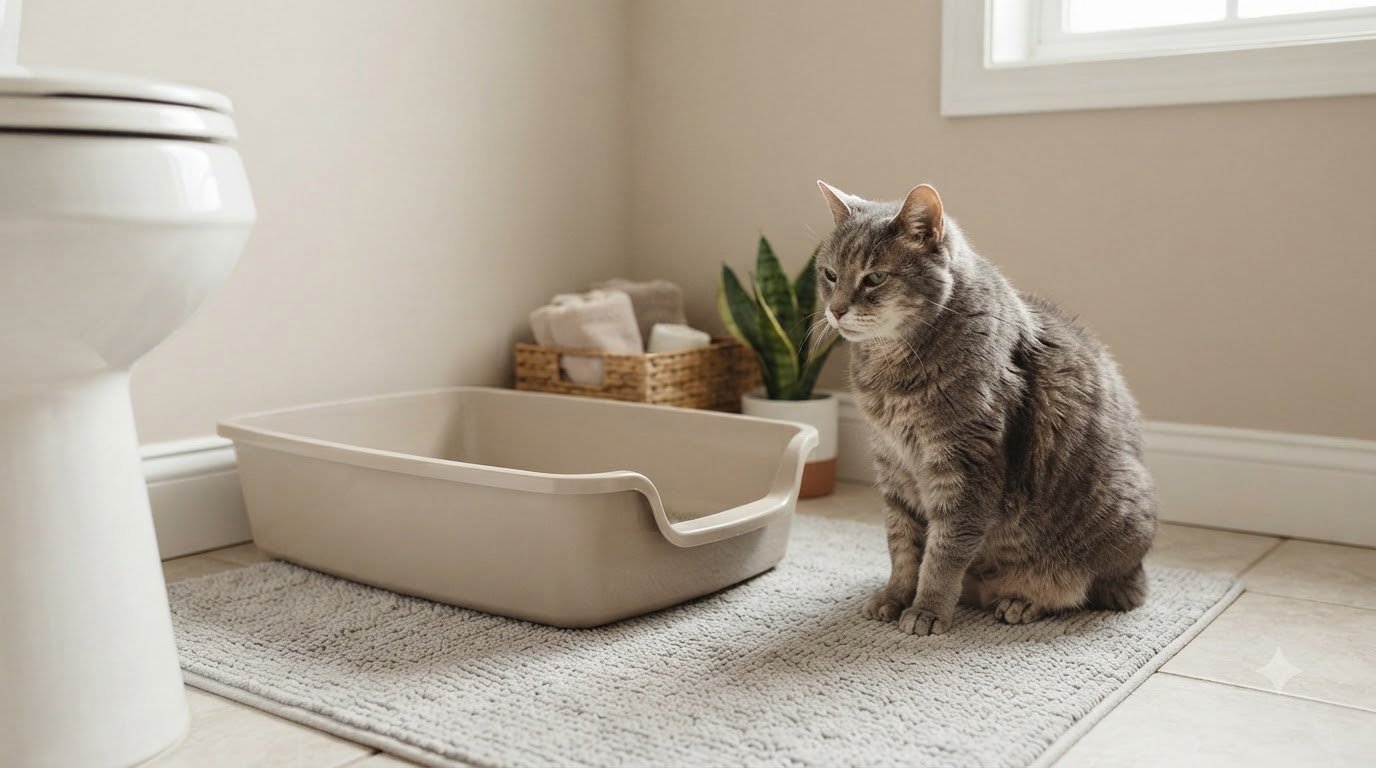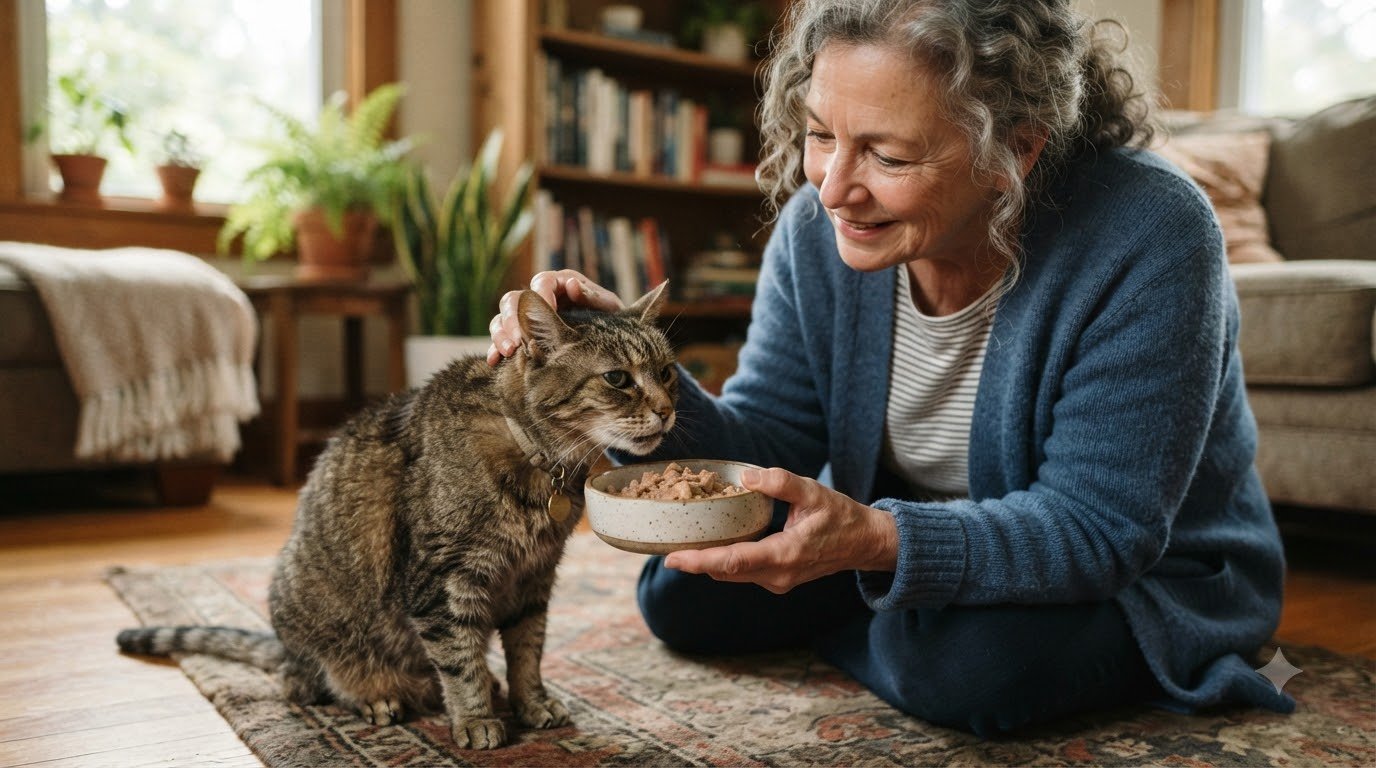
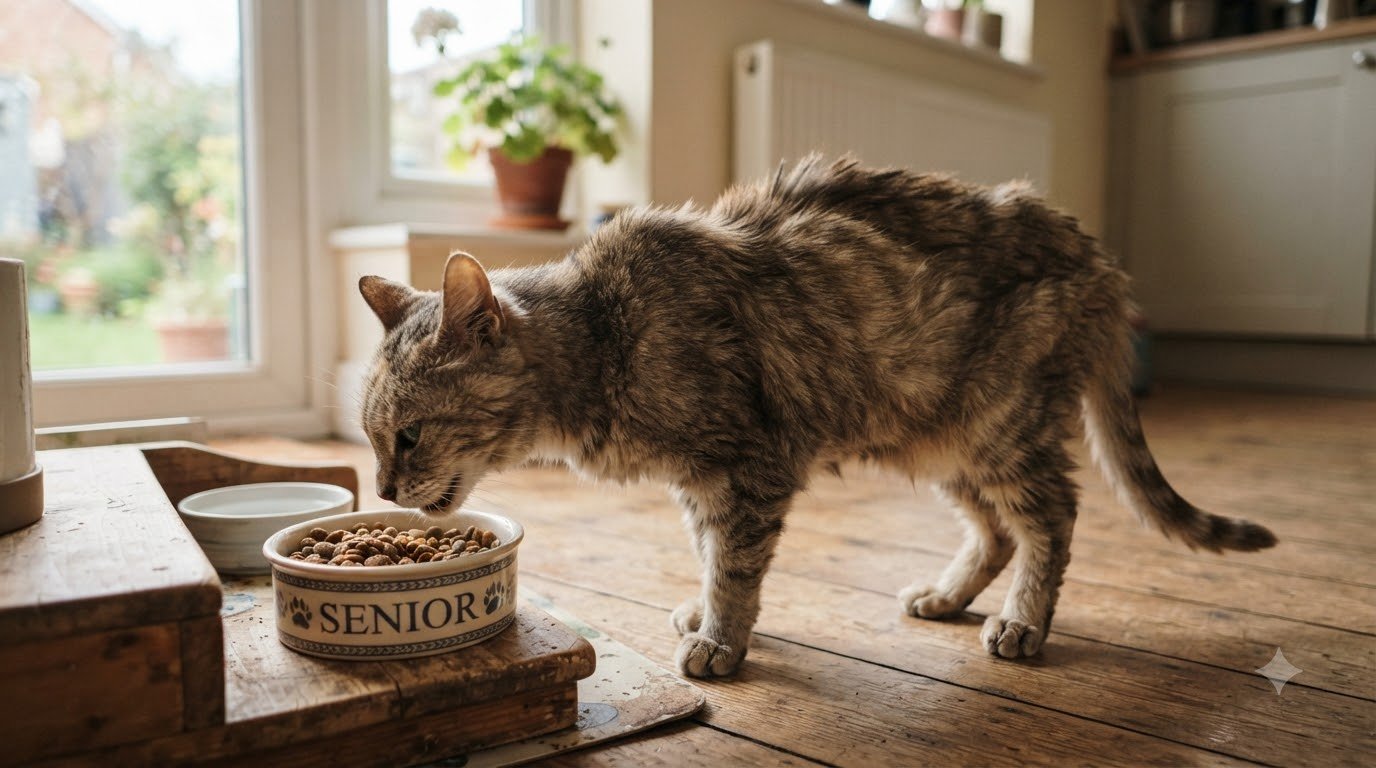
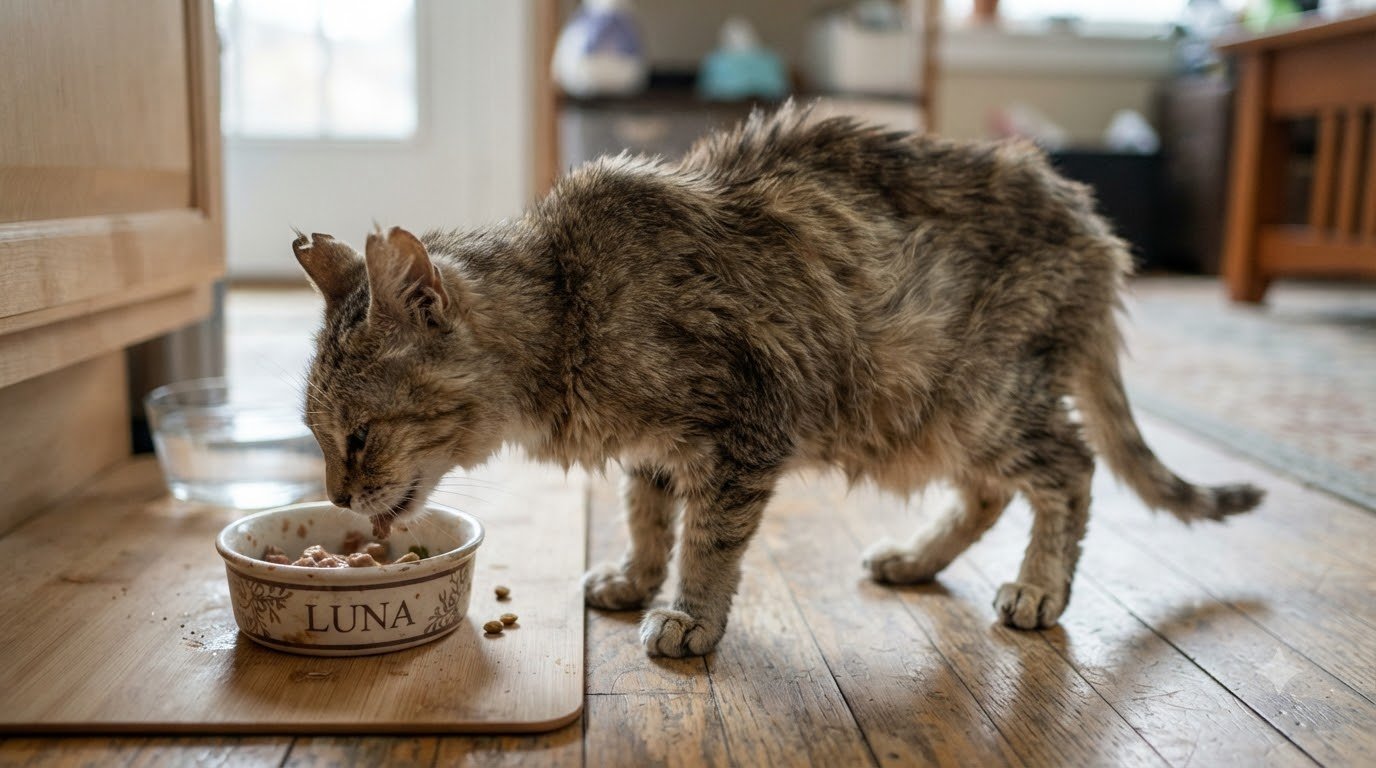
A senior cat that’s still eating normally but steadily losing weight is one of the more common — and more commonly dismissed — signs that something needs veterinary attention.
Why Is This Combination a Red Flag?
It’s intuitive to assume weight loss means a cat isn’t eating enough, but several conditions common in senior cats cause weight loss despite normal or even increased appetite, because the underlying problem affects how the body processes nutrients rather than how much food goes in.
What Are Common Underlying Causes?
- Hyperthyroidism: an overactive thyroid speeds up metabolism, often causing a cat to eat more while still losing weight — one of the most classic patterns behind this exact combination of symptoms
- Chronic kidney disease (CKD): increasingly common in senior cats, CKD can cause weight loss as the body struggles to maintain normal function, sometimes alongside increased thirst and urination
- Diabetes: similar to hyperthyroidism, diabetic cats can eat normally or more than usual while losing weight, since the body isn’t properly using glucose for energy
- Dental disease: painful teeth can sometimes cause a cat to eat less effectively even while still approaching the food bowl regularly, leading to gradual weight loss
- Intestinal issues: inflammatory bowel disease or malabsorption problems can prevent proper nutrient uptake even with normal food intake
Why Isn’t Guessing at the Cause a Good Strategy?
These conditions require different diagnostic tests and completely different treatments — what helps a hyperthyroid cat won’t address kidney disease, and vice versa. Trying home remedies or simply feeding more without a diagnosis risks delaying treatment for a condition that often responds well when caught relatively early.
What Does a Vet Visit Typically Involve?
- A physical exam, including weighing and body condition scoring
- Bloodwork, including thyroid levels and kidney values
- Urinalysis to assess kidney function and rule out diabetes
- Additional imaging or tests depending on initial findings
Why Does Catching This Early Matter?
Many of the conditions behind unexplained weight loss in senior cats — particularly hyperthyroidism and early-stage kidney disease — are manageable with appropriate treatment, and outcomes tend to be meaningfully better when caught before the condition has progressed significantly. Don’t wait for other symptoms to appear; unexplained weight loss on its own is reason enough for a vet visit.