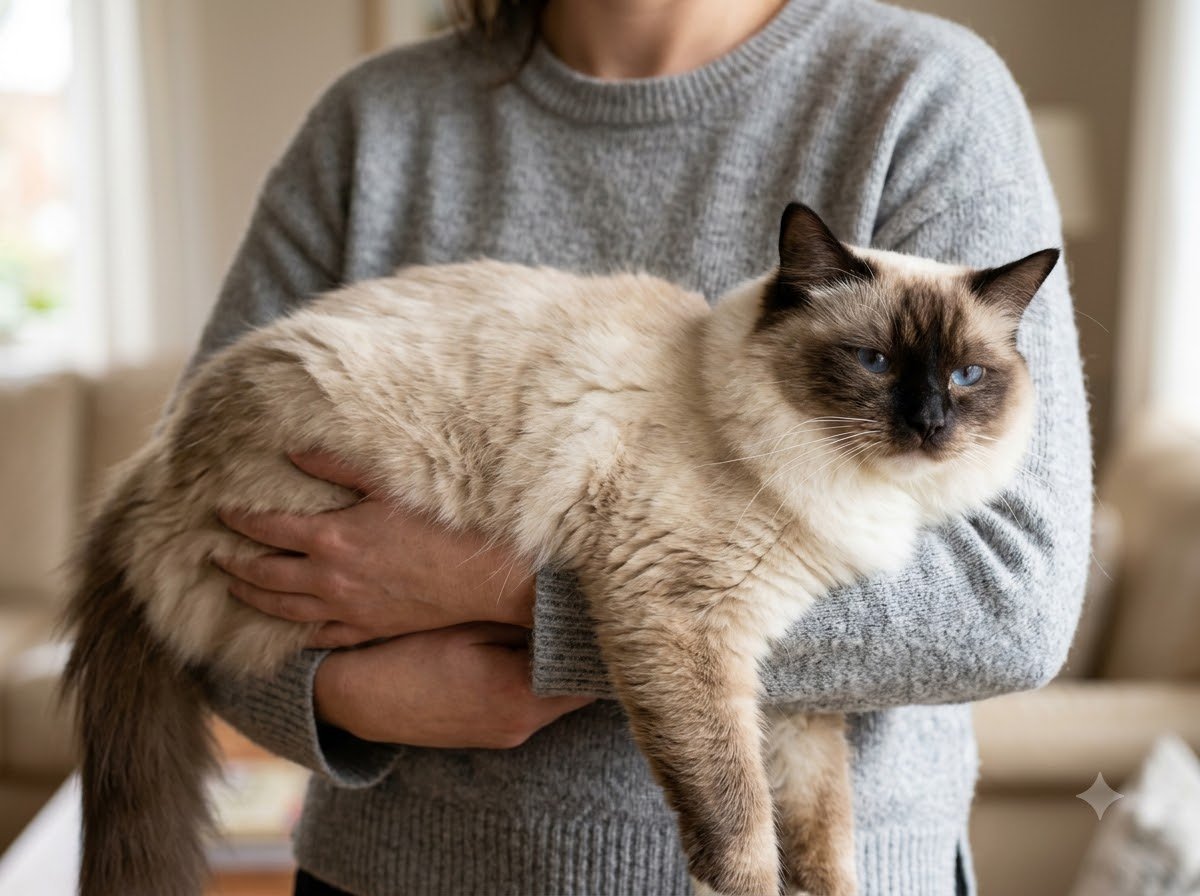
Ragdolls are known for their large size, docile temperament, and tendency to go limp when held — traits that also shape what to watch for as they age. A documented predisposition to a specific heart condition and a naturally low activity level that can tip into weight gain are the two areas most worth attention in this breed’s senior years.
Why Does Heart Health Matter More for Aging Ragdolls?
Ragdolls carry a notably elevated rate of hypertrophic cardiomyopathy, a thickening of the heart muscle that can go unnoticed until it’s advanced. Because the breed’s naturally calm, low-energy personality can mask the reduced activity that might otherwise signal a heart problem in a more active cat, routine cardiac screening becomes more valuable than waiting for obvious symptoms.
What Other Age-Related Changes Are Common in Ragdolls?
- Weight gain — the breed’s docile, low-activity nature makes creeping weight gain easy to miss, especially as metabolism slows further with age
- Joint stiffness — as one of the larger cat breeds, Ragdolls carry more weight over their joints throughout life, similar in principle to Maine Coons
- Reduced grooming — their semi-long coat needs more owner help as flexibility and self-grooming decline with age
How Should You Adjust Care for an Aging Ragdoll?
- Ask your vet about cardiac screening or genetic testing for hypertrophic cardiomyopathy, especially given the breed’s documented risk
- Monitor weight closely and adjust portions as activity naturally decreases further with age
- Increase brushing frequency to prevent matting as self-grooming becomes harder
- Encourage gentle, consistent play to help offset the breed’s naturally low activity baseline