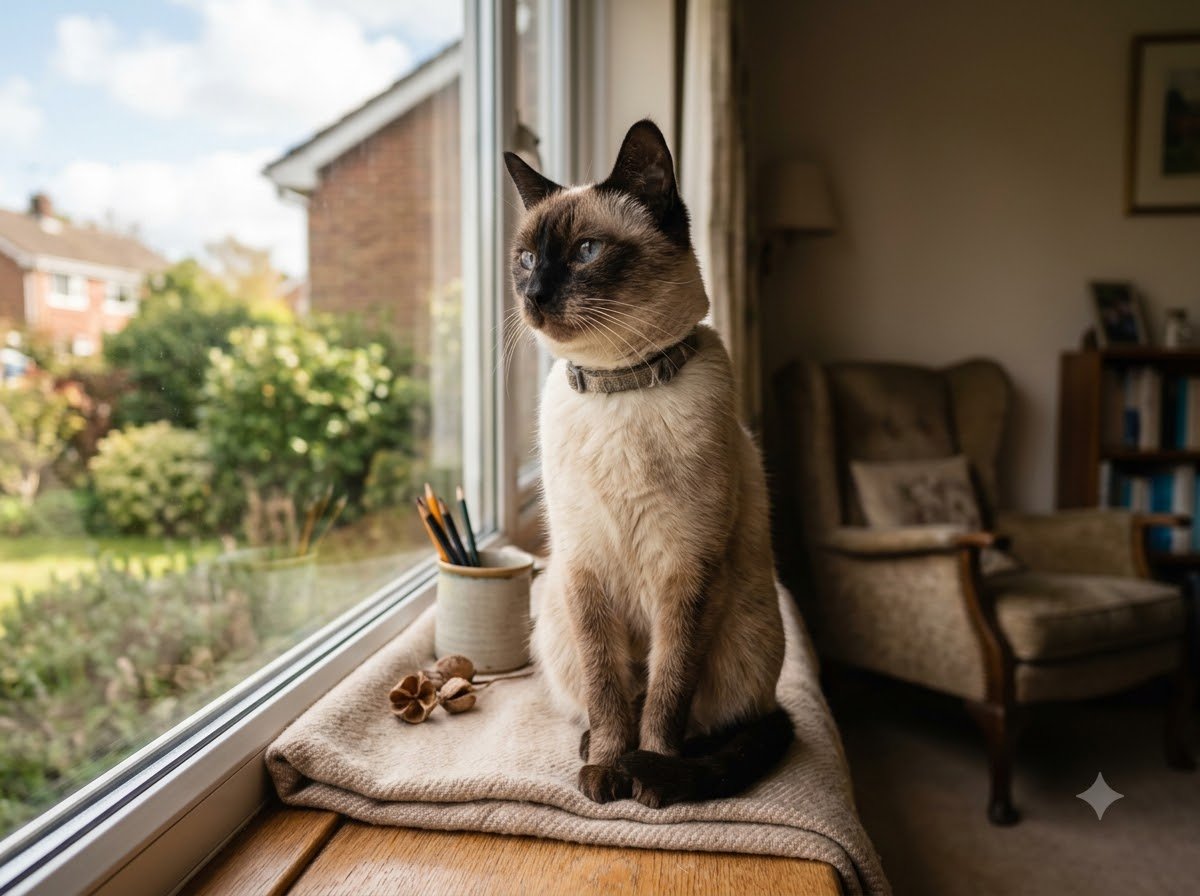
Siamese cats are known for being vocal and highly social, and they’re also one of the longer-lived cat breeds, often reaching their late teens or beyond. That longevity means their senior stage tends to stretch out, and two areas — dental health and behavioral changes — deserve particular attention as they age.
Why Are Siamese Cats Prone to Dental Issues?
The breed has a documented higher rate of dental resorption, a painful condition where a tooth’s structure gradually breaks down, along with a general tendency toward periodontal disease. Because cats are skilled at hiding dental pain, regular vet checks matter more for this breed than symptoms alone would suggest.
What Other Age-Related Changes Are Common in Senior Siamese Cats?
- Increased or changed vocalization — can signal cognitive changes, pain, or sensory decline rather than just breed personality
- Amyloidosis — a rare but breed-associated condition affecting organ function, worth being aware of if unexplained symptoms arise
- Vision and hearing decline — general to aging cats, but worth monitoring closely in a breed known for being highly alert and communicative, since changes are often more noticeable
- Weight loss — as with most cats, gradual weight loss in a senior Siamese is more often a warning sign than a normal part of aging
How Should You Adjust Care for an Aging Siamese Cat?
- Schedule dental checks at least once a year, given the breed’s documented resorption risk
- Pay close attention to changes in vocalization patterns and bring them up at vet visits
- Track weight consistently — even small losses are worth investigating in this breed
- Keep environmental enrichment high, since Siamese cats are unusually social and benefit from continued mental engagement into their senior years