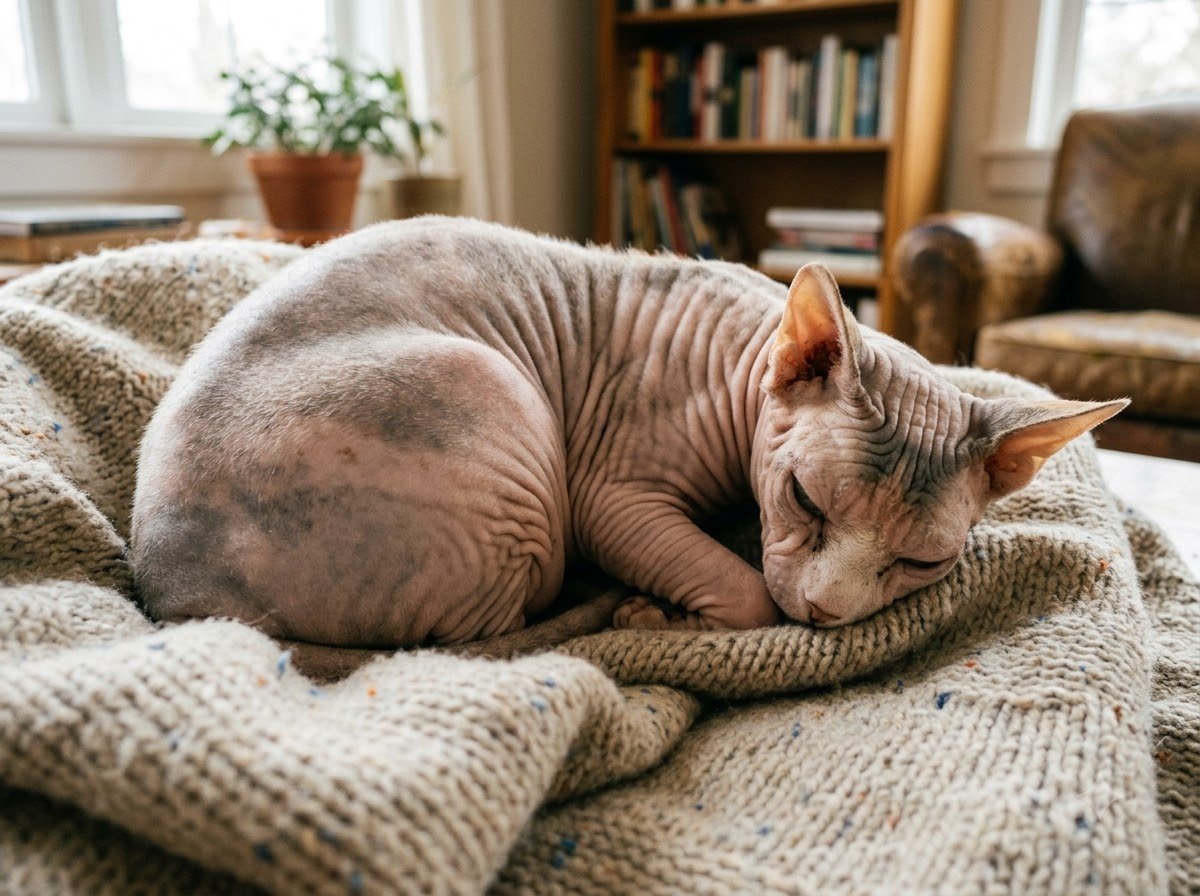
Sphynx cats are hairless, and that single trait shapes much of what changes about their care as they age — temperature regulation and skin maintenance, both manageable in a younger, more mobile cat, become more owner-dependent as flexibility and muscle mass naturally decline with age.
Why Does Temperature Regulation Become Harder for Aging Sphynx Cats?
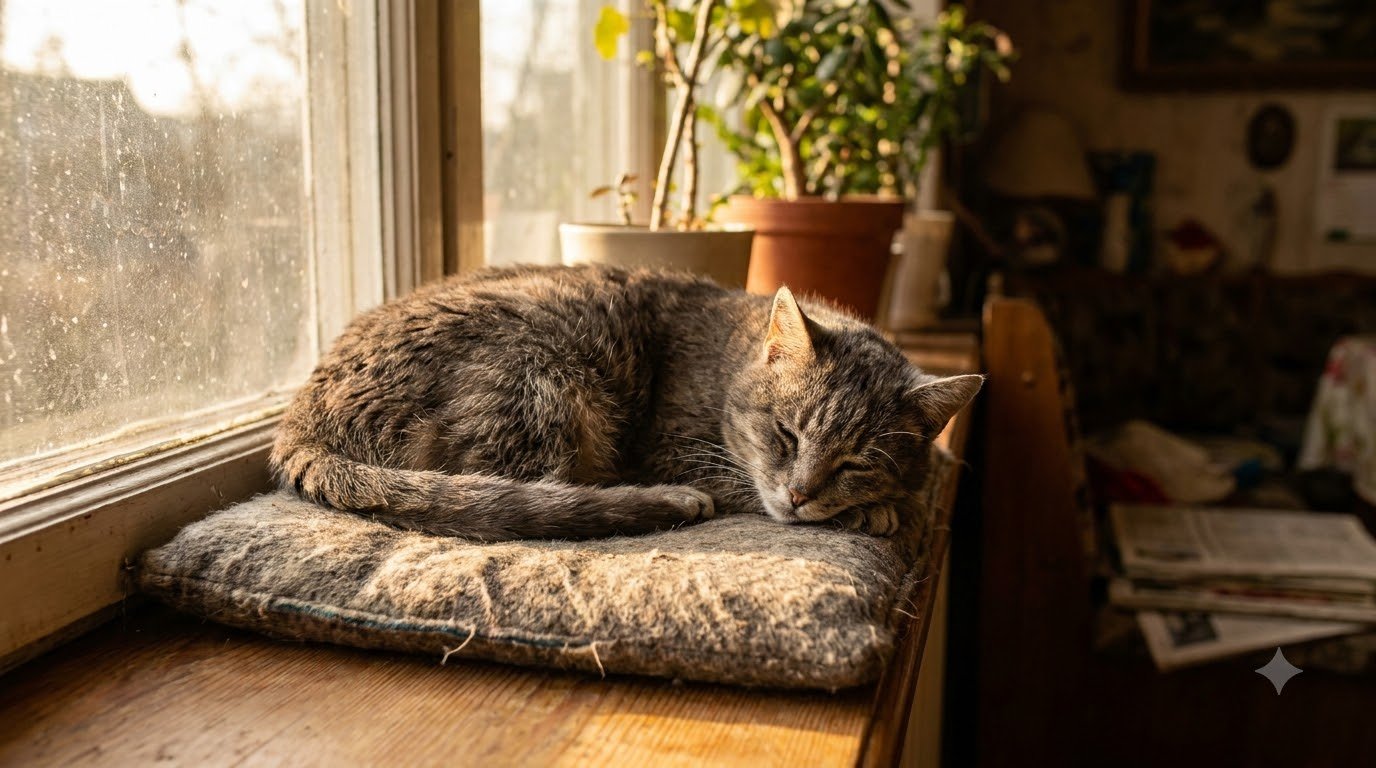
Without a fur coat for insulation, Sphynx cats rely more heavily than other breeds on behavior — seeking sunny spots, curling into blankets, staying close to warm bodies — to stay comfortably warm. As joint stiffness or reduced mobility makes moving to those warm spots harder, senior Sphynx cats can struggle more with temperature regulation than they did when younger and more mobile.
Why Does Skin Care Matter So Much for This Breed?
Sphynx cats’ skin produces oils that fur normally absorbs in other breeds, meaning regular bathing is a standard part of their care throughout life, not an extra. As flexibility declines with age and self-grooming becomes harder, owners often need to take on more of this responsibility, including more frequent skin checks for irritation or buildup.
What Else Should Owners Watch for in an Aging Sphynx?
- Provide extra warm resting spots (heated beds, blankets) that are easy to reach without much movement
- Maintain a regular bathing schedule and check skin folds for buildup, more often as self-grooming ability declines
- Ask your vet about cardiac screening for hypertrophic cardiomyopathy, a documented concern in the breed
- Watch body condition closely, since visible ribs or spine can be harder to interpret on a hairless cat than a furred one