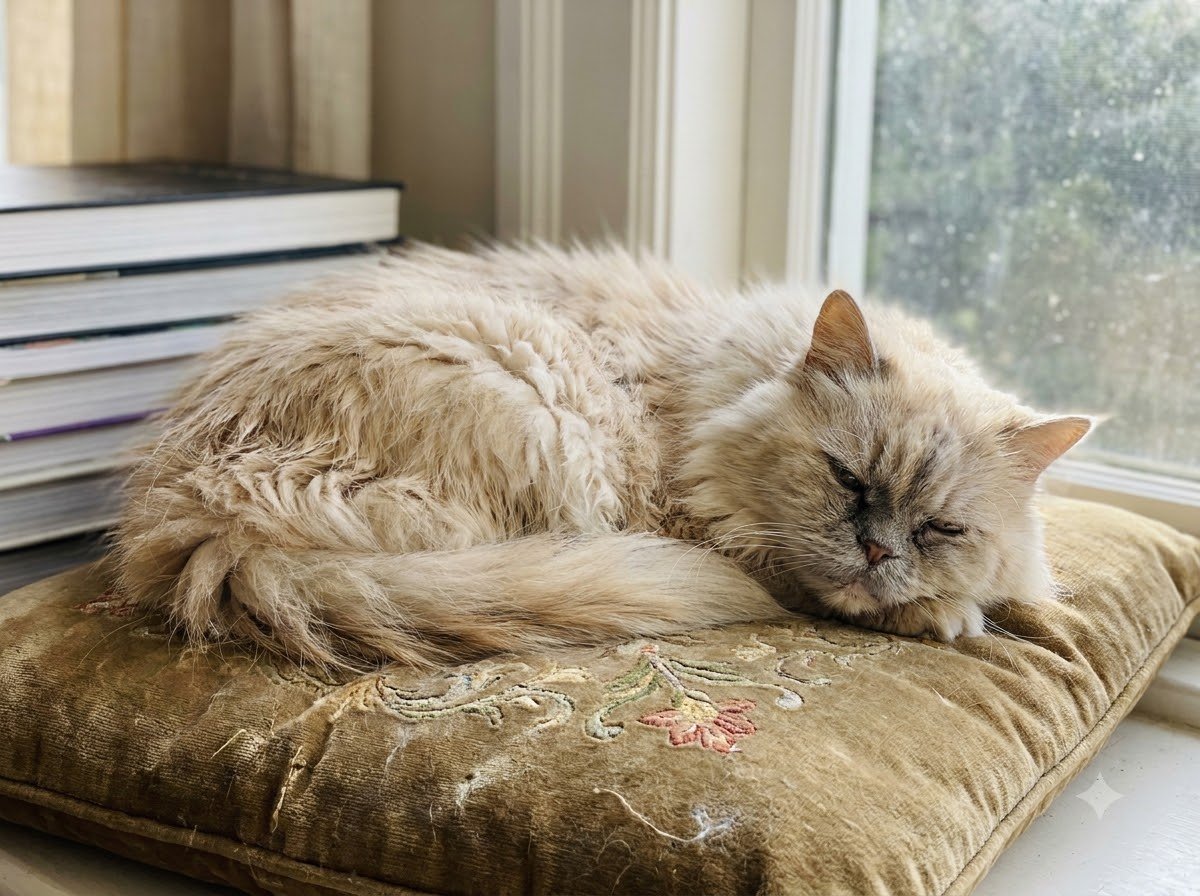
Persian cats bring two specific considerations into their senior years: a coat that requires increasing owner involvement as self-grooming becomes harder, and a documented breed predisposition to polycystic kidney disease that makes routine kidney monitoring more than just a general aging precaution.
Why Does Grooming Become More Important for Aging Persians?
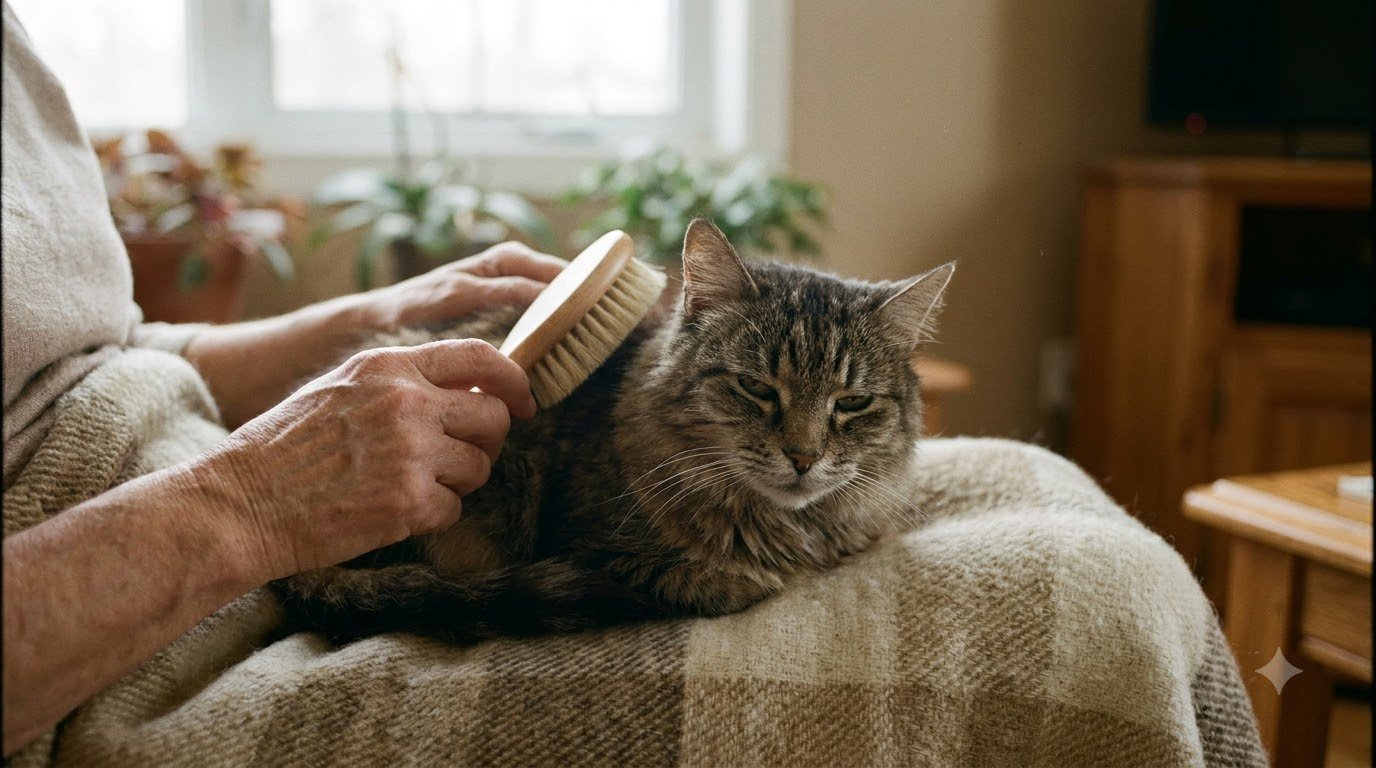
A Persian’s long, dense coat already requires more maintenance than most breeds even in youth. As joint stiffness or general reduced flexibility sets in with age, cats that once managed most of their own grooming often can’t reach or bend as effectively — leading to mats, especially around the hindquarters, if owners don’t step in with more frequent brushing.
What Health Conditions Are Persian Cats Prone to With Age?
- Polycystic kidney disease (PKD) — an inherited condition notably more common in Persians, making kidney bloodwork a particularly important part of senior wellness visits
- Brachycephalic breathing issues — the breed’s flat facial structure can make breathing less efficient, sometimes more noticeable as a cat ages or gains weight
- Dental disease — like most cats, but complicated by the breed’s facial structure, which can affect jaw alignment
- Eye discharge and tear staining — common throughout life due to facial structure, but worth monitoring for changes that could signal infection
How Should Persian Cat Care Change in the Senior Years?
- Increase brushing frequency, watching especially for mats forming in hard-to-reach areas
- Ask your vet about kidney function bloodwork given the breed’s PKD risk, even without obvious symptoms
- Keep the cat lean, since extra weight compounds the breed’s existing breathing inefficiency
- Watch for changes in breathing effort, especially during warm weather or activity